
The Bible does not directly promise that pets will be reunited with their owners in heaven, but several passages suggest animals hold a meaningful place in God’s plans. Isaiah 11:6–9 envisions restored animal harmony, Romans 8:19–22 describes all creation longing for renewal, and Revelation 5:13 portrays every creature joining heavenly worship. Theologians like C.S. Lewis and Martin Luther expressed cautious hope for animals in the new creation, a question the passages below explore further.
Key Takeaways
- The Bible never directly promises specific pets will be resurrected, leaving the question theologically unresolved among major evangelical scholars.
- Isaiah 11:6–9 envisions wolves, lambs, and lions living peacefully together, suggesting animals exist in restored creation.
- Romans 8:19–22 describes all creation groaning and longing for freedom from corruption alongside humanity’s redemption.
- Revelation 5:13 portrays every creature joining a cosmic worship chorus directed toward God and the Lamb.
- Theologians remain divided, with Aquinas denying animal immortality and C.S. Lewis offering relational hope for pet reunion.
Will My Pet Be in Heaven? What the Bible Actually Says
One of the most personal questions a grieving pet owner can ask is whether a beloved animal companion will appear in heaven. Scripture silence on this specific point is notable.
No verse directly promises that a particular pet will be resurrected or reunited with its owner. Major evangelical summaries acknowledge the question remains unresolved rather than definitively denied. The broader theological conversation about God’s plan for creation, including concepts like the New Earth, informs many Christian responses to the question.
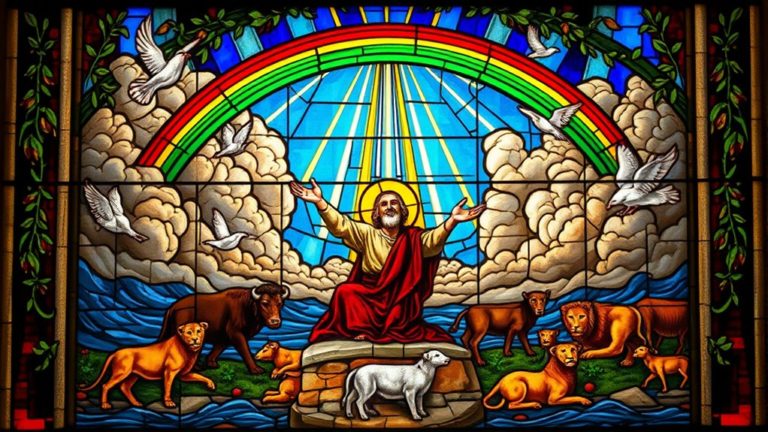
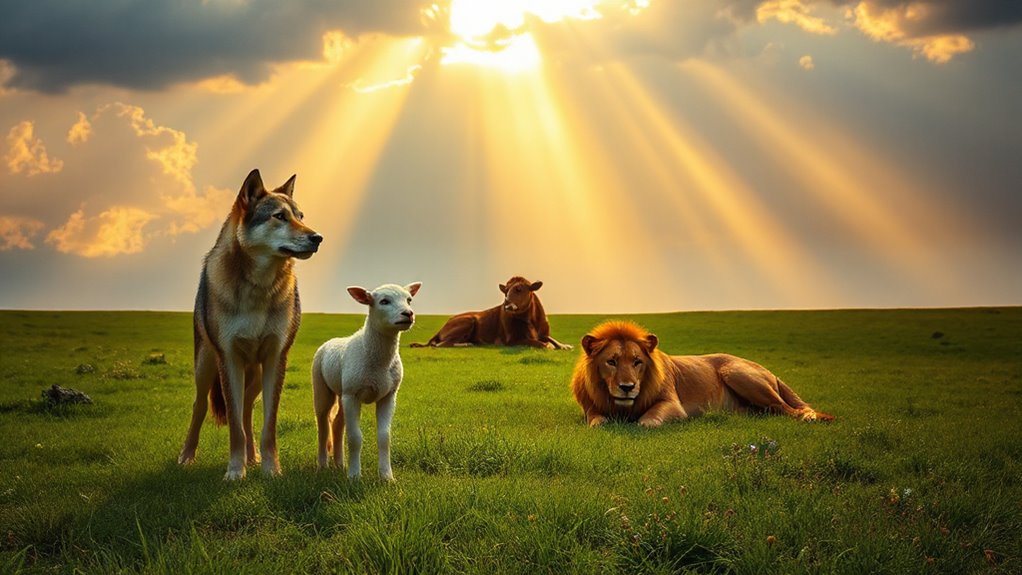
What the Bible does offer is a broader picture. Isaiah 11:6–9 describes wolves, lambs, lions, and calves living together in a restored creation.
Many Christian writers connect this vision to the New Earth. That imagery supports cautious hope that animals have a place in God’s renewed world, though individual pet reunion remains unconfirmed.
Scholars consistently advise framing the matter as hopeful possibility rather than established doctrine. Romans 8:19–22 describes the whole creation groaning together in pains of childbirth, waiting with eager longing to be set free from bondage to corruption into the freedom of the glory of God’s children.
When God brought every beast of the field and every bird of the sky to Adam in Genesis 2:19, naming animals established a close connection between human and animal life that Scripture frames as a lasting theme from the very beginning.
The Key Bible Passages About Pets and Animals in Heaven

Several passages in Scripture form the foundation for Christian thinking about animals and the afterlife, and each one contributes a different piece to the larger picture.
Scripture offers multiple passages that, taken together, build a distinctly Christian foundation for thinking about animals and eternity.
Isaiah 11:6–9 offers the clearest Old Testament vision, describing animal harmony where wolves dwell with lambs and predators rest beside prey on God’s holy mountain.
Revelation 5:13 extends the picture further, portraying every creature joining a chorus of cosmic worship directed toward God and the Lamb.
Revelation 4:6–9 places four living creatures with animal forms directly beside the heavenly throne.
Genesis 1:24–25 and Psalm 148:10 establish animals as intentional creations designed for praise.
Proverbs 12:10 reminds us that a righteous person cares for their animals, reflecting that God values animal life as part of His created order.
Together, these texts build a case for animals within God’s renewed creation, though none explicitly promises personal reunions between owners and their pets. Isaiah reminds us that real peace comes from God, not from human effort or imagination, making these visions a divine promise rather than a fanciful myth. The Catholic canon historically includes additional texts from the Septuagint like deuterocanonical books, which shaped early Christian Scripture and its view of creation.
What Theologians Conclude About Pets in the New Creation

Although theologians have not reached a single, settled conclusion about pets in the new creation, a broad range of Christian thinkers allow for the possibility while stopping short of certainty.
Thomas Aquinas argued that animals lack immortal rational souls, a position still influential in conservative theology. Regular engagement with daily Bible reading and theological reflection often shapes how communities interpret his views.
Yet even Aquinas-rooted thinkers often distinguish between personal resurrection and God’s broader renewal of creation.
C.S. Lewis offered a relational hope, suggesting pets bonded to humans might share in immortality through that connection.
Martin Luther anticipated restored harmony between humans and animals in paradise.
Most current theological writing reflects pastoral caution, separating what is possible from what is certain.
Churches generally avoid definitive claims, viewing Scripture as non-explicit, while still permitting Christians to hold measured hope for beloved animals. Pope John Paul II stated that animals possess a soul and stressed love and solidarity with our smaller brethren.
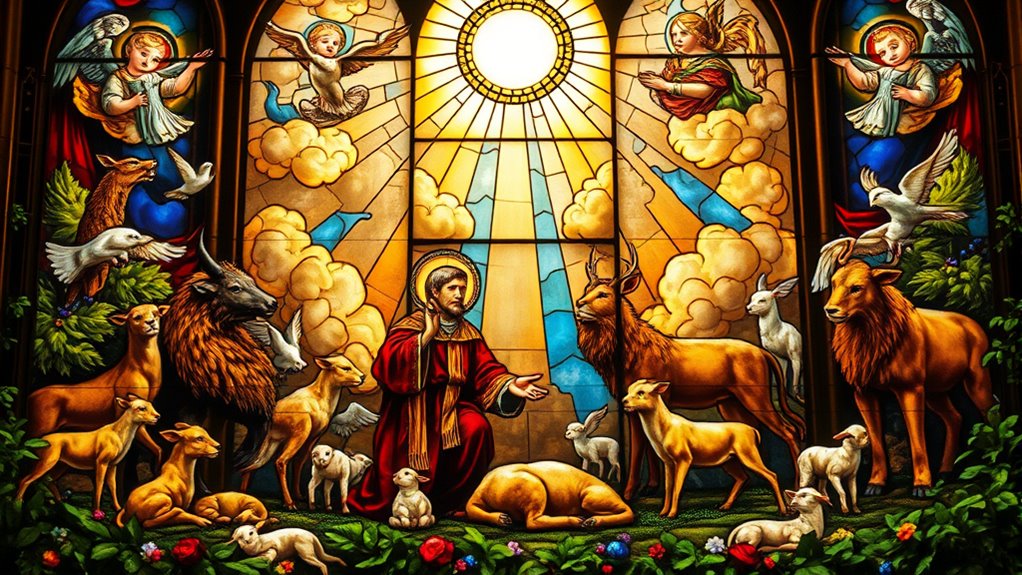
St. Francis of Assisi, whose core devotion centered on intimacy with Jesus Christ, loved and even preached to animals, reflecting a tradition of honoring creatures as gifts from God.