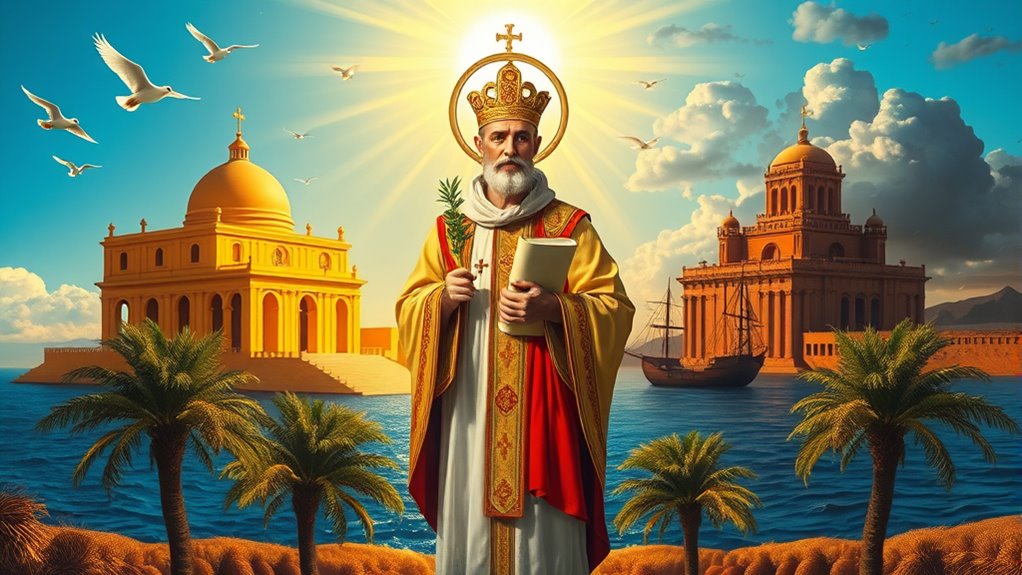



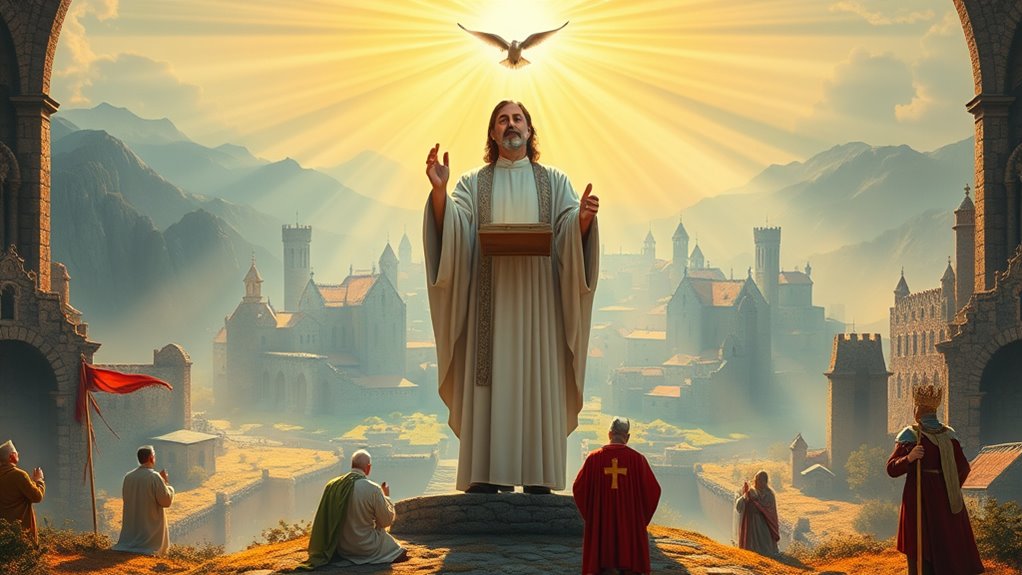
Bernard of Clairvaux, born in 1090 near Dijon, entered monastic life at twenty and by 1115 was leading the founding of Clairvaux monastery. He directly established approximately seventy Cistercian houses and contributed to the order’s expansion to 343 monasteries by his death, extending from Ireland to Lebanon. Beyond monastic growth, Bernard resolved papal schisms, secured recognition for Pope Innocent II, authored over five hundred letters, and preached the Second Crusade in 1148. His influence combined spiritual vision with pragmatic institution-building that shaped medieval Europe’s religious landscape in ways that merit closer examination.
Bernard of Clairvaux, a French abbot and theologian born in 1090, transformed medieval Christianity through his establishment of 163 monasteries and his influential role in European ecclesiastical affairs. Born in Fontaines near Dijon to Tescelin, lord of Fontaines, and Aleth of Montbard, he was initially groomed for knighthood as a younger son in Burgundy and Champagne. At age twenty in 1111, he chose monastic life instead, entering the Cîteaux community the following year with approximately thirty companions, including all five of his brothers.
From noble warrior’s path to monastic founder, Bernard’s dramatic choice at twenty reshaped medieval Europe’s spiritual landscape forever.
After three years of spiritual and theological study under St. Stephen Harding, Bernard was appointed in 1115 to lead a small group establishing a monastery at Clairvaux on the borders of Burgundy and Champagne. He brought four brothers, an uncle, two cousins, an architect, and two seasoned monks to the location, naming it “Valley of Light” to reflect its spiritual mission. The community endured extreme deprivations for over a decade before achieving self-sufficiency, though Bernard eventually moderated the initial austerity practices after experiencing health complications.
The monastery’s growth proved remarkable. Bernard directly established approximately seventy Cistercian monasteries from Clairvaux, with the order expanding to 343 houses by his death. Cistercian reach extended from Ireland westward to Lapland in the north and Lebanon in the east, creating a network of over 350 houses throughout Europe by the following century.
Bernard’s influence extended beyond monastic administration. King Louis le Gros called upon him to resolve a papal schism, and Bernard successfully secured recognition for Pope Innocent II over rival Anacletus, traveling to Italy to reconcile regional disputes and convince Roger of Sicily of Innocent’s legitimacy. The schism ended with Anacletus’s death in 1138.
His theological contributions included over 500 letters and the rules for the Knights Templar. The Holy See appointed him to preach the Second Crusade throughout Europe in 1148, where his eloquence assembled a great army. However, the crusade’s complete military and moral failure severely damaged his reputation, marking a significant setback in his otherwise influential career.
Bernard’s style of leadership emphasized servant leadership and reliance on spiritual discernment consistent with broader biblical principles for Christlike leadership.