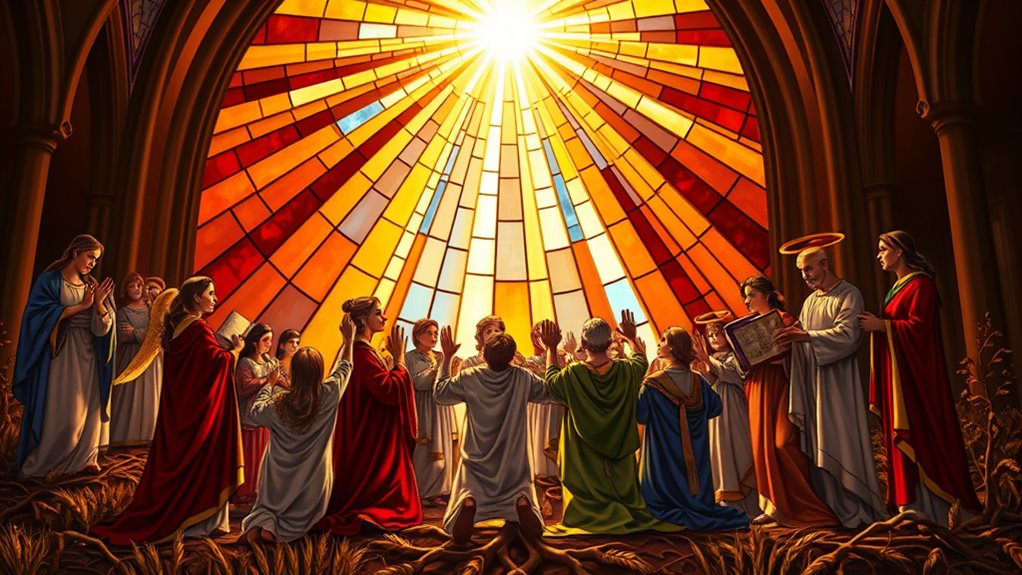
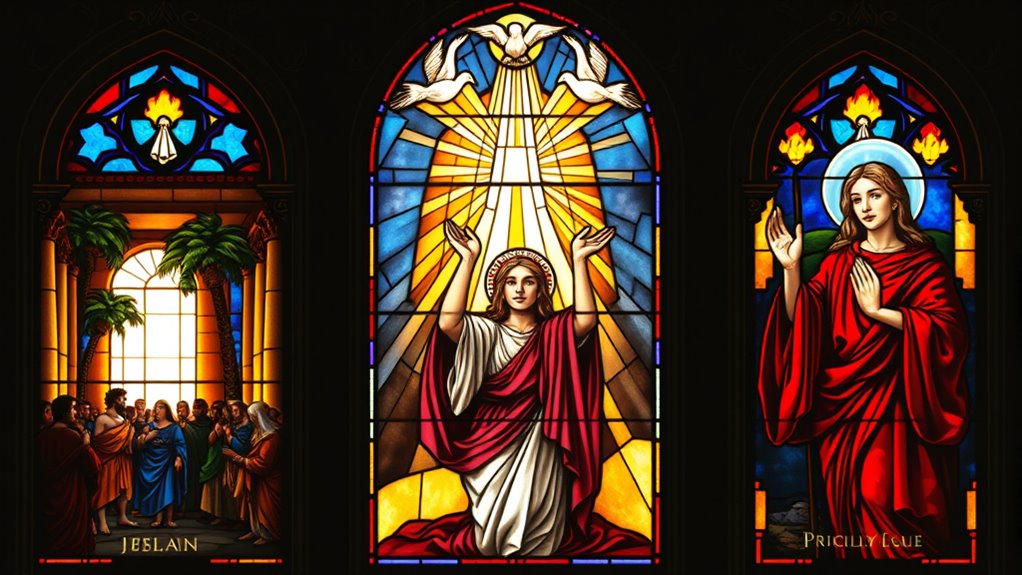
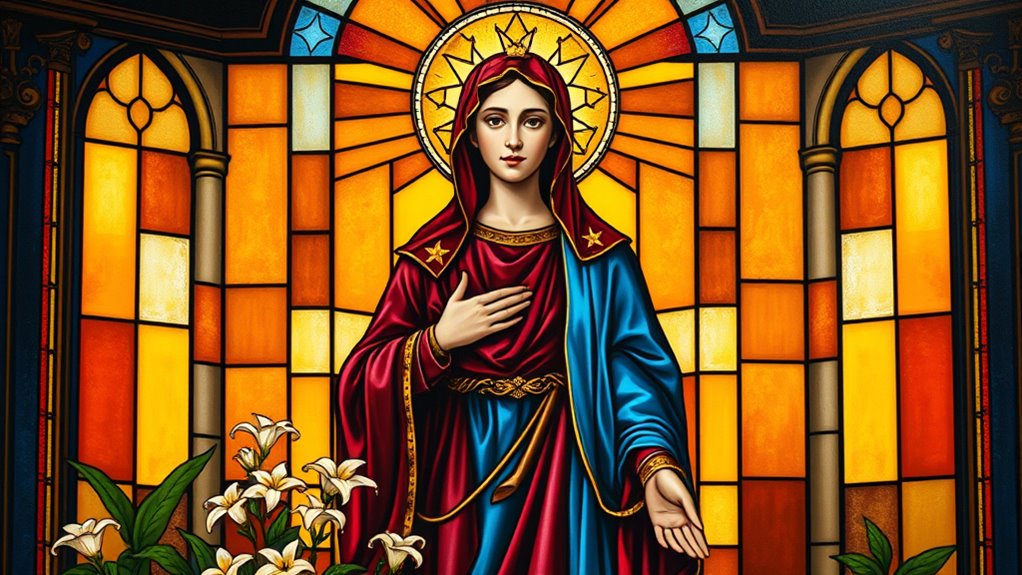
Mary’s garments in traditional Christian art function as deliberate theological codes rather than mere decoration. Blue robes signify divine grace and her role as heavenly queen, while red indicates her humanity, Jewish heritage, and suffering. Gold stars confirm her perpetual virginity—before, during, and after Christ’s birth. The three stars reference her immaculateness at all life stages, while additional symbols like floral patterns represent her purity as an enclosed garden. These visual elements combine to communicate complex doctrinal messages about Mary’s unique mission in salvation history, with each color and detail revealing deeper layers of meaning.
When believers gaze upon images of the Virgin Mary, they often see a woman draped in familiar blue and red robes, but few recognize that these garments carry deliberate symbolic messages developed over centuries of Christian artistic tradition. Each color choice, ornamental detail, and accessory serves as a visual code communicating theological concepts about Mary’s identity and mission.
Mary’s iconic blue and red robes function as deliberate theological codes rather than mere artistic convention.
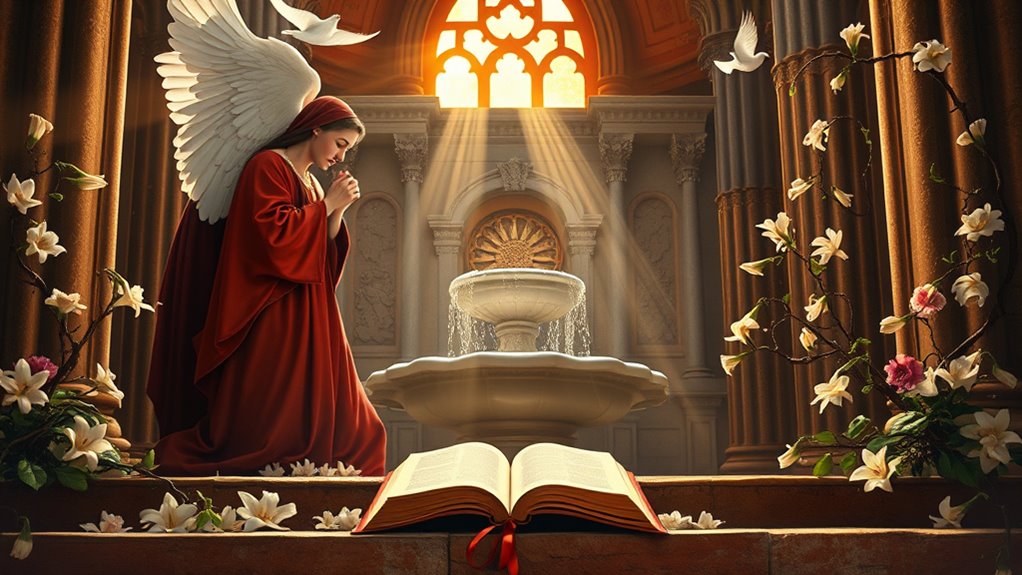
The red maphorion worn in many depictions represents multiple layers of meaning. Renaissance painters selected this color specifically for influential Jewish women, linking Mary to her heritage. In Byzantine iconography, the dark red gown denotes empress status and queenship. The hue simultaneously symbolizes her humanity, the blood of life, and her suffering as mother of the crucified Christ while affirming her role as Queen of Heaven.
Blue garments carry equally significant messages. The blue tunic represents both purity and divine grace, indicating the divinity Mary carried within her womb. This heavenly association appears across cultures, from the blue-mantled Madonna of Guadalupe, where Aztecs recognized the color as signifying royalty, to the blue robe standard in the Walsingham depiction of heavenly queenship. Artists also used blue to contrast Mary’s fidelity against warnings about the spirit of lawlessness found in Scripture.
Gold details and stars provide additional coded information. The stars positioned on Mary’s shoulders and forehead declare her perpetual virginity before, during, and after Christ’s birth, a trinity of stars affirming immaculateness. The eight-point star on her forehead references her title as Star of the Sea, while configurations of multiple stars connect to Revelation’s woman crowned with twelve stars, suggesting the immaculate conception. Gold details also indicate eternal light, communicating divine presence and timelessness.
White elements reinforce themes of purity. The white gown, veil, and rosary in Lourdes depictions recall sinlessness and purity of heart. The three-lily scepter appearing in some images again represents virginity at all stages, while floral gowns indicate the enclosed garden pointing to her untouched state. At Fatima, Mary appeared in a white gown that further emphasized her purity and divine nature.
Specific apparitions add localized symbolism. Guadalupe’s black belt indicates pregnancy, while the rose-colored garment maps Mexico’s geographic location. The Perpetual Help icon features a cross on Mary’s forehead contemplating her Son’s Passion. These wardrobe choices reflect calculated political and theological statements rather than random artistic decisions.