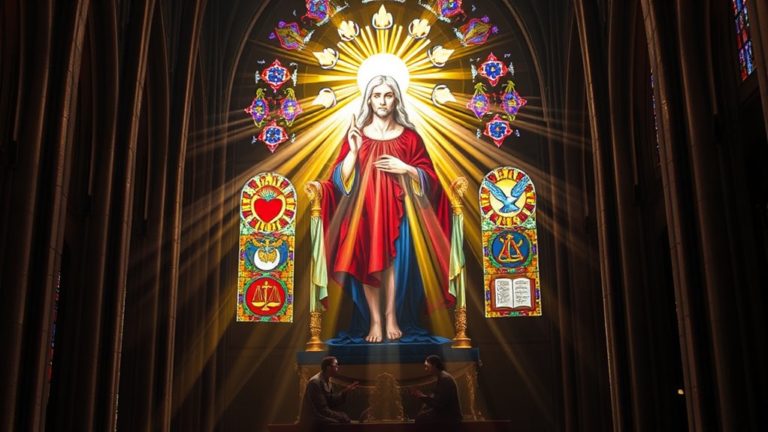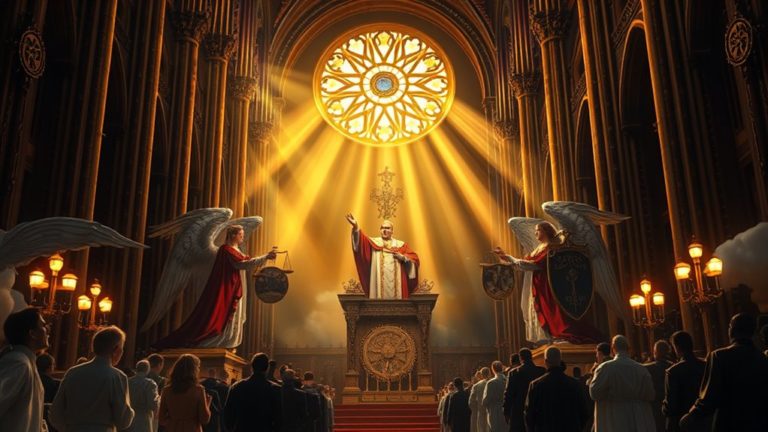


Melchizedek appears in Genesis 14 as king of Salem and priest of God Most High — a figure with no recorded genealogy, birth, or death. Psalm 110:4 later describes the Messiah as “a priest forever in the order of Melchizedek.” The book of Hebrews builds on this, presenting Jesus as the fulfillment of that ancient priest-king role, holding both royal and priestly authority through divine appointment rather than tribal descent. The full picture goes deeper still.
Who Was Melchizedek, Priest-King of Salem?
Among the most intriguing figures in the Hebrew Bible, Melchizedek appears only briefly yet leaves a significant impression.
Genesis 14:18–20 introduces him as king of Salem and priest of El Elyon, meaning God Most High. His name translates as “king of righteousness,” while Salem connects to peace, making him, in effect, a king of both righteousness and peace.
Melchizedek’s very name proclaims his identity: a king of righteousness reigning over a city whose name whispers peace.
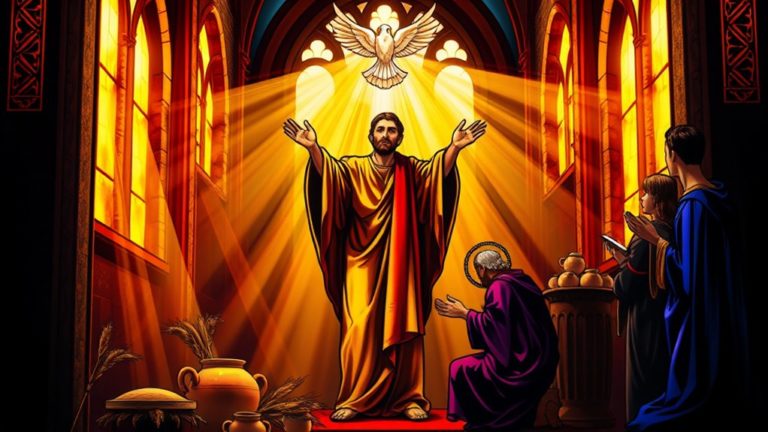
After Abram’s victory over rival kings, Melchizedek offers bread and wine, blesses Abram, and receives a tithe.
Scripture records no genealogy, birth, or death for him, which contributes to his enduring mystery and continued interpretive interest across Jewish and Christian traditions. Rabbinic tradition, preserved in sources such as Targum Jonathan and the Babylonian Talmud, identifies Melchizedek as Shem, son of Noah.
The letter to the Hebrews later draws on Melchizedek’s story to argue that Christ’s priesthood surpasses the Levitical order established through Aaron.
This brief episode has been read by Christians as foreshadowing Jesus’ victory over death and promise of eternal life.
How Jesus Fulfills the Melchizedek Priest-King Role
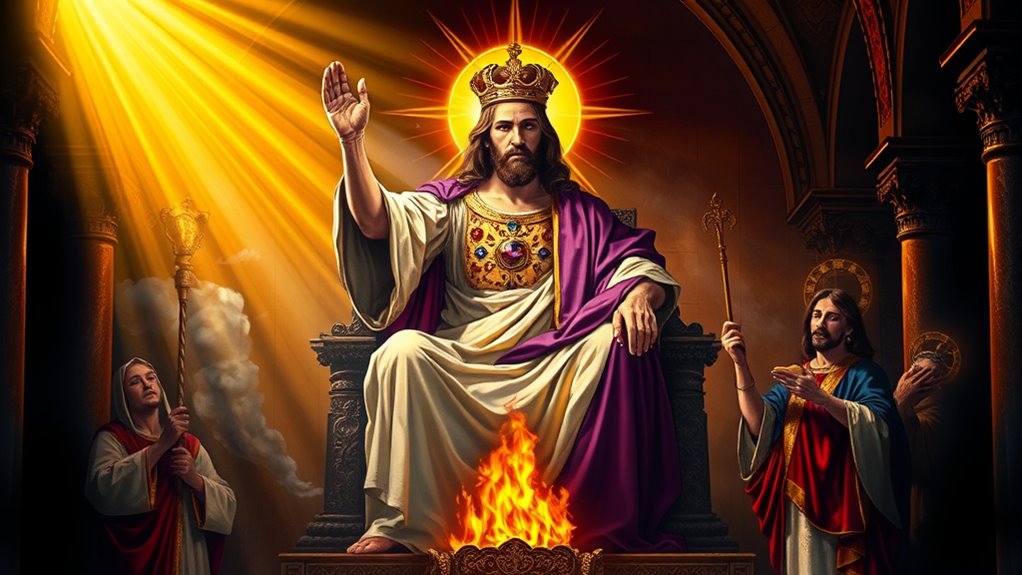
When Psalm 110:4 declares that the Messiah will be “a priest forever in the order of Melchizedek,” it places both royal and priestly authority in a single figure, a combination that the New Agreement applies directly to Jesus.
Hebrews describes Jesus as both Great High Priest and reigning King, not as separate roles but as one unified office.
His priesthood rests on divine appointment, not Levitical ancestry, grounded in God’s oath rather than tribal succession. Melchizedek predates the Aaronic line entirely, appearing in Genesis 14 before the Mosaic Law and its priestly arrangements were ever established.
Melchizedek himself ruled Salem, identified elsewhere as Jerusalem, serving as a royal priest who blessed Abraham and received his tithe long before any formal priestly system existed in Israel.
Because Jesus holds an indestructible life, his priesthood continues without interruption, securing permanent mediation between God and humanity through a single, everlasting priest-king. A key New Testament theme links this priesthood with identification with Christ, emphasizing both atonement and communal incorporation.
Why Jesus’ Eternal Priesthood Replaces the Levitical Order
The Levitical priesthood was built around a fundamental limitation: every priest eventually died. Hebrews 7:23 notes that death repeatedly prevented each priest from continuing his service, requiring constant succession.
Jesus, however, holds his priesthood permanently because, as Hebrews explains, he possesses an indestructible life. His resurrection guarantees that death no longer interrupts his priestly work.
Additionally, his priesthood rests on divine appointment through Psalm 110:4, not hereditary descent from Aaron.
This shift signals a covenantal change, replacing the temporary Mosaic system with something lasting.
Because Jesus always lives, he always intercedes, offering continuous mediation that the Levitical order could never provide. Hebrews 7:25 makes clear that this ongoing intercession secures salvation forever for all who draw near to God through him.
Hebrews presents this new covenant as superior to the old, warning that returning to the Levitical system means abandoning Jesus for a lesser covenant.
A clear contrast is drawn between the two systems in the New Testament, where authors explain the permanence of Christ’s ministry in light of the priesthood of Melchizedek.