
On January 12, President Trump held a private White House meeting with Archbishop Paul S. Coakley of Oklahoma City, alongside Vice President JD Vance and Secretary of State Marco Rubio, to address mounting immigration tensions between the Catholic Church and the administration. The bishops had raised concerns that Trump’s policies could hinder pastoral support and charitable work, having previously issued a special message opposing indiscriminate mass deportation. Two days later, the Department of Homeland Security announced rule changes easing religious worker visa renewals, which the archbishop praised while continuing to advocate for broader congressional action.
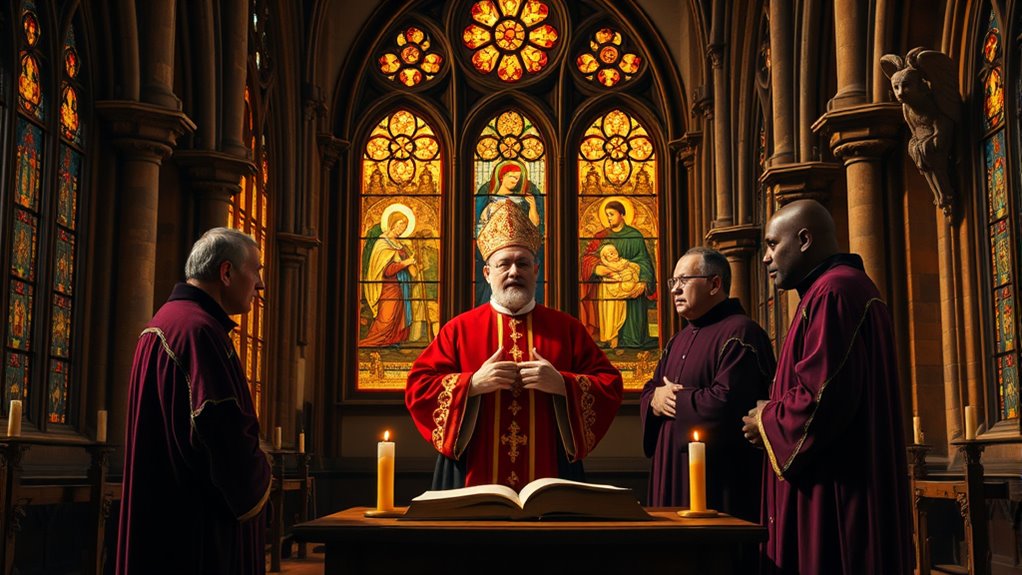
In a private White House meeting on January 12, President Trump and Archbishop Paul S. Coakley discussed areas of mutual concern, according to a USCCB spokesperson, as tensions over immigration enforcement continued to rise in early 2026. The session, closed to the press but listed on the official schedule, also included Vice President JD Vance and other officials such as Secretary of State Marco Rubio. Coakley expressed gratitude for the engagement and anticipated ongoing dialogue.
Archbishop Coakley met privately with President Trump, Vice President Vance, and Secretary Rubio to discuss mutual concerns amid rising immigration tensions.
The meeting occurred against a backdrop of escalating immigration tensions that had built from the previous year into the first weeks of 2026. Bishops acknowledged that Trump administration policies posed practical and religious liberty challenges, potentially hindering the Church’s pastoral support and charitable endeavors. Coakley, elected USCCB president in November 2025, had predicted immigration would be a discussion topic in a December 21 CBS interview.
Two days after the White House meeting, the Department of Homeland Security issued an interim final rule on January 14 that reduced wait times for religious worker visas. The change eliminated a one-year out-of-country waiting period for R-1 visa renewals, minimizing disruptions to religious ministries. The USCCB had advocated for years to address backlogs in the EB-4 immigrant visa category, which had reached decades for some applicants.
Coakley and Bishop Brendan J. Cahill, who chairs the USCCB Committee on Migration, issued a joint statement praising the administration’s action. They described it as a tremendously grateful step for foreign-born religious workers and reiterated calls for Congress to enact the bipartisan Religious Workforce Protection Act. The statement highlighted the value of the Religious Worker Visa Program for essential services while noting the rule provided significant relief pending green cards or permanent residency. R-1 nonimmigrant religious worker visas are initially granted for 30 months with one renewal allowed, totaling five years.
The USCCB had approved a special pastoral message on November 12 opposing indiscriminate mass deportation, the first such statement since a 2013 contraceptive mandate objection. The bishops’ special message also prayed for an end to dehumanizing rhetoric and violence directed at immigrants or law enforcement. Pope Leo XIV emphasized that immigrants should be treated with dignity and encouraged adherence to the bishops’ message, suggesting opportunities remained for frank dialogue on immigration issues. The Church’s historical teachings on dignity of migrants continue to inform its public advocacy and pastoral outreach.