





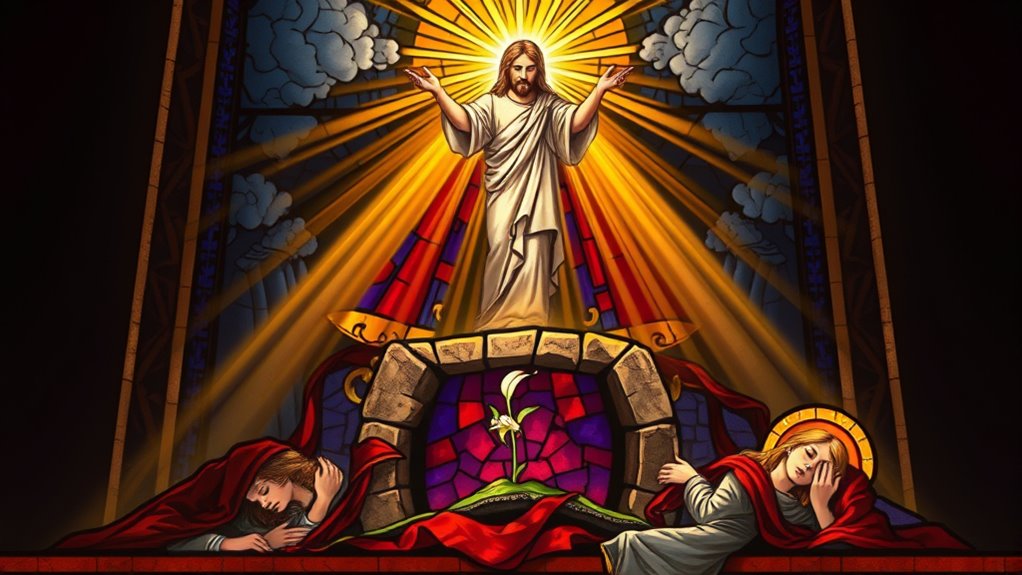
Resilience helps people adapt to loss, but researchers and theologians argue it cannot restore what grief has taken. UConn researchers describe recovery as integrating difficult experiences into a life story, not moving past them. Pauline Boss adds that closure is largely a myth. Resurrection hope, grounded in 1 Thessalonians 4:13, goes further by reframing death as passage rather than termination. Those who explore this distinction often find that grief, while ongoing, becomes anchored in something larger than endurance alone.
Why Resilience Falls Short After Real Loss
After significant loss, the word “resilience” tends to appear quickly, often offered as both a description and a prescription. But researchers suggest the concept may be too narrow. ReachLink describes resilience as adapting to loss while honoring pain, not simply returning to a previous state. Psychologist Pauline Boss, cited in Psychology Today, argues that closure is largely a myth. UConn researchers describe the process as integrating difficult experiences into a life story rather than moving past them. For major losses, especially sudden or violent ones, PMC notes that symptoms run deeper than standard resilience frameworks typically acknowledge. Grief produces measurable physical brain changes, including a hyperactive amygdala and reduced prefrontal cortex activity, which impair planning, decision-making, and basic functioning in ways that outlast what resilience-focused approaches are typically designed to address. Boss also observed that grief frequently resurfaces on holidays and anniversaries, demonstrating that loss leaves a lasting mark that continues to reshape how people think and live long after the initial event has passed. Pastoral resources emphasize that spiritual practices and communal rituals can provide sustained meaning beyond individual coping.
Resurrection Means Bouncing Forward, Not Back
Within the conversation about grief and recovery, a distinction is beginning to emerge between two different ideas: bouncing back and bouncing forward. Bouncing back implies returning to a prior state, as though loss were simply a detour. Bouncing forward suggests something different — adaptation, learning, and rebuilding with greater intention.
Resurrection language aligns more closely with the second idea. It honors what existed before without insisting that recovery means restoration. Lessons remain. Scars remain. What changes is the direction.
Researchers increasingly describe resilience not as fixed toughness but as dynamic adaptation, a process that moves through disruption rather than simply away from it. The Gospel account of Mary failing to recognize the risen Jesus illustrates this vividly — he had been raised into a connected-yet-new life, not simply returned to the old one.
In a world defined by volatility, uncertainty, complexity, and ambiguity, the ability to bounce forward intentionally has become less a personal virtue and more a necessary orientation toward survival and growth. Drawing on biblical themes that find meaning and hope amid suffering, this orientation recognizes God’s presence with the afflicted and the promise of future restoration.
What Scripture Says About Resurrection
Scripture’s testimony on resurrection spans both Covenants, building a case that extends well beyond a single moment or text.
Isaiah 26:19 speaks of dead bodies living again. Daniel 12:2 foretells many awakening to everlasting life or shame. Job 14:13–15 expresses confidence that God will remember the dead.
The New Testament presents Jesus’ resurrection as fulfilling these earlier promises. First Corinthians 15:3–4 states Christ was raised “according to the testament.” Luke 24:39 records Jesus affirming bodily resurrection directly. Revelation 1:5 calls him “the firstborn from the dead,” signaling not only personal victory but the beginning of something larger.
Jesus himself pointed to the sign of Jonah as a foreshadowing of his death and resurrection, comparing his three days in the earth to Jonah’s three days in the fish.
Scripture also affirms that the resurrection will include both the righteous and unrighteous, restoring individuals whose lives ended before they had opportunity to learn and follow God’s standards. Many passages further connect resurrection with the promise of eternal life through Christ.
How Resurrection Reframes Grief and Suffering
What Scripture records about resurrection is not limited to doctrine about the afterlife; it also shapes how suffering and grief are understood in the present.
Resurrection theology reframes loss in three ways:
Resurrection theology does not erase loss — it reframes it, giving grief a different shape and direction.
- Death becomes a passage, not a termination, making grief temporary rather than final.
- Suffering gains meaning because God demonstrated through Christ’s resurrection that even the worst events can be redeemed.
- Mourning continues honestly, but within a larger frame of expected reunion and restoration.
Paul’s words in 1 Thessalonians 4:14 describe the dead as sleeping, awaiting awakening — a quiet but significant reorientation of how loss is carried. Resurrection defeats death, as proclaimed in 1 Corinthians 15, where Paul declares that death has been swallowed up in victory through the Lord Jesus Christ.
The communion of saints affirms that unity between living and deceased continues beyond death, transforming grief from a severing of relationship into a change in its form. This perspective is grounded in the biblical promise of eternal life, which offers both comfort and hope.
How to Grieve With Resurrection Hope, Not Just Endure
For Christians, grieving with resurrection hope means something different from simply pushing through loss with determination. Where resilience focuses on personal endurance, resurrection hope focuses on a promise grounded in Christ’s defeat of death.
First Thessalonians 4:13 draws a clear distinction: believers mourn, but not as those without hope. Jesus wept at Lazarus’ tomb while knowing resurrection was coming, demonstrating that grief and hope coexist rather than compete.
Psalm 56:8 reinforces this, describing God as one who keeps count of every tear. Hope does not demand immediate strength; it offers steady endurance anchored in future restoration. Paul’s language of death as sleep underscores that for the believer, the grave is not a final destination but a temporary resting place before resurrection morning.
Uncertainty about doctrine does not disqualify a person from this hope; even those who struggle to verbally affirm belief can choose to act on hope as a deliberate step toward faith. Scripture teaches that Christ suffered the pains of all living creatures, meaning resurrection is not an abstract promise but one rooted in intimate acquaintance with human grief and mortality. Bringing sorrow to God in prayer and participating in Christian community can be a practical way to receive comfort and support.