



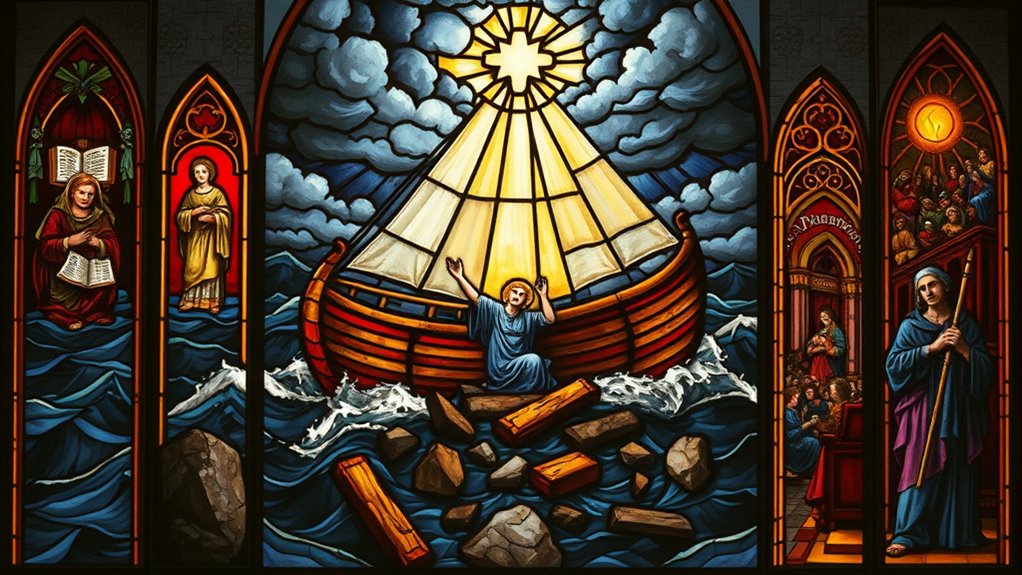
Spiritual shipwreck, as Paul describes in 1 Timothy 1:19, signals a collapse of faith rather than a temporary stumble. Ingratitude often functions as the quiet starting point, with Romans 1:21 connecting failure to give thanks with darkened thinking and moral drift. Left unchecked, ingratitude can shift into self-worship and idolatry. The damage is serious but not without hope, and understanding how this collapse unfolds reveals practical steps to guard against it.
What Does Spiritual Shipwreck Actually Look Like?
The image of a shipwreck in Scripture is deliberate and precise. Paul uses it in 1 Timothy 1:19 to describe a faith life ending in ruin, not a temporary stumble.
Paul’s use of shipwreck in 1 Timothy 1:19 is no accident — it signals ruin, not recovery.
The picture is a vessel shattered on rocks, suggesting collapse that followed hidden drift.
Visible signs include abandonment of the Christian path, loss of hunger for God, growing apathy, and reduced spiritual resilience.
Entanglement in worldly patterns previously resisted often follows.
The warning targets spiritual destruction in witness, stability, and service.
Shipwreck, in Paul’s framing, does not always mean final death, but it does mean serious, measurable loss. Paul himself survived three literal shipwrecks, confirming that shipwreck means suffering, not necessarily a final end.
Scripture identifies multiple causes of such ruin, including the love of the world seen in Demas, the choking power of riches and pleasures described in Luke 8:14, and the deceitfulness of sin warned against in Hebrews 3:12–14. The danger often begins with failing to practice humble discernment toward ourselves and others.
Why Ingratitude Is More Than a Bad Attitude
Ingratitude is often dismissed as a minor social flaw, but biblical and philosophical sources place it in a more serious category.
Romans 1:21 connects refusing to give thanks with futile thinking and darkened hearts.
Philosophers frame it as a break in moral reciprocity.
Scripture treats it as a rejection of God’s goodness, not a simple lapse in manners.
- Ingratitude signals entitlement, implying one deserves every benefit received
- It weakens trust and damages relationships over time
- Left unchecked, it functions as a gateway toward broader moral and spiritual decline
John Piper warns that failing to abound with thanksgiving makes believers fair game for the devil, who then deceives his way into the city of the soul.
Idolatry is rooted in the unwillingness to be thankful to God, making ingratitude not merely a personal failing but the very soil in which false worship grows.
This pattern is evident in Israel’s murmuring in the wilderness, which the Bible records as a warning about how persistent complaint erodes faith and community murmuring in the wilderness.
What Idolatry Has to Do With an Ungrateful Heart
Once ingratitude takes hold as a pattern rather than an occasional lapse, it tends to point toward something deeper than forgetfulness.
Strategic Renewal identifies it as evidence of idolatry, arguing that assuming one deserves everything received places the self at the center of life, where God belongs.
Truth and Tidings connects this to “the worship of self,” noting that unwillingness to thank God quietly elevates something else to the place of authority.
Paul’s diagnosis in Romans traces the same movement: failing to honor and thank God eventually leads toward moral disorder and the worship of created things.
The heart that stops giving thanks often stops trusting God altogether, and Scripture warns that the heart is deceitful, capable of convincing a person they need nothing beyond what they can secure for themselves.
This tendency also ignores the biblical teaching of sowing and reaping, which links actions and consequences within God’s just and merciful governance.
How Ingratitude Quietly Causes Spiritual Shipwreck
A thankless heart rarely announces its intentions. According to Romans 1, spiritual collapse begins not with open rebellion but with quiet refusal—failing to honor God and give thanks. Churches and pastors are called to recognize and respond to hidden spiritual decline with both truth and compassion, especially when members struggle with suffering and despair.
Spiritual collapse rarely announces itself—it begins with a quiet refusal to honor God and give thanks.
That refusal darkens thinking gradually, long before visible ruin appears. Ingratitude functions less like a feeling and more like a slow theological drift, reshaping what a person trusts and values.
Three patterns mark this quiet unraveling:
- Self-exaltation replaces dependence, treating personal worthiness as the measure of blessing
- Discernment weakens as thanklessness numbs the heart over time
- Loyalty shifts toward lesser things—comfort, approval, or pleasure
Romans 1:28 warns that those who refuse to acknowledge God are ultimately given over to a depraved mind, a sobering endpoint to what began as simple ingratitude.
Five Habits That Keep Your Faith From Falling Apart
Spiritual collapse rarely happens without warning, and most of the habits that prevent it are ordinary rather than dramatic.
Daily Scripture reading keeps belief grounded in actual text rather than feeling. Prayer is a primary way to engage with God’s revelation and respond to it through communication with God.
Continual prayer, practiced in small pauses throughout the day, maintains dependence on God rather than self-reliance.
Regular fellowship with other believers provides accountability that private faith alone cannot sustain. When gathering in person is not possible, online meetings serve as a meaningful way to encourage others and remain someone else’s lifeline through isolation.
Immediate obedience closes the gap between knowing and doing.
Guarding the heart through doctrinal testing prevents slow drift. Testing podcasts, songs, and books against the clear teaching of Scripture keeps sound doctrine protected.
Together, these five habits function less like emergency measures and more like quiet maintenance that keeps faith structurally sound over time.