


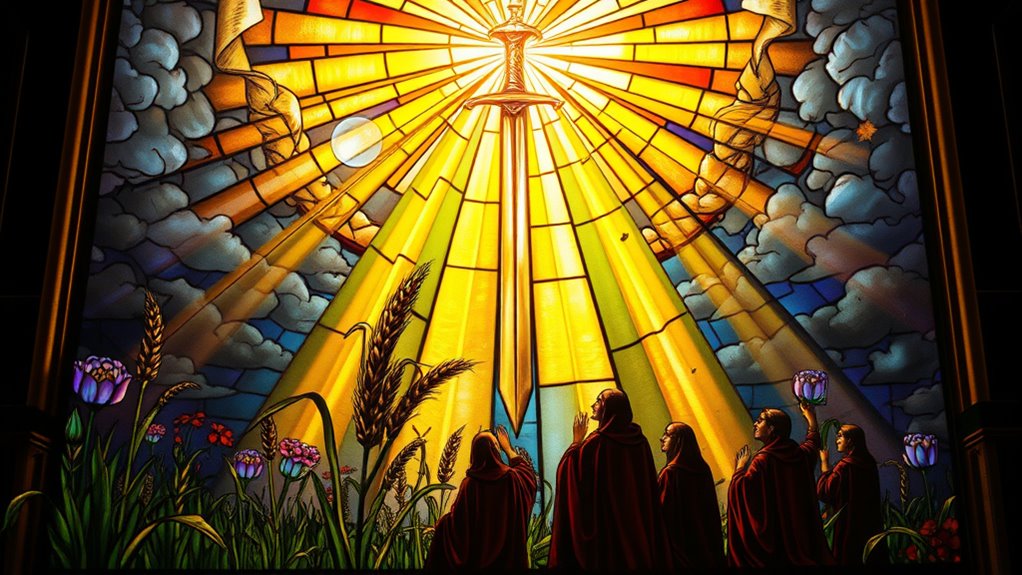
The Bible describes the word of God as living and imperishable, meaning it carries genuine life from its divine source and produces that same undying quality in those who receive it. Hebrews 4:12 calls it “living and active.” First Peter 1:23 identifies it as imperishable seed, directly linking regeneration to the word’s eternal nature. Isaiah 40:8 contrasts withered grass against a word that stands forever. The sections ahead trace exactly how that process unfolds.
What the Bible Means by the Living Word
When the Bible calls its own message “living,” it means something more precise than poetic language.
Hebrews 4:12 describes the word of God as “living and active,” distinguishing it from inert text or ordinary religious writing.
The term “living” signals genuine life, not mere existence on a page.
This quality is connected directly to God, who speaks through Scripture.
Because the source remains alive, the message carries ongoing presence and authority across generations.
The living Word is not simply a historical record.
It reflects divine self-disclosure, preserved in written form yet continuing to communicate with those who encounter it.
Isaiah 55:11 affirms that God’s Word accomplishes His purposes without returning to Him empty.
First Peter 1:23 teaches that believers are born again through the living and enduring Word of God, which is imperishable.
The Bible also presents itself as authoritative teaching intended for instruction, correction, and spiritual formation.
How John and 1 Peter Define the Word of Life
Both John and Peter use the phrase “word of life” or “living word,” yet each writer approaches the concept from a distinct angle.
John focuses on direct encounter:
- The Word of life is the incarnate Jesus, heard and touched by eyewitnesses
- Fellowship with the Father and Son results from receiving this testimony
- Eternal life was made visible through Christ’s appearance
Peter emphasizes endurance:
- The living word produces new birth through imperishable seed
- That word is identified explicitly with the preached gospel
Together, both writers present the Word as personal, proclaimed, and genuinely life-giving. Prayer is also presented in Scripture as communication with God, encompassing worship, confession, thanksgiving, and intercession.
Why the Word of God Produces Imperishable Life
The reason the word of God produces imperishable life lies in the nature of the word itself.
Isaiah 40:8 describes it as standing forever, unlike grass or flowers that fade.
Because the source is permanent, the life it generates shares that quality.
First Peter 1:23 reinforces this by calling the word an imperishable seed, meaning life reflects the nature of its origin.
Hebrews 4:12 adds that the word remains alive and active, continuing to work inwardly rather than sitting idle.
Isaiah 55:11 confirms it accomplishes God’s purposes reliably, making imperishable life a fitting outcome of speech that never fails.
Romans 10:17 shows that faith springs up when the word is heard and believed, connecting the reception of the word directly to the new life it produces.
First Corinthians 15:53 declares that the perishable must clothe itself with the imperishable, confirming that God’s word points toward a transformation no human effort can achieve on its own.
Hope in Scripture is shown to be a confident expectation rooted in God’s character rather than mere wishful thinking.
How New Birth Comes Through the Word of God
Scripture identifies the Word of God as the instrument through which new birth occurs. James 1:18 states that God “begat” believers “with the word of truth,” while 1 Peter 1:23 connects regeneration directly to divine seed. Several principles clarify this process:
- God acts first, choosing to give new birth “of his own will”
- The Word serves as the external means, not ritual or ancestry
- Faith arrives through hearing, as Romans 10:17 confirms
- Gospel proclamation remains the ordinary channel God uses
New birth, consequently, flows from sovereign grace expressed through living truth. Believers are designated as a kind of firstfruits of God’s creatures, reflecting their place as the prized initial offering of a coming greater harvest. Across numerous translations, the phrase “word of truth” appears with variants such as “message of truth” and “true word,” yet each rendering preserves the same instrument by which God brings new life. This assurance finds its ultimate fulfillment in the promise of eternal life through Christ’s victory over death.
Why Life From the Living Word Never Decays
Having established that new birth comes through the Word of God, a natural question follows: why does the life produced by that Word not fade or wear out over time?
First Peter 1:23 identifies the Word as “living and abiding,” meaning it carries continuous vigor rather than temporary force.
Since the seed is imperishable, the life it generates shares that same quality.
The seed is imperishable, so the life it produces carries that same undying quality.
Scholars note that this life “cannot die” because its source never weakens.
Isaiah 40:8 reinforces this: grass withers, flowers fall, but the Word of the Lord remains forever, sustaining whatever life it has produced.
Hebrews 4:12 describes the Word as living and active, sharper than any two-edged sword, confirming that its power neither dulls nor diminishes across time.
Peter explicitly identifies this enduring Word as the good news preached to his recipients, connecting the imperishable seed directly to the gospel proclaimed to them.
This enduring life also aligns with the biblical call to steadfast faith that relies on God’s unchanging character and promises.