




The Bible does not forbid keeping pets but establishes humans as stewards over animals, with dominion granted in Genesis 1:26 and moral responsibility emphasized in Proverbs 12:10, which connects righteous character to regard for animal life. Nathan’s parable in 2 Samuel 12:3 describes a lamb treated as a companion, sleeping in its owner’s arms and sharing his food. Scripture mandates rest and fair treatment for animals in Deuteronomy 5:14 and 25:4, framing care as accountability rather than ritual command. Understanding the balance between affection for pets and obligations toward people made in God’s image requires examining the full scope of biblical teaching on stewardship.
Key Takeaways
- The Bible does not explicitly forbid or command keeping pets, but describes companionship with animals like Nathan’s lamb parable.
- Genesis 1:26 grants humans dominion over animals as stewards, authorizing their use for food, clothing, and work responsibly.
- Proverbs 12:10 links righteous character to proper animal care, while Deuteronomy mandates rest and fair treatment for animals.
- Luke 12:7 emphasizes humans’ greater value, warning against excessive pet spending that conflicts with obligations toward people.
- Biblical principles support pet ownership through stewardship and compassion, balanced with maintaining proper human-animal distinctions and priorities.
What Does the Bible Say About Owning and Caring for Pets?
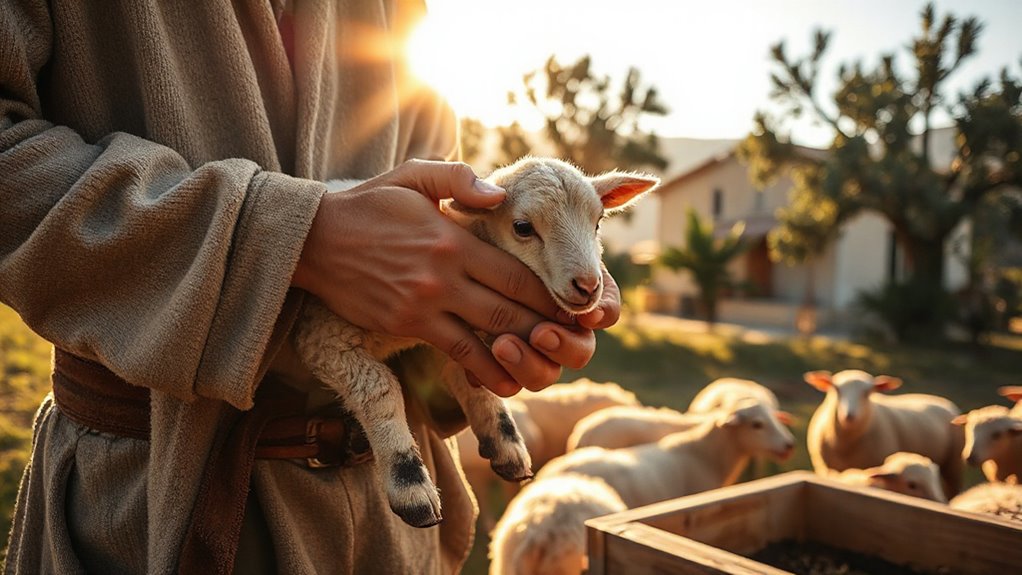
The Bible does not provide explicit instructions about keeping pets as household companions, leaving the practice largely unaddressed in direct terms.
However, one notable example appears in Nathan’s parable, where a poor man owned a lamb that grew up with his children, shared his food, and slept in his arms (2 Samuel 12:3). This passage suggests companionship with animals was an accepted practice.
Biblical principles emphasize stewardship and responsible care. Proverbs 12:10 states that righteous individuals have regard for the life of their animals, indicating that treatment of creatures reflects personal character.
Additional passages establish that animals deserve rest (Deuteronomy 5:14), fair portions of harvest (Deuteronomy 25:4), and protection from cruelty, framing pet ownership through moral accountability rather than explicit commandment.
Scholars often place many biblical events and writings in the final years of the first century BC, which helps contextualize attitudes toward animals in ancient Near Eastern society.
Why God Designed Humans to Have Dominion Over Animals

From the earliest chapters of Scripture, God establishes humanity’s unique role in creation through the concept of dominion over animals. Genesis 1:26 records God’s intention to create mankind in His image with authority over fish, birds, cattle, and every creeping thing. This dominion represents delegated sovereignty, positioning humans as stewards who reflect God’s wise management of creation.
Psalm 8:4-8 reinforces this arrangement, declaring that God placed all things under human feet, including sheep, oxen, birds, and sea creatures. The purpose extends beyond mere control to responsible care and just use of animals to their fullest potential.
Scripture indicates humanity’s greater value through intelligence that enables moral judgment and communication with God—capacities animals lack—while authorizing animal use for food, clothing, and work. Archaeological and textual evidence supports the Bible’s historical context and longstanding teachings about humans’ role in creation, including the careful preservation of these texts over millennia for textual integrity.
When Pet Love Conflicts With Loving People Biblically

Understanding humanity’s God-given dominion over animals provides the foundation for examining how modern pet ownership sometimes disrupts biblical priorities in relationships.
Conflict emerges when pets consume resources—time, money, emotional energy—that Scripture directs toward people created in God’s image. Luke 12:7 affirms humans possess greater value than animals, establishing a hierarchy of care. When pet affection overshadows concern for neighbors, family members, or those in need, biblical priorities invert.
Proverbs 12:10 commends righteous care for animals, yet this care must remain proportional to their lesser status.
The challenge surfaces when emotional attachment to pets eclipses responsibility toward image-bearers. Proper balance prevents fascination with animals from becoming elevation above humans, maintaining the distinction Genesis 1:26-28 establishes while still honoring God’s design for interspecies relationships.
Catholics, for example, include additional biblical books like the deuterocanonical books which reflect the Septuagint tradition and inform broader theological perspectives.