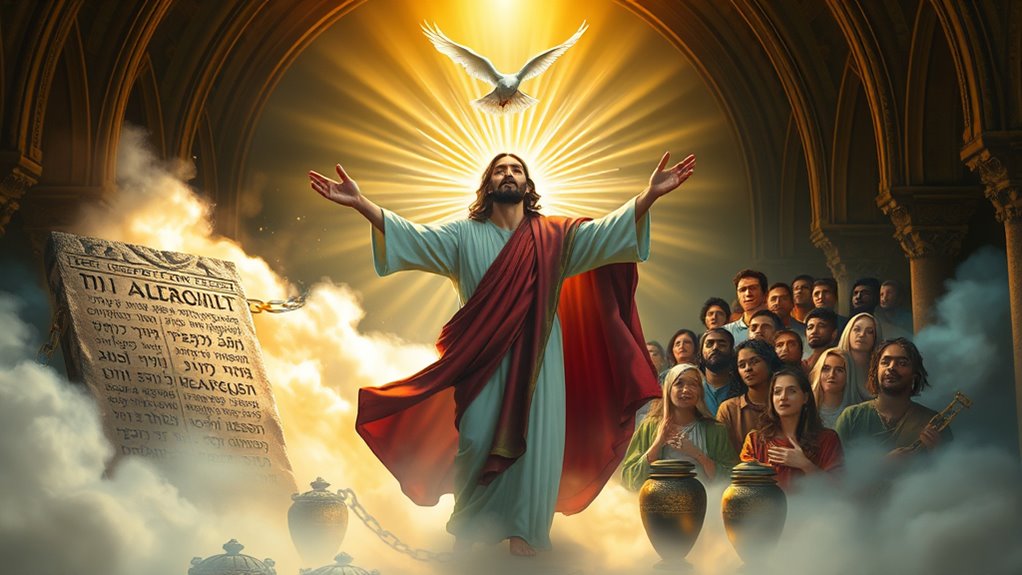

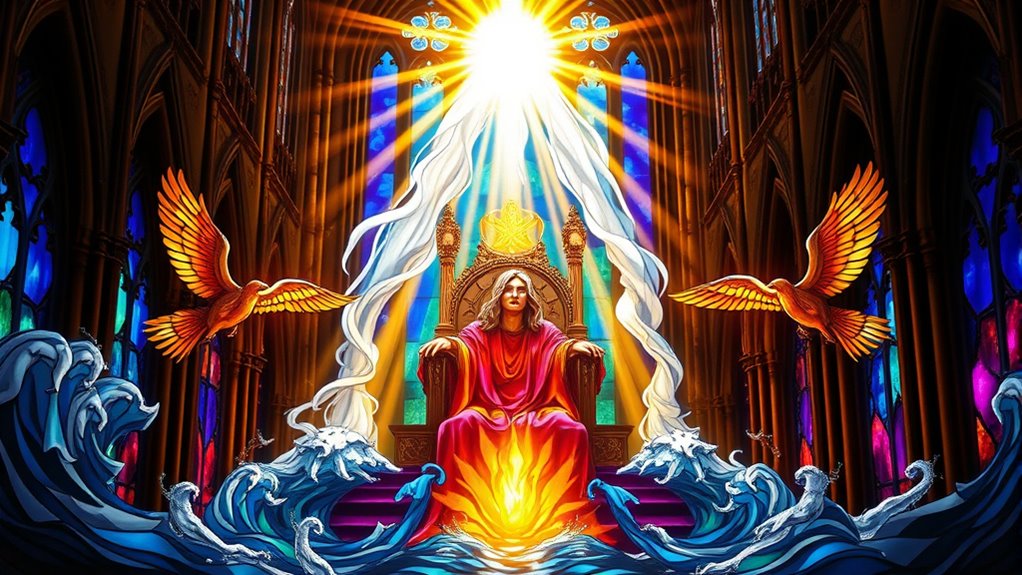
Biblical descriptions of God’s appearance use symbolic imagery rather than literal physical features. Revelation 1:14-16 depicts white hair representing wisdom, fiery eyes symbolizing divine insight, and feet of burnished bronze indicating strength. Daniel 7:9-10 describes the “Ancient of Days” with similar attributes of fire and splendor. These metaphorical portrayals emphasize God’s holiness, transcendence, and majesty rather than actual appearance, since Scripture teaches God is fundamentally spirit and invisible. Further exploration reveals deeper theological understanding.

Throughout history, people have wondered about the physical appearance of God, yet biblical texts suggest this question touches on profound mysteries that transcend human understanding. A significant scholarly view notes that the scriptures themselves emerged from multiple authors and communities over centuries. The scriptures present a complex picture that balances divine visibility with ultimate transcendence, offering both vivid descriptions and clear limitations on what humans can perceive.
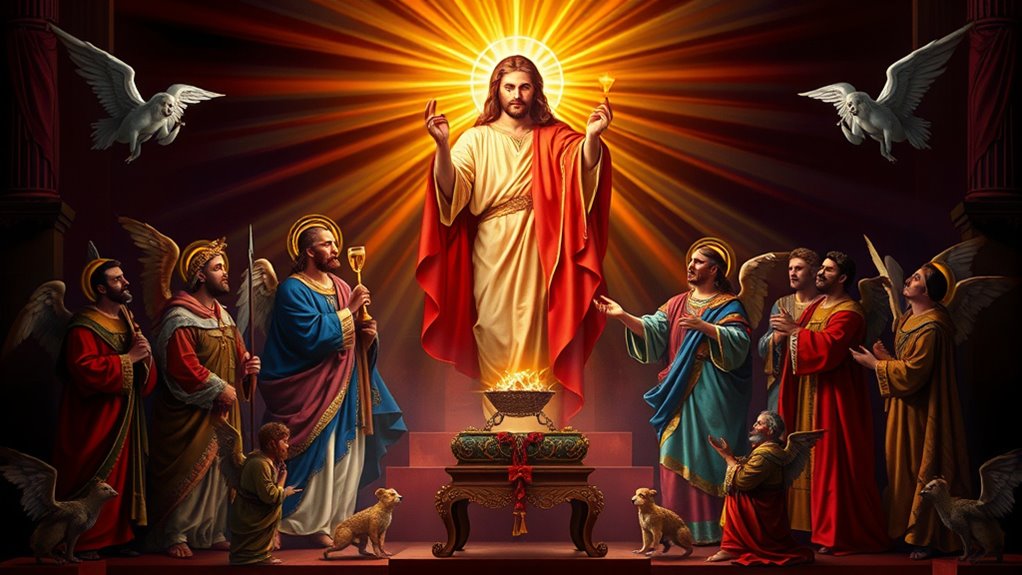
Biblical accounts describe God using striking symbolic imagery that emphasizes divine attributes rather than literal physical features. In Revelation 1:14-16, God appears with hair white like wool or snow, eyes like flames of fire, feet like burnished bronze refined in a furnace, and a voice like rushing waters. Daniel 7:9-10 depicts the “Ancient of Days” with white hair like lamb’s wool and fiery splendor, while Ezekiel 1:26-28 describes a sapphire-like throne surrounded by elements of fire.
These descriptions function as symbolic teachings about God’s character rather than physical portraits. White hair represents purity, wisdom, and eternal existence, while eyes like fire symbolize divine insight, judgment, and holiness. Feet of burnished bronze indicate strength and unwavering stability, and the voice like many waters conveys powerful authority and overwhelming majesty.
The theological understanding emphasizes that God is spirit and fundamentally invisible, as stated in John 4:24 and 1 Timothy 1:17. The Bible uses human characteristics to make God relatable and understandable to believers through anthropomorphic descriptions. Exodus 33:20 declares that no one can see God’s essence fully and live. The visible manifestations, called theophanies, show God in forms understandable to human senses without revealing His complete essence. Moses only saw God’s “backside,” a metaphor indicating that divine glory exceeds direct human perception. Old Testament passages describe God as having supersized human features including muscular legs, bulging biceps, and other corporeal characteristics that emphasize divine power and majesty.
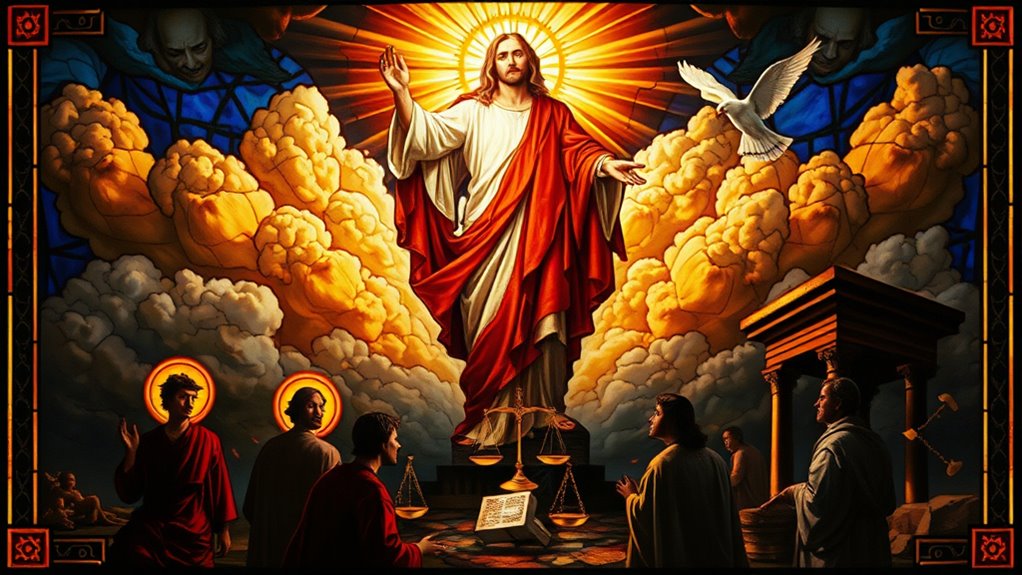
Jesus Christ provides the clearest accessible image of God’s nature. Colossians 1:15-19 calls Him “the image of the invisible God,” revealing divine character through His incarnation. Through Jesus, people can understand God’s love, mercy, and justice in tangible, relatable terms.
Deuteronomy 4:15-19 warns against creating physical images of God, reinforcing His invisible nature. The biblical descriptions ultimately communicate divine holiness and transcendence that far surpass normal human comprehension, inviting reverence rather than literal visualization.
Frequently Asked Questions
Why Don’t We Have Any Actual Photographs or Drawings of God?
No actual photographs or drawings of God exist because major religious traditions teach that God is incorporeal and transcends physical form.
The Second Commandment prohibits creating graven images of the divine, while biblical texts emphasize God’s invisible nature.
Early religious art used symbols like light or doves instead of literal depictions.
Photography requires material subjects, making it impossible to capture spiritual beings through conventional means.
Do Different Religions Describe God’s Appearance Differently?
Different religions describe God’s appearance in distinctly varied ways. Christianity emphasizes God’s spiritual, invisible nature, with Jesus as the visible representation.
Islam strictly maintains God’s transcendence beyond any physical form, prohibiting visual depictions entirely.
Hinduism presents the ultimate reality as formless but manifests through countless deities with symbolic physical attributes like multiple arms and distinctive iconography representing cosmic functions and divine powers.
Can Humans Ever See God’s True Form Without Dying?
According to biblical theology, humans cannot see God’s full divine essence and survive, as stated in Exodus 33:20 and 1 Timothy 6:16.
However, several Old Testament figures like Jacob and Gideon encountered God through theophanies—manifested forms that allowed them to “see” God without dying. These appearances, often identified as the preincarnate Christ, provided safe glimpses of divine presence while protecting human mortality.
Why Did God Create Humans in His Image if He’s Invisible?
God created humans in His image to serve as visible representatives of His invisible character and nature. According to Genesis 1:26-27, this image reflects spiritual, moral, and relational qualities rather than physical appearance.
Theologians explain that humans manifest God’s attributes like righteousness, love, and justice in tangible ways, enabling meaningful fellowship with Him and responsible stewardship over creation despite His invisibility.
Will We See What God Looks Like When We Get to Heaven?
Scripture suggests believers will see God in heaven, though this vision differs from ordinary physical sight. Matthew 5:8 promises “the pure in heart will see God,” while Revelation depicts Jesus clearly visible at God’s throne.
The Father’s appearance remains more mysterious, described through precious stones and dazzling light rather than physical features. This divine vision likely represents a transformed, spiritual perception suited to glorified bodies.