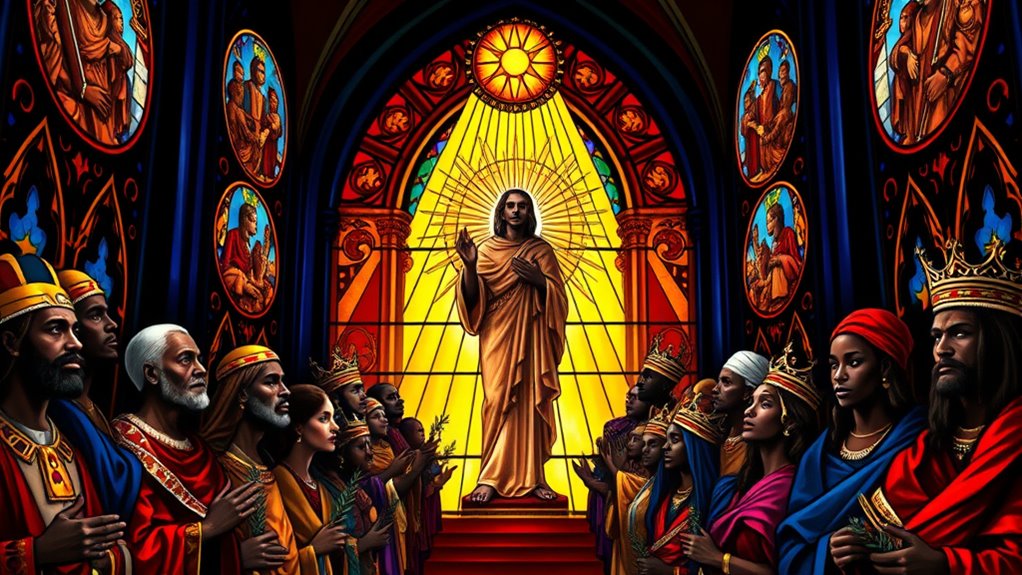
The Bible does not define race in modern terms, but it includes Black African figures throughout its pages and affirms the dignity of every ethnicity. Genesis 1:27 establishes all humanity as image-bearers of God. Texts once weaponized against Black people, such as the Curse of Ham in Genesis 9, have been widely debunked by contemporary scholars and formally rejected by major evangelical organizations. The full picture runs deeper than most expect.
Key Takeaways
- The Bible never uses race as a spiritual or moral category, and all humanity shares equal dignity as image-bearers of God (Genesis 1:27).
- Racist interpretations of Genesis 9’s “Curse of Ham” are historically discredited; the text curses Canaan, not Black Africans.
- Black and African figures appear throughout Scripture, including in Jesus’ own genealogy, demonstrating integral roles in biblical history.
- Notable Black figures like Ebed-Melech, Simon of Cyrene, and the Ethiopian eunuch contributed meaningfully to God’s redemptive story.
- Revelation 7:9–10 envisions every nation and ethnicity worshiping together, affirming that ethnic diversity is celebrated, not erased, in God’s kingdom.
Does the Bible Support Racism Against Black People?
Throughout history, certain passages from the Bible have been pulled out of context and reshaped into arguments for racial hierarchy, particularly against Black people. Two passages were most commonly distorted: the Curse of Ham in Genesis 9 and the Mark of Cain in Genesis 4.
In Genesis 9, Noah cursed Canaan, not Black Africans. The Mark of Cain was originally protective, not racial. Figures like Brigham Young and Abraham Kuyper reinterpreted these texts to support slavery and white superiority. However, every reputable evangelical scholar today considers such readings indefensible. The Billy Graham Evangelistic Association formally debunked the Ham myth in 2013.
Scripture itself, particularly Numbers 12, records God punishing racial prejudice directly. The Bible does not support racism; its misuse reflects human bias, not divine instruction. The vision in Revelation 7:9 depicts a multitude from every nation, tribe, people and language worshiping together, affirming that ethnic diversity is preserved and celebrated in God’s kingdom.
Matthew’s genealogy of Jesus includes five women, four of whom are of Hamitic or non-Israelite origin, demonstrating that African and Canaanite figures were integral to the very lineage through which the Messiah came.
Black Biblical Figures Who Shaped Redemption History
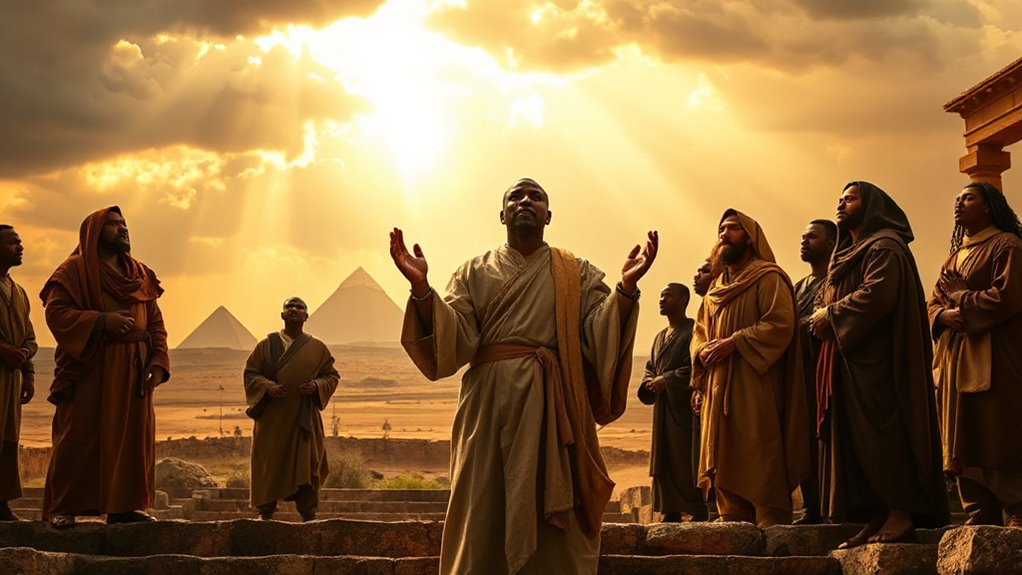
Many of history’s most consequential contributors to Christian redemption were Black men and women whose names rarely appear in standard retellings.
Many of history’s most overlooked architects of Christian faith were Black — and their impact cannot be overstated.
Ebed-Melech, a court official under Judah’s king, rescued the prophet Jeremiah from a muddy cistern and received God’s personal promise of protection.
Simon of Cyrene, from North Africa, carried Jesus’ cross on crucifixion day, appearing in three Gospel accounts.
Athanasius of Alexandria, born in 293 AD, defended Christ’s divinity through five exiles under four emperors.
Richard Allen, born into slavery in 1760, founded the African Methodist Episcopal Church after experiencing racism at a Philadelphia congregation.
Lott Carey, also born into slavery, led the first Baptist missionaries to Liberia.
Each figure shaped Christianity’s development in ways that remain historically significant. The Ethiopian eunuch, a court official of Candace, Queen of the Ethiopians, became the first recorded non-Jewish believer in Acts after Philip explained how Isaiah’s prophecy pointed to Jesus.
Lemuel Haynes, born in 1753 to an African father and a white mother, became the first ordained African American minister and later served as the first Black pastor of a white congregation.
What Scripture Actually Affirms About Black Identity

Beneath the familiar stories and genealogies of Scripture, a consistent portrait emerges: Black identity finds affirmation not in silence but in direct testimony.
Genesis 1:27 establishes that all humanity bears God’s image, granting inherent dignity to every ethnicity. Revelation 7:9–10 confirms that ethnic distinctions persist even in eternity, making colorblindness a sub-biblical posture rather than a spiritual virtue.
The Hebrew word for Adam describes a dark, dusky complexion, while *aphar*, the soil from which he was formed, means very black or dark brown.
Galatians 3:28 removes hierarchy among races without erasing difference.
Psalm 68:31 specifically names African nations within God’s redemptive story. Scripture, read carefully, offers Black readers not borrowed dignity but documented belonging. Ethiopia alone is mentioned 45 times in the Bible, making Africa’s presence in sacred text impossible to dismiss as incidental.
Moses’ wife Zipporah is explicitly identified as a Cushite in Numbers 12:1, with Cush representing an ancient African region, grounding Black presence in the Bible’s earliest narratives rather than its margins.