




The Bible does not mention cannabis by name or with clear botanical descriptions, despite the plant’s presence in the ancient Near East. Some interpreters argue the Hebrew term qanēh-bōśem in Exodus 30:23 refers to cannabis, but Hebrew and Greek scholars widely reject this claim based on linguistic evidence and lexicon analysis. Scripture does establish principles against intoxication and loss of self-control while permitting moderate consumption of substances like wine. These broader biblical teachings on sobriety, stewardship, and spiritual clarity guide believers considering cannabis, with further scriptural context offering additional insight into applying these timeless principles.
Key Takeaways
- The Bible does not explicitly mention cannabis by name or provide clear descriptions of the plant.
- Claims that “qanēh-bōśem” in Exodus 30:23 refers to cannabis are rejected by most Hebrew and Greek scholars.
- Biblical warnings against drunkenness and intoxication apply to substances that impair judgment or create dependency.
- Scripture emphasizes sobriety, self-control, and avoiding enslavement to any substance rather than prohibiting specific plants.
- Biblical principles of moderation, stewardship, and spiritual clarity should guide discernment regarding cannabis use.
Is Cannabis Mentioned Anywhere in Scripture?
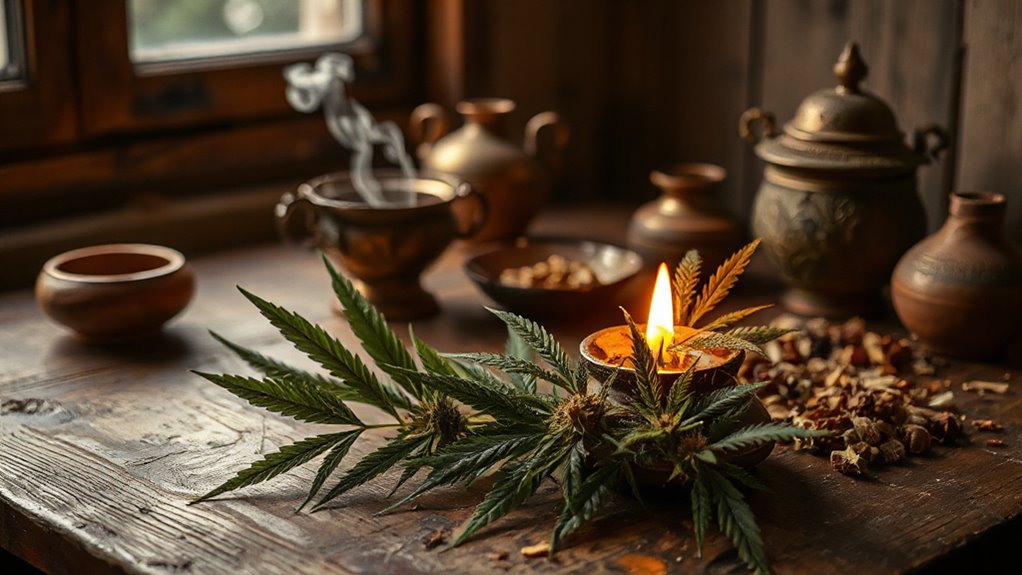
The Bible contains no explicit reference to cannabis by its modern name or any clear description of the plant, despite archaeological evidence showing its widespread use in the ancient Near East as early as 2500 years ago in China, India, Africa, and Assyria.
Scripture remains silent on marijuana, even though the ancient world knew of the plant. Some advocates claim the Hebrew phrase *qanēh-bōśem* in Exodus 30:23, meaning “aromatic cane,” refers to cannabis based on phonetic similarity.
Scholar Sula Benet proposed this translation through links to Sanskrit, Assyrian, Persian, and Arabic words. However, Hebrew and Greek scholars widely reject this interpretation as sloppy word study, finding no lexicon support for equating *qanēh-bōśem* with cannabis. The Old Testament was written primarily in Hebrew with some Aramaic sections, while the New Testament was composed in Koine Greek, reflecting the linguistic context of the ancient Near East.
Do Biblical Sobriety Commands Prohibit Cannabis Use?

Despite the Bible’s silence on cannabis itself, many Christians look to Scripture’s broader sobriety teachings to determine whether recreational marijuana use aligns with biblical principles. The New New Covenant directly commands against drunkenness in Ephesians 5:18, while 1 Corinthians 6:12 and 2 Peter 2:19 warn believers not to be mastered by anything. Titus 2:3 condemns enslavement to wine. These passages establish a pattern: intoxication that impairs judgment or creates dependency conflicts with Christian faithfulness.
However, Scripture distinguishes between consumption and excess. Deuteronomy 14:26 permits celebratory drinking, Numbers 28:7-10 requires beer offerings, and Jesus provided 150 gallons of wine at Cana. The biblical concern centers on losing self-control rather than moderate use itself, leaving Christians to discern cannabis through principles of sobriety, stewardship, and spiritual clarity. Consistent study habits like reading one chapter daily can help Christians apply these principles wisely by fostering consistent study.