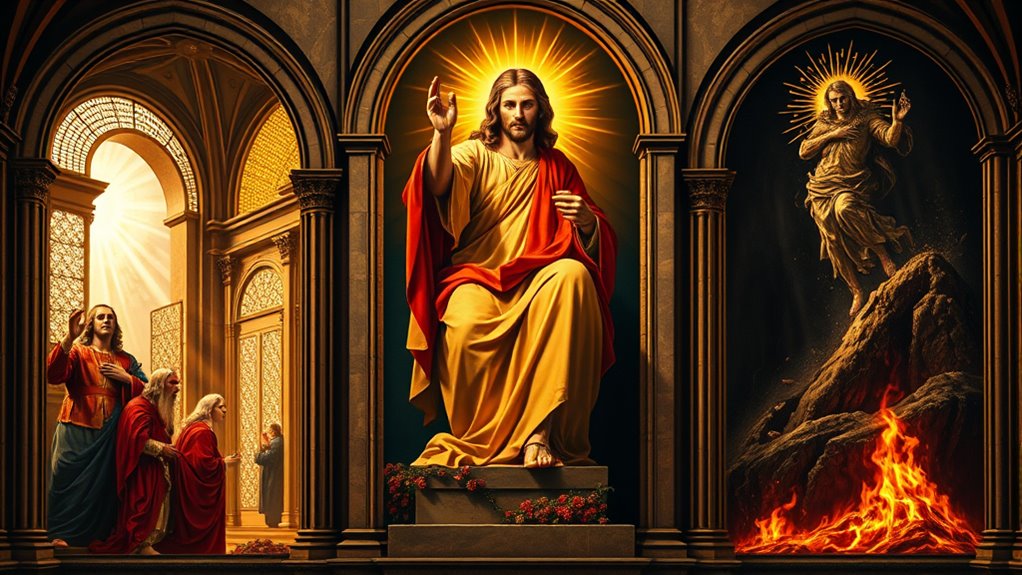
The Bible presents hell as a state of eternal separation from God, using vivid imagery including fire, darkness, and unquenchable flames to convey its severity. Scripture describes it as a place of conscious suffering where inhabitants experience weeping and gnashing of teeth, with Jesus himself warning in Matthew 25:46 that it represents eternal punishment in contrast to eternal life. The biblical texts, spanning 31,102 verses, emphasize that hell reflects God’s perfect justice, serving as the consequence for those who reject divine grace and truth, though the details vary across passages that illuminate this challenging doctrine.
Key Takeaways
- Hell is described as a place of eternal fire, outer darkness, and separation from God’s presence.
- The Bible depicts hell through imagery including weeping, gnashing of teeth, unquenchable flames, and undying worms.
- Hell represents God’s perfect justice as the consequence for rejecting divine grace and truth.
- Jesus contrasts eternal punishment in hell with eternal life, emphasizing its serious and permanent nature.
- Punishment severity varies based on individual knowledge and deeds, but all experience complete separation from God.
The Reality and Nature of Hell as Described in Scripture

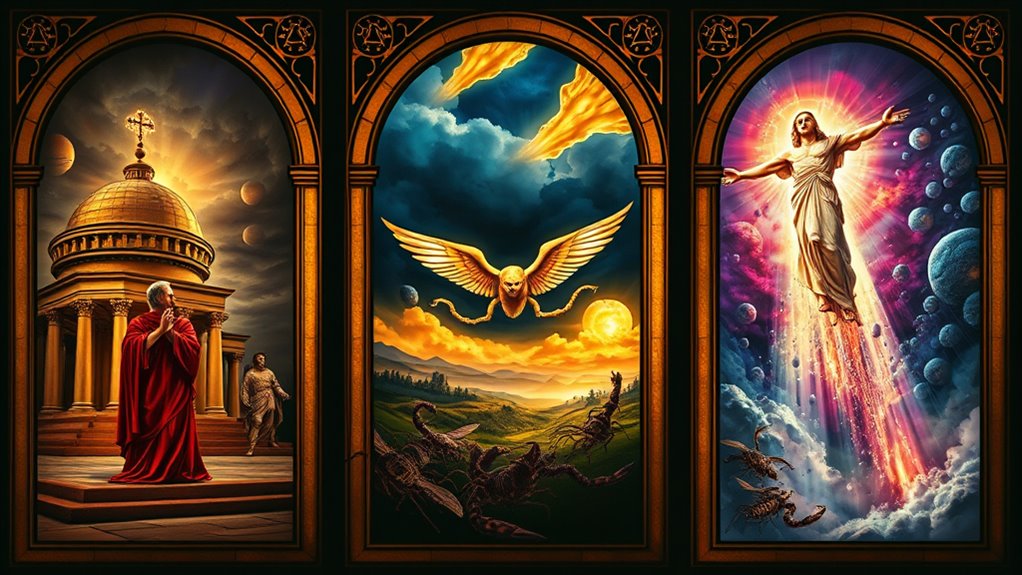
The Bible presents hell through vivid and somber imagery that emphasizes its reality as a place of separation from God. Scripture describes it as both “outer darkness” and a “lake of fire,” where inhabitants experience weeping and gnashing of teeth (Matthew 8:12; Revelation 21:8).
These contrasting images—darkness and flame—underscore the intensity of suffering and divine absence. The translation of the Hebrew scriptures into Greek as the Septuagint between 250 and 200 BC broadened access to these teachings.
Hell is further characterized as a realm of fire and sulfur, with unquenchable flames and eternal torment (Mark 9:43; Jude 1:7).
Biblical texts depict it as a prison of everlasting chains and gloomy darkness, conveying confinement without hope of escape (2 Peter 2:4; Jude 6). The imagery of the undying worm symbolizes continuous, conscious suffering (Mark 9:48), indicating that hell represents a permanent state of separation from God’s presence and light. Matthew 10:28 warns that God has the power to destroy both soul and body in hell, emphasizing the complete nature of divine judgment. Jesus contrasts this eternal punishment with eternal life, clarifying the stark difference between these two destinies (Matthew 25:46).
Understanding God’s Justice and the Eternal Consequences of Rejecting Divine Mercy

Why does Scripture emphasize divine justice so strongly when discussing hell’s existence and nature? Scripture’s teaching spans many passages across the Bible, which contains 31,102 verses that collectively witness to its doctrine. Biblical texts present eternal punishment as the necessary consequence of God’s righteous judgment, where each person’s abandonment to sin receives proportional assessment.
Hell reflects God’s perfect justice, where eternal punishment corresponds to each person’s willful rejection of divine grace and truth.
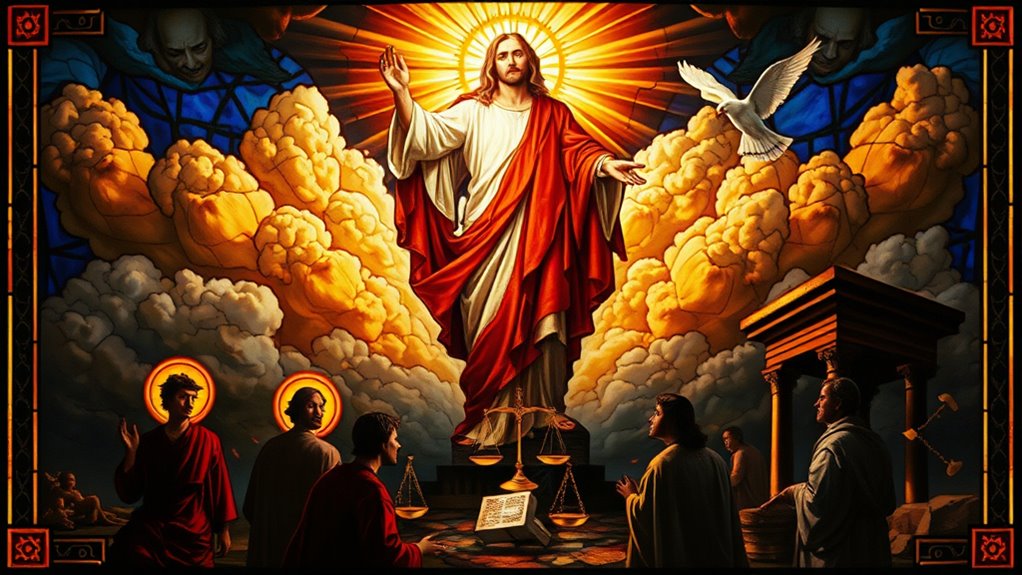
Jesus taught that hell involves “eternal punishment,” using identical language for both the wicked’s fate and the righteous’s eternal life. The fire remains “unquenchable,” and conditions persist where “their worm does not die, and the fire is not quenched.”
Divine justice guarantees punishment fitted exactly to individual guilt, accounting for spiritual privileges abused and light rejected. Judgment will be based on recorded works, with punishment varying in severity according to each person’s knowledge and sins. All souls in hell will endure perfect misery, with no easy relief, involving weeping, wailing, and gnashing of teeth.
Christ described hell as a place where people “will be thrown outside, into the darkness, where there will be weeping and gnashing of teeth,” separated by an unbridgeable chasm from paradise.