

The Bible contains no explicit prohibition against interracial marriage, according to careful examination of both Old and New covenants texts. Old Testament marriage restrictions targeted religious idolatry among Canaanites rather than skin color, as seen in Deuteronomy 7:3-4, which aimed to preserve religious faithfulness. New Testament passages like 2 Corinthians 6:14 emphasize spiritual compatibility over ethnic background, while Romans 10:12 affirms equality in Christ across all racial distinctions. The biblical guidance focuses on shared faith rather than ethnic heritage when selecting a spouse, and the scriptural principles below illuminate how these teachings apply to modern relationships.
Key Takeaways
- The Bible contains no explicit prohibition against interracial marriage in either Old or New Testament.
- Old Testament restrictions targeted religious idolatry among Canaanites, not ethnic or racial differences.
- New Testament emphasizes spiritual compatibility, advising believers marry “only in the Lord” without ethnic restrictions.
- Romans 10:12 affirms no distinction between ethnic groups, declaring equality and unity in Christ.
- Biblical marriage guidance focuses on faithfulness and shared faith rather than racial or ethnic background.
Does the Bible Forbid Interracial Marriage?

When examining what Scripture actually says about interracial marriage, readers encounter a surprising answer: the Bible contains no explicit prohibition against it. Neither the Old covenant law nor the New covenant teachings forbid marriage between people of different ethnic backgrounds. The only consistent biblical guideline for choosing a spouse centers on spiritual compatibility rather than race or ethnicity.
Romans 10:12 affirms that human equality in Christ transcends racial distinctions. Where the Bible does address marriage restrictions, such as in Deuteronomy 7:3-4, the concern targets religious idolatry among Canaanites, not skin color. The passage explicitly states these unions were forbidden because they would “turn your children away” from God, making faith the defining issue. Jesus himself was ethnically Jewish and lived within Jewish traditions, showing that religious identity and practice, not ethnicity, shaped his teachings and community ethnic and religious identity.
What Old Testament Marriage Laws Actually Restricted
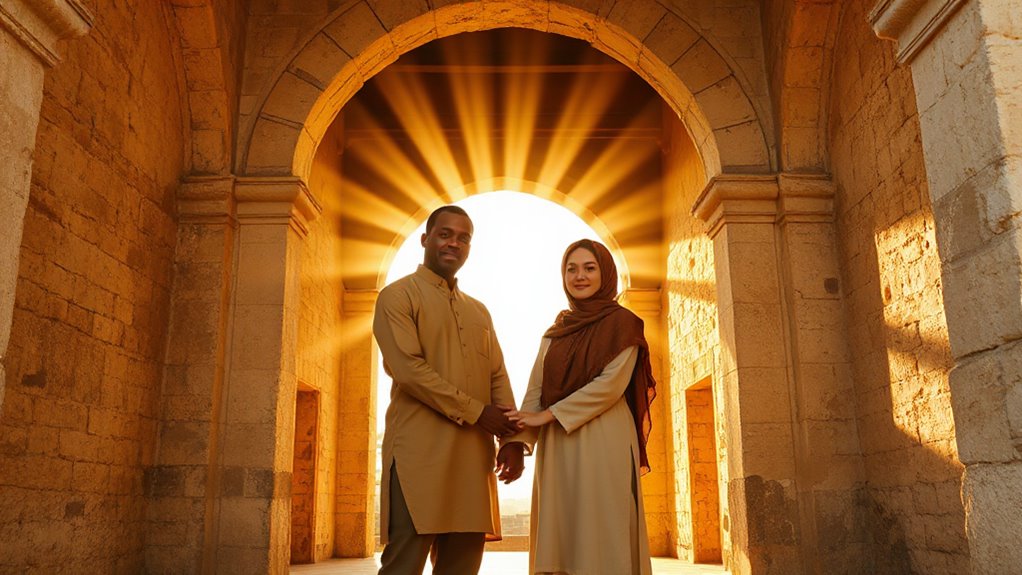
Throughout the Old Covenant, Israelite marriage laws focused primarily on maintaining religious faithfulness and protecting family lineage rather than restricting unions based on ethnicity or skin color.
Deuteronomy 21:10-14 explicitly permitted marriages to foreign captives from war, requiring only a mourning period and specific rituals.
The laws concentrated on preventing incestuous relationships, as detailed in Leviticus 18:7-18, which banned unions within close family connections.
Deuteronomy 25:5-10 established levirate marriage to preserve family lines when brothers died childless.
Leviticus 18:18 addressed polygamy concerns.
Deuteronomy 23 excluded certain groups from assembly worship, but these restrictions centered on covenant violations and religious opposition rather than racial identity.
The restrictions aimed at preserving Israel’s distinct worship of Yahweh, not preventing marriages across ethnic boundaries. Archaeological and textual evidence also show the Bible was written and transmitted by many authors over centuries, reflecting diverse historical contexts and consistent preservation efforts, including Dead Sea Scrolls that confirm Old Testament preservation over millennia.
Why New Testament Believers Can Marry Across Races

How does the New Covenant guide marriage decisions for believers today? The New testament establishes faith in Christ as the primary criterion for spouse selection.
According to 2 Corinthians 6:14, believers should not be unequally yoked with unbelievers, emphasizing spiritual compatibility rather than racial considerations.
Similarly, 1 Corinthians 7:39 permits marriage to anyone “only in the Lord,” defining Christian freedom without ethnic restrictions.
No New testament passage addresses or prohibits interracial unions directly.
Romans 10:12 declares no distinction between Jew and Gentile under one Lord, affirming unity across ethnic lines.
Hebrews 13:4 upholds all marriages between man and woman as honorable regardless of ethnic origin.
Marriage decisions rest on prayer and personal choice between believers, with ethnicity meriting consideration but never determining viability.
The New Testament was originally written in Koine Greek, which shaped how its teachings were composed and circulated.
Choosing a Spouse When Family Opposes Interracial Marriage

For believers committed to honoring Scripture, family opposition to an interracial relationship creates a painful tension between biblical conviction and familial loyalty.
Since no biblical command prohibits interracial marriage, couples facing such resistance stand on solid theological ground. The Bible requires only that believers marry fellow Christians, not members of the same ethnicity.
Prospective partners should consult together about how they will handle pressure from disapproving relatives, recognizing that some families or cultures may forbid such unions despite lacking biblical authority.
Couples must also prepare to help future children navigate potential prejudice. While ethnic differences should not be ignored, they absolutely should not determine whether two believers marry.
Ultimately, this remains a decision between the couple and God, not extended family members.
The Catholic Bible contains 73 books, including deuterocanonical texts like Tobit and Maccabees, which reflects its historical canon based on the Septuagint Greek translation.