



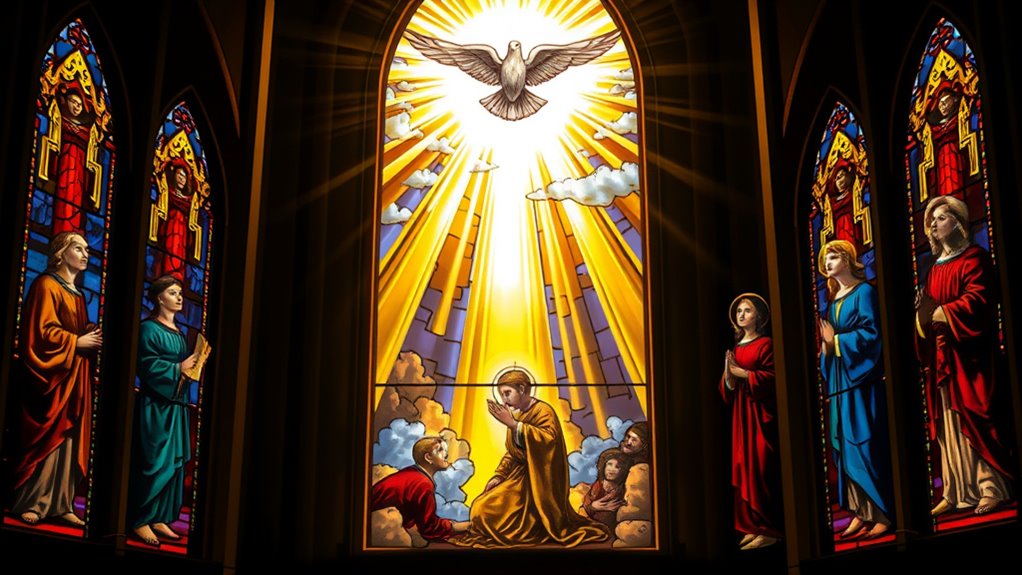
God already knows every thought and need before a word is spoken, yet Scripture still commands believers to “pray without ceasing.” Theologians explain this apparent tension by distinguishing God’s sovereign plan from the means He uses to carry it out, with prayer serving as one of those means. Writer Richard Foster argued simply that “to pray is to change,” suggesting the invitation exists less to inform God and more to transform the one who prays. Exploring that distinction further reveals something worth understanding.
Prayer Is Communion, Not a Cosmic Information Transfer
Many Christians describe prayer as communication with God, but several theologians and spiritual writers argue that this framing, while not wrong, is incomplete.
Communication centers on exchanging information, while communion emphasizes relationship and closeness.
Prayer as communion includes conversation but extends beyond verbal exchange into personal encounter with God.
Reducing prayer to words and thoughts alone risks flattening it into a purely mental activity rather than a transformative meeting.
In this view, the core purpose of prayer is not to inform God of anything.
It is to participate in a relational bond with the one who already knows. Paul described believers as in Christ and Christ as dwelling within believers, forming a shared communal life by the Spirit.
Richard Foster argues that to pray is to change, identifying prayer as the central avenue through which God brings about real transformation in and around those who seek him.
Prayer also serves as an expression of worship, confession, thanksgiving, and intercession, aligning our hearts with God’s purposes and presence.
Why Prayer Starts With Admitting You’re Not in Control
If prayer is fundamentally about relationship rather than information exchange, then its natural starting point is not confidence but honesty — specifically, honesty about limits.
The Serenity Prayer frames this directly: it asks for help accepting what cannot be changed, changing what can, and gaining wisdom to tell the difference. The prayer is attributed to Reinhold Niebuhr.
Worry, described elsewhere as a “hamster wheel,” persists when people overestimate their control.
Prayer interrupts that cycle by acknowledging partial, finite authority over circumstances.
This acknowledgment is not defeat — it is clarity.
Surrender becomes the foundation for both peace and responsible action, rather than an excuse to disengage from what still can be done. In Mark 14, a woman anointing Jesus was criticized for her actions, yet Jesus defended her by noting that “she did what she could” — a phrase that frames faithfulness as acting within one’s limits rather than beyond them. Faithful trust often grows through practices like reading Scripture that remind us of God’s guidance and past faithfulness.
How Prayer Changes the Person Who Prays
Prayer does not leave the person who prays unchanged. According to Desiring God, prayer can shift a person’s will by aligning it with God-centered truth rather than personal preference.
Prayer does not leave us unchanged — it bends our will toward God rather than ourselves.
Over time, consistent prayer reshapes desires, builds humility, and trains the heart toward dependence rather than self-direction.
Thanksgiving and confession can gradually reframe how hardship is interpreted.
Perseverance through unanswered or delayed prayer often produces greater spiritual maturity.
Prayer can also strengthen character traits like courage, gratitude, and resilience.
The person who prays regularly, researchers and theologians note, tends to develop a steadier, more grounded interior life. Marissa Bondurant, author of a Bible study for caregivers, writes to encourage weary caregivers to know they are cared for by Jesus through practices like consistent, dependent prayer.
One perspective frames prayer not as a mechanism for getting things but as a practice that strips away anger, ego, and fear while drawing the heart closer to what God has in store. A biblical understanding of hope as a confident expectation grounded in God’s promises often undergirds why believers continue in prayer even when outcomes are uncertain.
How to Use Prayer When Facing Real Decisions
Consistent prayer, as examined above, tends to reshape the person doing the praying — but that same practice becomes particularly concrete when a real decision is on the table.
Teachers across Christian traditions suggest several structured steps:
- Pause briefly before reacting, creating space for reflection rather than impulse
- Ask specifically for wisdom, following the model of James 1:5 and Solomon’s example
- Pray for discernment when two reasonable options compete for attention
- Examine motives honestly and seek counsel from trusted believers
Together, these steps shift decision-making from self-reliance toward deliberate, grounded dependence on God’s guidance. Before any step is taken, Scripture encourages believers to count the cost, carefully weighing the pros and cons of a choice and submitting the entire process to God before moving forward. Alongside this process, believers are reminded that unconfessed sin clouds judgment, distorting self-perception and hindering the very prayers meant to guide a decision. Christians are also encouraged to remember that God cares for anxious people and to bring worries into prayer as part of discerning God’s leading.
Why God Still Invites You to Pray When He Already Has a Plan
One of the more common questions raised about Christian prayer is why it would matter if God has already decided what will happen. Theologians offer a careful distinction: God’s sovereign plan and the means He uses to carry it out are not the same thing.
Prayer, they argue, is one of those means. Blaise Pascal suggested God grants humans the “dignity of causality” through prayer, meaning requests participate in real outcomes. God ordains both the events and the prayers connected to them.
The plan, in this view, includes the asking. Scripture commands believers to “pray without ceasing”, treating prayer not as optional but as an ongoing practice God expects and works through.
Jesus Himself addressed this tension directly, warning against empty, repetitive words while still instructing His followers to pray, demonstrating that foreknowledge does not eliminate the purpose or practice of prayer. The Holy Spirit also participates in this dynamic by guiding in truth as believers pray.