


The Bible mentions Gaza over twenty times as a major Philistine city that frequently conflicted with Israel, most especially in the Samson narrative. God promised land to Abraham’s descendants stretching from Egypt to the Euphrates, though prophets like Amos and Jeremiah emphasized that legitimate occupation required justice and protection for vulnerable populations. The Hebrew Scriptures repeatedly linked land security to righteousness, warning that oppression would lead to divine judgment. These ancient texts offer multiple layers of meaning that continue shaping religious perspectives on the region today.
Key Takeaways
- Gaza was a major Philistine city mentioned throughout the Bible, notably in Samson’s story and prophetic judgments.
- God promised Abraham’s descendants land from Egypt to the Euphrates as an everlasting possession through Isaac and Jacob.
- Prophets condemned Gaza for violence and oppression, viewing it as a symbol of conflict with God’s people.
- Biblical land promises emphasized conditional occupation requiring justice, righteousness, and protection of foreigners and the vulnerable.
- Philip baptized an Ethiopian eunuch near Gaza, showing the region’s significance in early Christian evangelism and outreach.
Gaza in Biblical History: From Philistine Stronghold to Prophetic Judgment
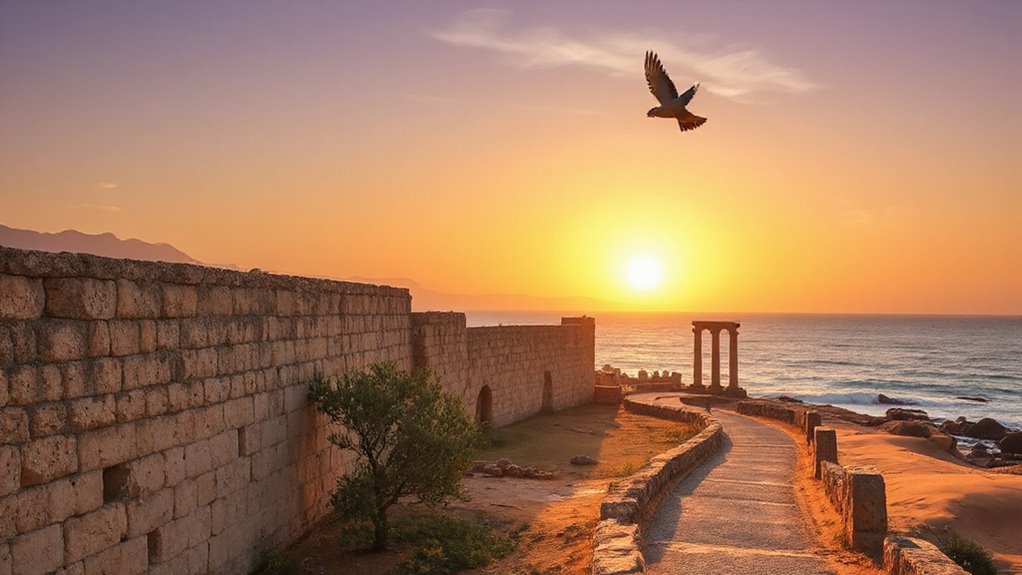
How did a coastal city mentioned more than twenty times in the Hebrew Bible come to symbolize both military power and divine judgment? Gaza stood as one of five major Philistine cities controlling the Mediterranean coast and crucial trade routes connecting Egypt to Canaan.
Though assigned to Judah in Joshua’s territorial lists, the city remained largely under Philistine control throughout the biblical period. Samson’s imprisonment and death there, pulling down the temple of Dagon, made Gaza central to narratives of captivity and divine deliverance. Archaeological digs around Gaza and nearby Philistine sites reveal material culture that helps explain the city’s economic importance.
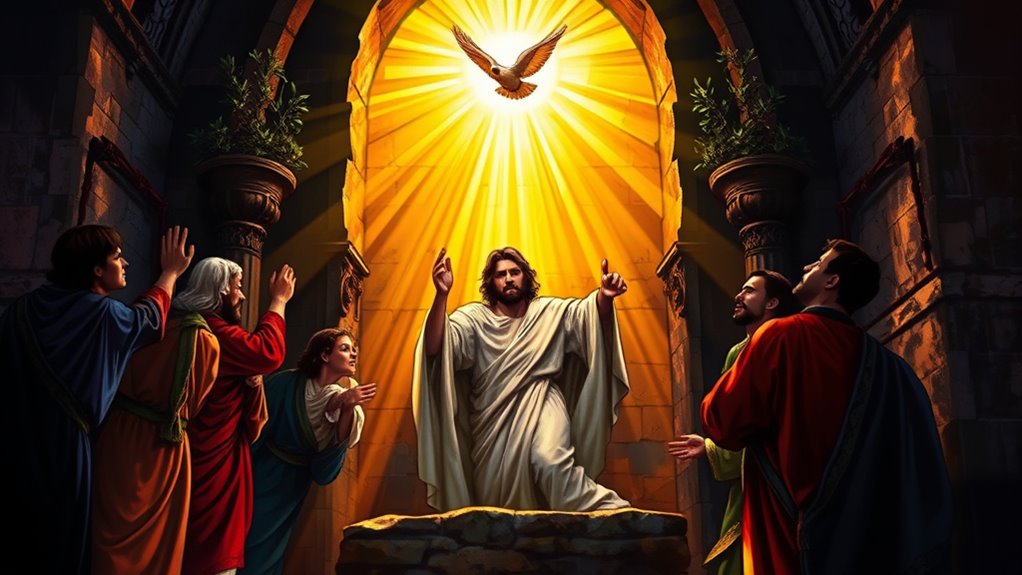
Later prophets including Amos, Jeremiah, and Zephaniah pronounced judgment against Gaza for violence and slave trading. The city functioned as a persistent military stronghold and religious center representing ongoing conflict between Israelite faith and surrounding powers. During the reign of Hezekiah, the king defeated and pursued the Philistines to Gaza, though the city was not captured until the Assyrians conquered it in 720 BC. In the New Testament era, Gaza appeared when an angel instructed Philip to travel the road from Jerusalem to Gaza, where he encountered and baptized the Ethiopian eunuch.
Biblical Land Promises and Modern Application: Covenant, Justice, and the Call to Peacemaking

What does it mean to apply ancient promises about land to conflicts unfolding in the twenty-first century? The Bible records God’s promise of land to Abraham’s descendants as an “everlasting possession” stretching from Egypt to the Euphrates, a territory far larger than modern Israel’s borders (Genesis 17:8; 15:18).
Yet the Mosaic covenant made security in that land conditional on justice, warning that the land would “vomit out” inhabitants who practiced oppression, just as it did previous nations (Leviticus 18:24–28).
Prophets tied legitimate occupation to protecting foreigners and the vulnerable (Deuteronomy 10:18–19). This covenant promise was reiterated to Isaac and Jacob, whose name God changed to Israel, establishing a line of inheritance that spans generations (Genesis 26:3; 28:13).
The Land Promise appears in approximately 28 major passages in the Old Testament and is further addressed in 26 passages in the New Testament, demonstrating its significance throughout Scripture. Many interpreters today argue biblical land promises cannot justify contemporary policies without accompanying commitment to righteousness, mercy, and peacemaking toward all inhabitants, including those in Gaza. Historical context shows the ancient speakers of the region used Aramaic dialects alongside Hebrew and Greek, shaping how these texts were communicated and understood.