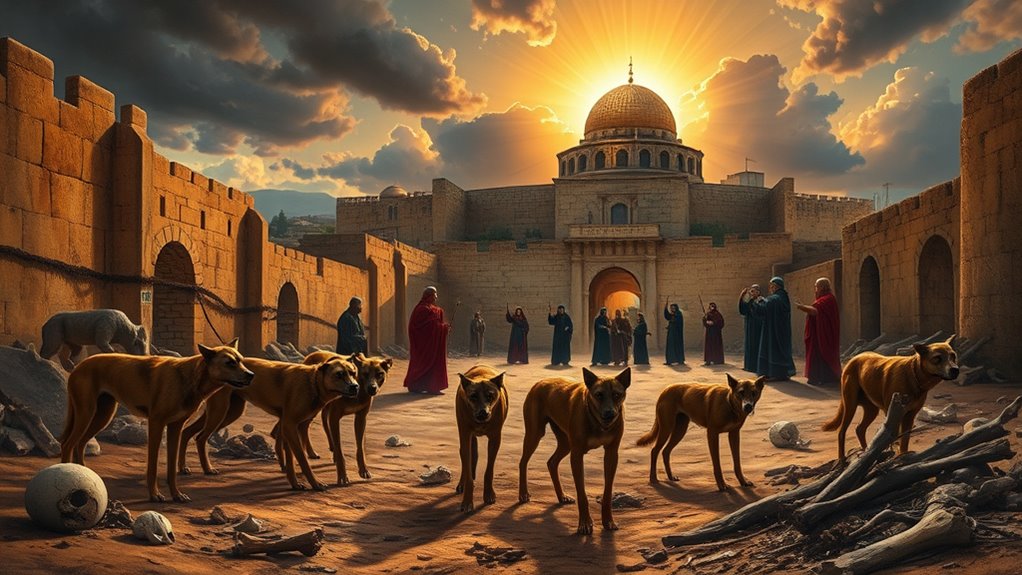
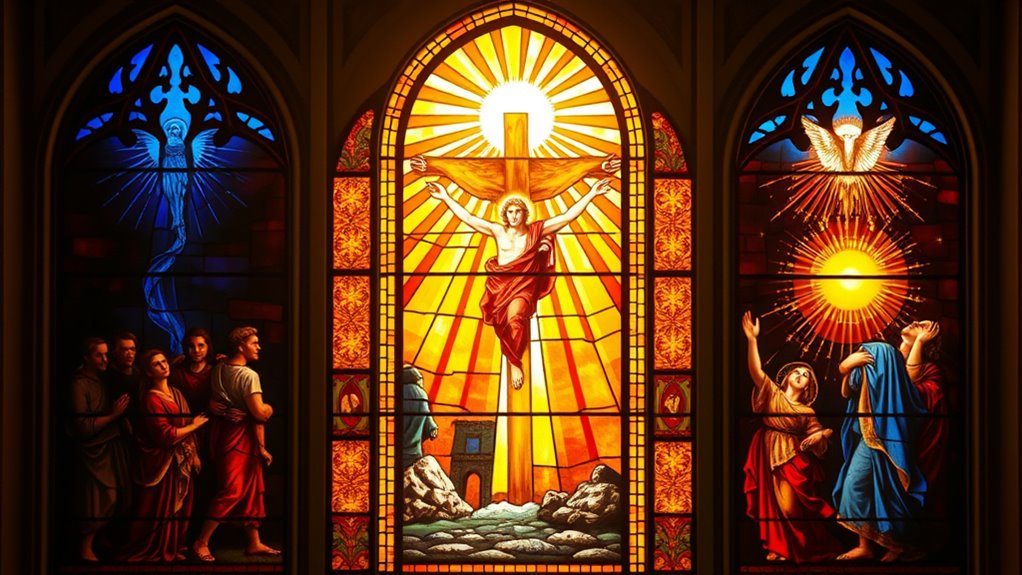
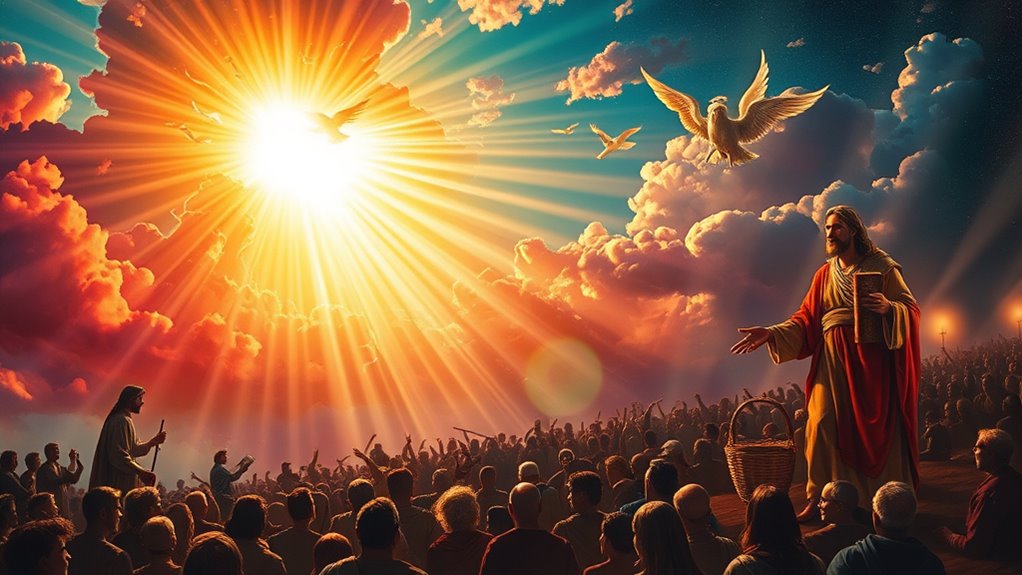
The Bible uses “manifestation” to describe God revealing Himself to humanity, not humans creating reality through thoughts. The King James Version contains the term 39 times, referring to divine disclosure rather than self-empowerment techniques. Examples include the burning bush in Exodus 3:2-6 and Jesus as the incarnate Word. Biblical prayer directs faith outward toward God’s sovereign will, emphasizing surrender and humility, while modern manifestation focuses inward on personal mental processes. The distinction centers on who controls reality—God as Creator or the individual mind. The following sections explore these differences more fully.
Key Takeaways
- Biblical manifestation means God revealing Himself, His truth, and power to humanity, not humans creating reality through thoughts.
- Modern manifestation contradicts Scripture by emphasizing self-empowerment over God’s sovereignty and personal will over humble surrender.
- Prayer directs faith toward God as Creator; manifestation directs faith inward toward one’s own mental processes.
- God manifests through theophanies, miracles, and Jesus Christ, demonstrating His desire to communicate with creation.
- Scripture cultivates dependence on God’s will, while manifestation techniques encourage self-reliance and treat God as optional.
Why Biblical Prayer Differs From Modern Manifestation

Modern manifestation teaching and biblical prayer may appear similar on the surface, yet they diverge fundamentally in where they direct human faith and expectation. Prayer channels faith outward toward God, recognizing Him as Creator and Sustainer of reality. Manifestation, by contrast, turns faith inward, emphasizing personal mental processes and self-empowerment to attract desired outcomes.
Scripture teaches that God alone holds sovereign control over creation (Colossians 1:16–17), while manifestation assigns creative power to human thoughts and intentions. Biblical prayer embraces surrender, echoing Jesus’ words, “not my will, but Yours be done” (Luke 22:42).
Manifestation prioritizes personal will and demands specific results. This distinction matters because prayer cultivates humility and dependence on God, whereas manifestation encourages self-reliance, treating God as optional rather than essential. Early Christian reflection on the nature of Jesus affirmed His role in creation and divinity, emphasizing that Christ is distinct from the Father while sharing one divine essence Christ’s divine role.
What the Bible Actually Means by Manifestation

The Bible’s definition of manifestation centers on revelation rather than creation, describing the act by which God discloses hidden truths, displays divine power, or makes His presence known to humanity.
The term “manifest” appears 39 times in the King James Version, with “manifestation” used three times and “manifested” occurring ten times. Biblical instances include theophanies like the burning bush in Exodus 3:2-6, miracles such as feeding five thousand in John 6:1-14, and the incarnation of Jesus Christ.
According to John 14:21, God manifests Himself to those who love and obey Him. Mark 4:22 declares nothing hidden will remain concealed.
This theological framework reveals God’s holiness, love, justice, and mercy, demonstrating His desire to communicate with creation rather than teach techniques for obtaining personal desires.
Archaeological discoveries and external sources have corroborated many biblical people and places, supporting the Bible’s historical reliability and its role in recording eyewitness testimony.