
The Bible establishes animals as part of God’s creation under human stewardship, with clear instructions for their care. Proverbs 12:10 states the righteous regard the life of their beasts, while Exodus 23:4-5 requires helping even an enemy’s lost or burdened animals. Genesis 1:26 frames dominion as caretaking responsibility rather than exploitation. Future prophecies in Ezekiel and other books describe animals in temple worship, which premillennial scholars interpret as memorial rather than atoning sacrifices during the Messiah’s reign. The sections below explore these ethical obligations and prophetic roles further.
Key Takeaways
- The Bible commands righteous people to regard the life of their animals and monitor their conditions closely.
- Scripture requires helping even an enemy’s lost or burdened animals, demonstrating universal care obligations.
- Humans receive dominion over animals as stewardship responsibility, implying ethical limits on exploitation.
- Animals play structured roles in temple worship and sacrificial systems throughout biblical prophecy.
- Future sacrifices are interpreted as memorials demonstrating sin’s cost, not replacing Christ’s atonement.
How the Bible Says We Should Treat Animals

The Bible establishes clear standards for how people should treat animals, presenting care for creatures as a reflection of moral character. Proverbs 12:10 states that the righteous regard the life of their beasts, while the tender mercies of the wicked are cruel.
This principle extends beyond personal property, as Exodus 23:4-5 commands people to help even an enemy’s lost or burdened animals. Scripture assigns humanity a stewardship role, with Genesis 1:26 granting dominion as caretakers rather than exploiters.
Practical duties include monitoring livestock conditions closely, as Proverbs 27:23 advises, and following protective measures like Deuteronomy’s prohibition against taking mother birds with their young. When animals suffer hopelessly or threaten others, mercy may require ending their lives humanely. The Bible’s teachings on animals also reflect a long textual tradition preserved across centuries and languages, evidenced by extensive manuscript collections that inform modern translations.
God’s Purpose for Animals in the Messianic Kingdom

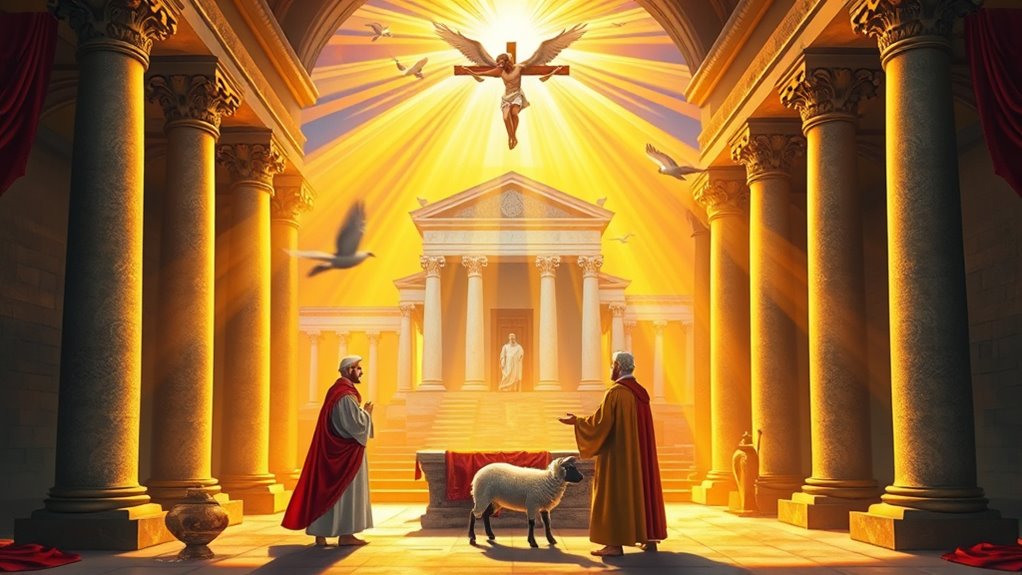
According to biblical prophecy, animals will continue to serve specific purposes in the Messianic kingdom, particularly within the worship system described in Ezekiel’s vision of a future temple. Ezekiel chapters 40-48 detail a sacrificial system involving animals, with specific instructions for altar preparations and offerings outlined in 43:18-27.
Five prophets, including Isaiah, Zechariah, and Jeremiah, reference these future sacrifices across 50 verses. Premillennial scholars interpret these sacrifices as memorial in nature, functioning like museum artifacts that demonstrate the cost of sin and God’s holiness rather than providing atonement.
The animals would serve educational and commemorative roles, reminding earthly-bodied humans of Christ’s finished work on the cross. This interpretation maintains that only Jesus’ blood eternally removes sin, as affirmed in Hebrews, while sacrifices provide tangible reminders during Messiah’s earthly reign. Archaeological and historical study also locates key biblical events at specific sites, such as the traditional place of crucifixion at the Church of the Holy Sepulchre, which lies over Golgotha place of the skull.