
The Bible describes mothers as nurturers who teach God’s word through daily life, as seen in Deuteronomy 6:6-7 and the Greek term *philoteknos* in Titus 2:4, meaning tender, affectionate care for children. The fifth commandment in Exodus 20:12 requires lifelong honor for mothers, a directive repeated in Ephesians 6:2. Isaiah 66:13 compares divine comfort to maternal tenderness, while Proverbs 31 and Hannah’s dedication of Samuel in 1 Samuel 1:27-28 model faithful devotion. The passages below explore these roles and commands in greater detail.
Key Takeaways
- The Fifth Commandment requires lifelong honor of mothers, affirmed throughout Scripture from Exodus 20:12 to Ephesians 6:2.
- Biblical motherhood includes nurturing love (philoteknos), teaching God’s word daily, firm discipline, diligent work, and faithful dedication.
- Scripture compares maternal comfort to God’s own tenderness, as in Isaiah 66:13’s divine motherly compassion.
- The Proverbs 31 woman and Hannah exemplify industrious household management and faithful dedication by offering Samuel to God.
- Mothers’ teaching is honored as equally vital to fathers’, portrayed as garlands of honor in Proverbs 1:8-9.
What the Bible Says About Mothers’ Roles and Character

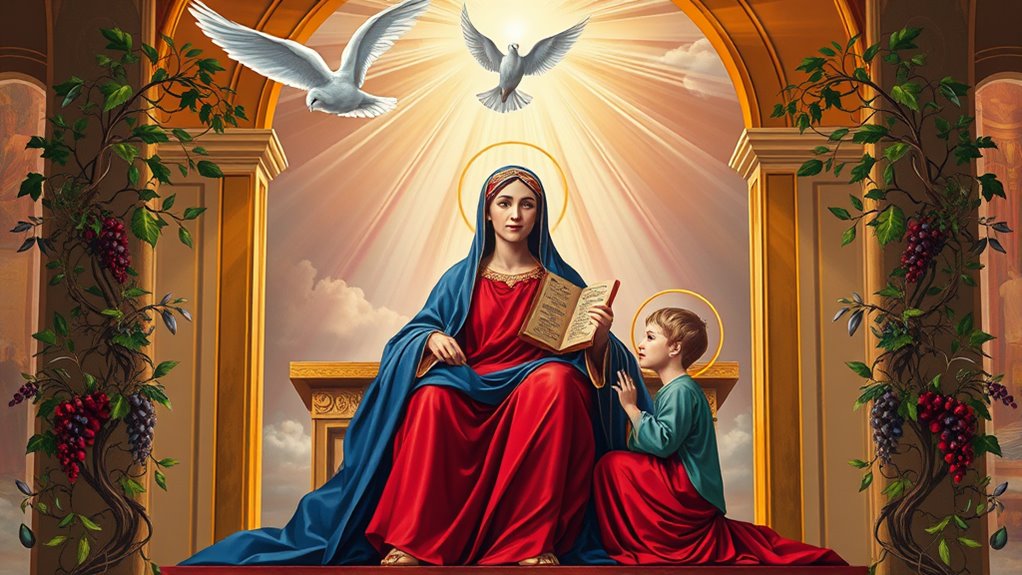
The Bible presents motherhood as a calling marked by specific responsibilities and character qualities that shape both families and future generations. Scripture outlines five primary roles: nurturing love, teaching God’s word, firm discipline, diligent work, and faithful dedication.
Biblical motherhood encompasses five essential roles that shape families and generations: nurturing love, teaching Scripture, firm discipline, diligent work, and faithful dedication.
Titus 2:4 commands mothers to love their children to avoid bringing reproach on the Lord, while Isaiah 66:13 compares divine comfort to a mother’s tenderness. The Greek term philoteknos in Titus 2:4 denotes a special “mother love” characterized by caring, nurturing, and affectionate embracing. Jesus himself taught in the everyday language of the people, often speaking Aramaic phrases that resonated with common listeners.
Deuteronomy 6:6-7 requires teaching Scripture throughout daily life, morning and evening. Proverbs 1:8-9 portrays a mother’s teaching as a garland to grace the head and a chain to adorn the neck, emphasizing the lasting beauty and honor of maternal wisdom.
Proverbs 13:24 and Ephesians 6:4 mandate loving but consistent discipline.
The Proverbs 31 woman models industrious household management, working willingly with her hands and watching over family affairs. Hannah’s dedication of Samuel in 1 Samuel 1:27-28 exemplifies faithful commitment to stewarding children as gifts from God.
Biblical Commands for Honoring Your Mother

Scripture establishes honoring one’s mother as a fundamental moral obligation, anchoring this duty in the Ten Commandments themselves. Exodus 20:12 commands, “Honor your father and your mother,” linking obedience to the promise of long life in the land. This fifth commandment appears again in Deuteronomy 5:16 and receives New Testament affirmation in Ephesians 6:2, where Paul identifies it as “the first commandment with a promise.” Leviticus 19:3 further requires reverence for both parents, positioning this duty as foundational to covenant faithfulness. Many Catholics read these passages in approved translations such as the NABRE used at Mass.
The Bible pairs maternal instruction with paternal teaching throughout Proverbs, describing a mother’s words as “a garland of grace” in Proverbs 1:8-9. Proverbs 23:22 warns against despising your mother when she is old, emphasizing that maternal wisdom retains enduring value regardless of age. Even while dying, Jesus demonstrated this command by entrusting his mother’s care to the beloved disciple in John 19:26-27. The Greek term teknon, meaning offspring, indicates that the obligation to honor parents extends throughout life with no age limit specified, encompassing adult children as well as the young.