

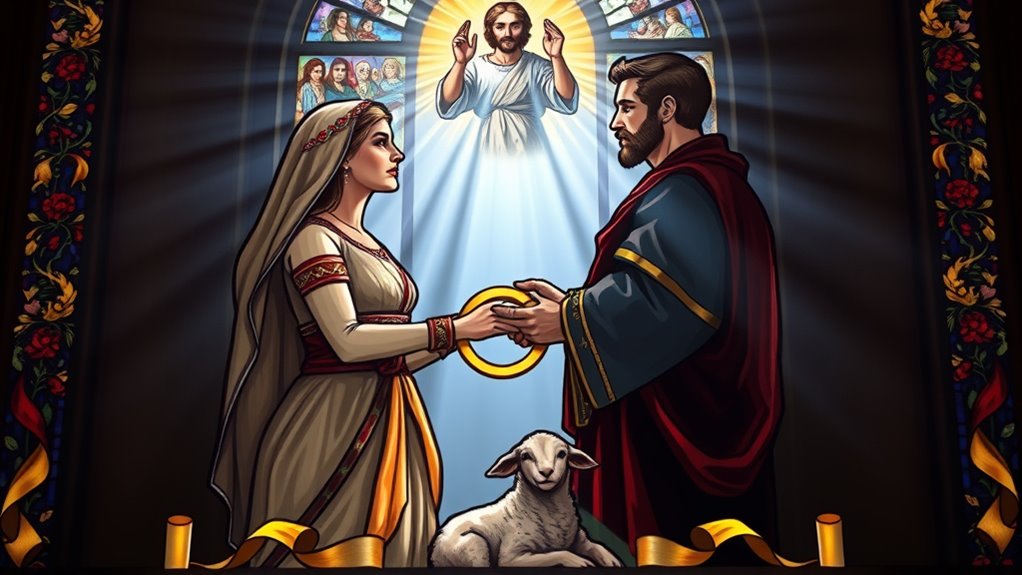
The Bible teaches that love serves as the primary command shaping all relationships, with Jesus identifying it as the greatest commandment in Matthew 22:37-39. This divine love, which is sacrificial and selfless, finds its fullest human expression in marriage, described in Genesis 2:24 and Ephesians 5:23-33 as a covenant bond reflecting Christ’s relationship with the church. Biblical relationships emphasize faithfulness, purity of thought and action, and commitment rooted in deliberate choice rather than fleeting emotion. The following sections explore how these principles apply to specific relationship contexts.
Key Takeaways
- Love is the greatest commandment, shaping all relationships with God and others through selfless, sacrificial action.
- Marriage is a sacred covenant reflecting God’s faithfulness, requiring permanent commitment beyond temporary emotions or feelings.
- Faithfulness extends beyond physical actions to include mental purity, thoughts, and complete devotion to one’s spouse.
- The Holy Spirit empowers believers to love genuinely, enabling them to reflect God’s character in all relationships.
- Christian marriage mirrors Christ’s sacrificial love for the church, emphasizing service, nourishment, and unconditional commitment.
Love as the Foundation of Biblical Relationships

The Bible places love at the center of all meaningful relationships, presenting it not as a secondary emotion but as the primary command that shapes how people relate to God and to one another. Jesus identified love as the greatest commandment, directing all conduct toward God and neighbor (Matthew 22:37–39), and declared that all other commandments hang on this principle (Matthew 22:40). He lived this command within a Jewish context, participating in synagogue life and Jewish practices. Paul reinforced this framework, explaining that love fulfills the law because genuine love prevents harm and aligns behavior with God’s moral will (Romans 13:8–10).
Love stands not as one virtue among many, but as the foundational command governing all relationships with God and others.
First John declares that God himself is love (1 John 4:8), establishing divine character as the standard for human relationships.
Christians receive their capacity to love through the Holy Spirit (Romans 5:5), reflecting God’s prior love demonstrated in Christ’s self-giving sacrifice. This sacrificial model sets the standard for believers, as Christ’s death exemplifies the depth of divine love and calls followers to offer themselves for others’ benefit (Ephesians 5:2). Scripture portrays love as both a divine gift and a relational principle that governs how believers interact with one another in community.
Marriage, Sexual Purity, and the Gospel Picture

Biblical teaching presents marriage as a covenant relationship designed to reflect the permanence and faithfulness of God’s commitment to His people, establishing it as more than a social arrangement or emotional partnership. Scripture references this covenant four times—in Genesis 2:24, Matthew 19:5, Mark 10:7-8, and Ephesians 5:31—emphasizing the principle of leaving one’s parents and permanently attaching to one’s spouse.
God uses marriage imagery to describe His relationship with Israel in Ezekiel 16:8 and Hosea 2:16-20, illustrating the sacred nature of marital commitment. The development of many biblical texts occurred across centuries, including post-exilic writings around 530-440 BC, which shaped how covenant themes were later framed.
The biblical framework extends beyond physical fidelity to encompass mental monogamy. Matthew 5:27-28 applies the adultery prohibition to lustful thoughts, establishing standards for both partners. This all-encompassing approach to faithfulness reinforces marriage as a complete, witnessed commitment recognized by formal agreement and government, as documented in Malachi 2:14.
Marriage is established not by emotion but by covenant and choice, as demonstrated in Isaac and Rebekah’s union where love developed after their commitment to marry.
Ephesians 5:23-33 reveals that the husband-wife relationship mirrors Christ’s love for the church, establishing marriage as a living picture of sacrificial, unconditional love that serves and nourishes the beloved.