
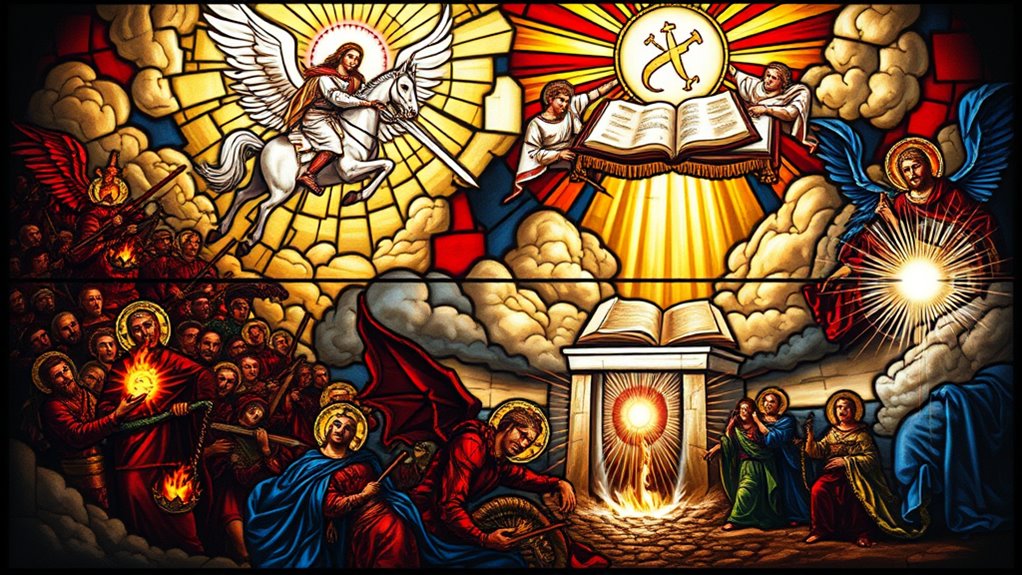
The Bible describes the last days as a period marked by escalating wars, food shortages, earthquakes, widespread disease, and deepening moral decline, as outlined in Matthew 24 and 2 Timothy 3. Persecution of believers and environmental destruction are also listed as indicators. The reestablishment of Israel in 1948 is widely viewed as a key prophetic milestone. Those who explore further will find that Scripture traces these events toward a specific, dramatic conclusion.
Key Takeaways
- The Bible identifies large-scale wars, food shortages, earthquakes, disease, and moral decline as observable signs of the last days.
- Many scholars cite Israel’s reestablishment as a sovereign nation in 1948 as a significant prophetic fulfillment.
- The Great Tribulation will be an unprecedented period of suffering lasting three and one-half years, causing massive global death.
- An Antichrist figure, empowered by Satan, will rise to demand worldwide worship through deception and counterfeit miracles.
- Christ will return, defeat evil forces at Armageddon, establish a 1,000-year kingdom, and ultimately judge all humanity.
Biblical Signs That the Last Days Have Begun
How does a person know when a prophesied period in history has actually begun? According to biblical texts, specific observable signs mark the arrival of the last days. Jesus outlined several in Matthew 24, including large-scale warfare, food shortages, earthquakes, and widespread disease. Revelation adds symbolic imagery reinforcing these same themes.
Beyond physical catastrophe, the apostle Paul described moral decline in 2 Timothy 3, noting increasing lawlessness, broken family bonds, and growing spiritual coldness. Matthew 24:9 warns of rising persecution against believers, while 1 Timothy 4:1 cautions about widespread abandonment of faith.
Taken individually, such events might seem coincidental. But their simultaneous occurrence across the globe, many Bible scholars suggest, points toward something more significant — the convergence of signs that Scripture identifies as marking the last days. Revelation 11:18 also foretells that mankind would be ruining the earth, adding environmental destruction to the list of conditions expected to characterize this period.
Among the most prominent signs cited by scholars is the reestablishment of Israel as a sovereign nation in 1948, an event seen as fulfilling God’s promise to Abraham that Canaan would be an everlasting possession, as recorded in Genesis 17:8.
The Great Tribulation: The Worst Period in Human History
Among the prophesied events described in Scripture, the Great Tribulation stands as the most severe period in human history. According to Matthew 24:21, this period will bring tribulation unlike anything since creation, never to be repeated. It comprises the final three and one-half years of Daniel’s 70th week, corresponding to the 42 months of the beast’s authority described in Revelation 13:5.
During this period, God’s judgments unfold across Revelation 6–18, including widespread death through war, famine, and disease. One-fourth of earth’s population perishes under the pale horse’s reach. Yet Scripture indicates purpose within this severity. Daniel 9:24 connects it to Israel’s discipline and restoration, while Revelation 19–20 records that Christ’s return ultimately ends this period and establishes his earthly kingdom. Jeremiah 30:7 describes this time as a day of unprecedented distress for Jacob, identifying Israel as a central focus of the suffering and persecution that defines this period.
Scripture also foretells that during the Great Tribulation, false religion faces destruction, as political powers represented by the United Nations are tasked with carrying out this judgment against Babylon the Great, described in Revelation 17 as the great prostitute.
The Antichrist’s Rise, Deception, and Defeat

Within the darkest stretch of the Great Tribulation, Scripture introduces a figure whose influence reaches every corner of the globe. Known as the Antichrist, this individual rises through Satan’s direct empowerment, performing counterfeit miracles and demanding worldwide worship (Rev. 13:2–4; 2 Thess. 2:9).
A False Prophet assists him, calling fire from heaven to reinforce the deception (Rev. 13:13). Those who reject truth become especially vulnerable, as God permits a strong delusion to overtake them (2 Thess. 2:10–12).
Yet Scripture is clear about the outcome. Christ defeats the Antichrist simply by the breath of His mouth at His return (2 Thess. 2:8). Evil does not win. Believers are encouraged toward patient endurance and steady faith throughout this period (Rev. 13:10). The Antichrist is not limited to one future figure alone but encompasses any person, power, or teaching that seeks to replace Christ’s authority.
Together, Satan, the Antichrist, and the False Prophet form a counterfeit trinity that mimics the nature and work of the true God while leading the world into deception and false worship.
Armageddon, the Millennial Kingdom, and the Final Judgment
At a place called Armageddon, named in Revelation 16:16, the kings of the earth gather for a final confrontation against God’s rule. Demonic spirits assemble the nations, but Jesus Christ arrives leading a heavenly army, defeating the opposing forces at his second coming. The beast and false prophet are thrown into the lake of fire, while remaining armies are destroyed by the sword from Christ’s mouth (Revelation 19:20-21).
Following this defeat, Christ establishes a 1,000-year kingdom on earth, with resurrected saints reigning alongside him (Revelation 20:1-6). Satan is briefly released afterward, deceives nations once more, and is then permanently destroyed.
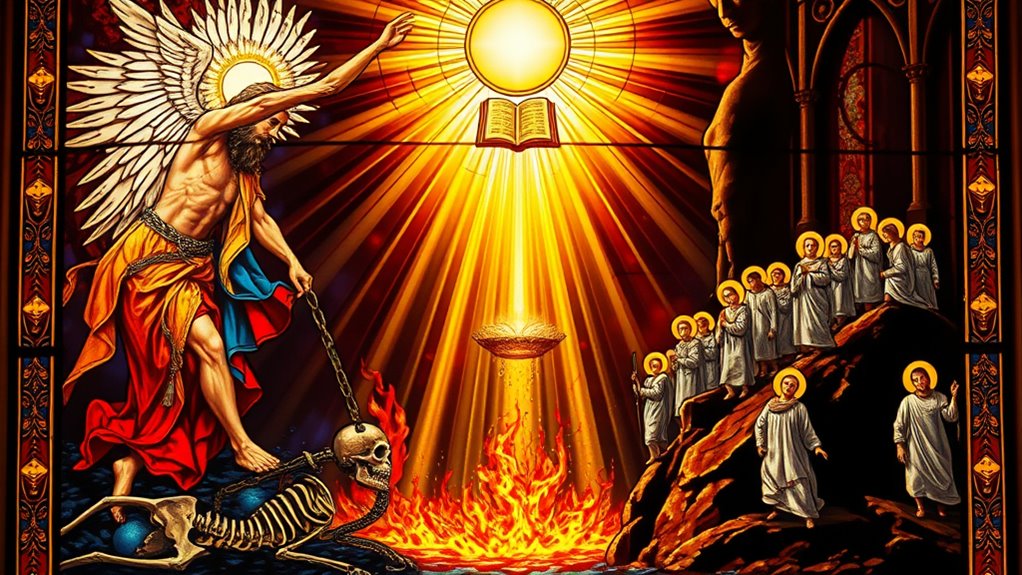
A final judgment follows at the great white throne, where the dead are judged by their works, and death itself is cast into the lake of fire (Revelation 20:11-14). The name Armageddon comes from the Hebrew Har-Magedone, meaning Mount Megiddo, the predicted location of this climactic battle. Rather than destroying the planet, this conflict ends wicked human rule while the earth remains mankind’s eternal home, as affirmed in Psalm 37:29 and Ecclesiastes 1:4.