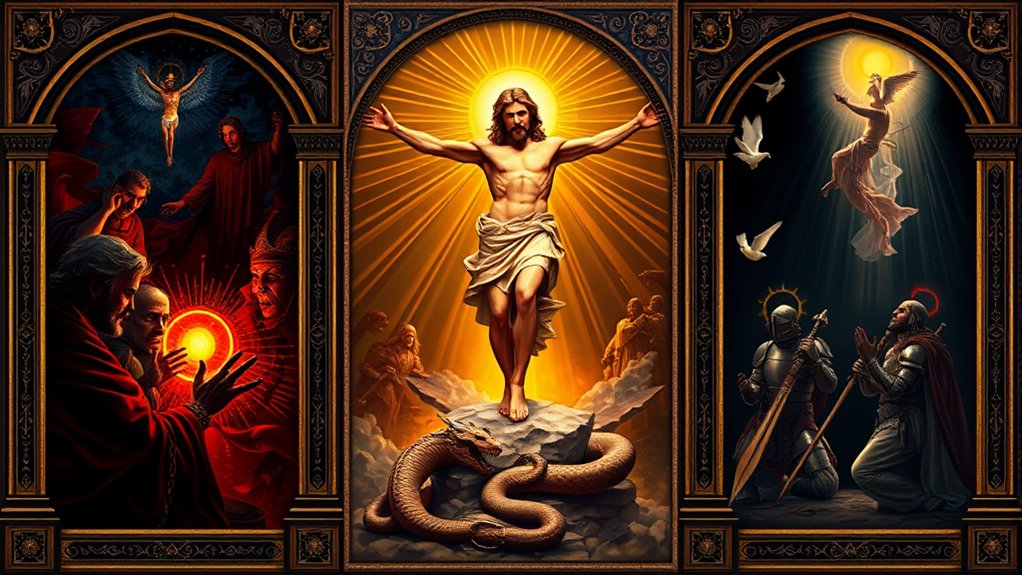

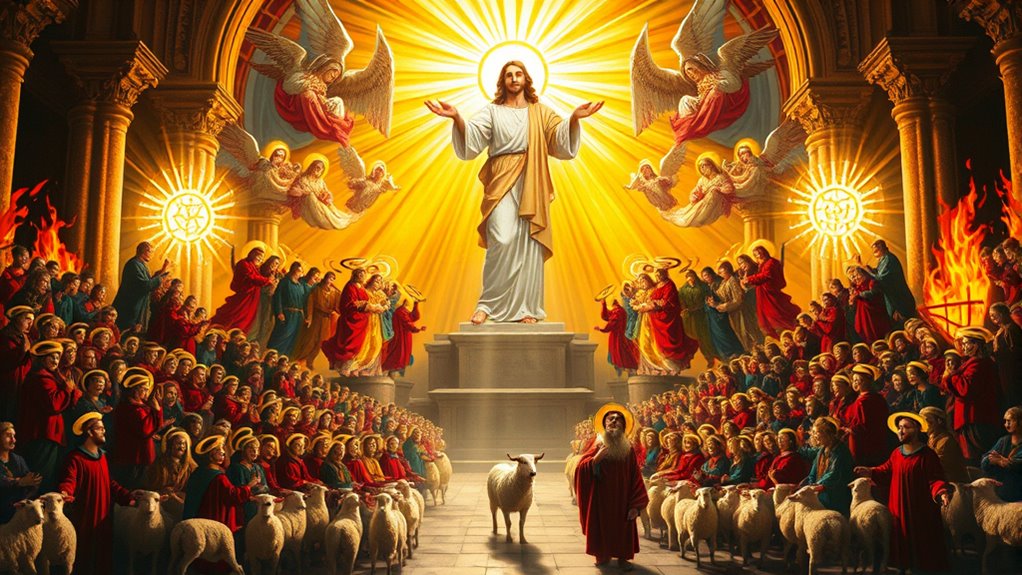
The Bible teaches that death separates body and soul, sending each on a different path until resurrection reunites them. The body remains in the grave, described as “sleeping,” while the soul continues consciously. Believers enter God’s presence immediately, according to 2 Corinthians 5:8 and Philippians 1:23, while unbelievers face torment, as Luke 16 describes. A final resurrection and judgment await everyone. The answers below explore each stage of this journey in greater detail.
Key Takeaways
- At death, body and soul separate—the body remains in the grave while the soul immediately enters either God’s presence or torment.
- Believers’ souls go directly into Christ’s presence after death, while unbelievers face a place of conscious suffering (2 Corinthians 5:8; Luke 16).
- Biblical references to “sleep” describe the body’s appearance in death, not unconsciousness of the soul.
- Both the righteous and unrighteous will be physically resurrected and face final judgment before God (John 5:28–29).
- Eternal destinies are determined by faith in Christ—resulting in eternal life or eternal punishment (Matthew 25:46; John 5:24).
What Actually Happens to Your Body and Soul at Death?
At the moment of death, according to biblical teaching, the body and soul take separate paths that eventually converge again at resurrection.
At death, body and soul diverge — only to converge again at the resurrection.
The physical body remains in the grave, described in Scripture as sleeping until that future resurrection day.
Meanwhile, the soul follows a different course depending on one’s relationship with Christ. For believers, the soul departs immediately into God’s presence. Paul writes in 2 Corinthians 5:8 that to be absent from the body is to be at home with the Lord. Philippians 1:23 echoes this, expressing the desire to depart and be with Christ.
For unbelievers, Scripture indicates a place of torment awaits. Luke 16:22–23 illustrates this vividly, showing the rich man experiencing immediate anguish after death.
Both paths remain temporary until resurrection, when body and soul reunite permanently in their respective eternal destinations. The future resurrection body, according to 1 Corinthians 15, will be imperishable and glorious, reflecting the complete redemption of the whole person God promises to his people.
Are the Dead Conscious or Simply Sleeping?
Among the more debated questions in biblical theology is whether the dead remain conscious between death and resurrection, or whether they enter a state of complete unconsciousness often called “soul sleep.” Scripture uses the word *sleep* repeatedly as a metaphor for death. Daniel 12:2 describes multitudes sleeping in the dust, and John 11:11 calls Lazarus sleeping before plainly stating he had died. Ecclesiastes 9:5 supports unconsciousness, noting the dead know nothing.
However, Luke 16:19–31 portrays Lazarus and the rich man as fully conscious in the afterlife. Revelation 6:9–11 shows souls in heaven actively crying out. Paul himself expressed a desire to depart and be with Christ, suggesting an immediate and conscious fellowship rather than a period of unconscious waiting. Most scholars conclude the *sleep* metaphor describes the body’s appearance, not the soul’s condition, while the soul remains aware, awaiting resurrection. Seventh-day Adventists and Jehovah’s Witnesses are among the contemporary groups that continue to affirm soul sleep as a doctrinal position.
Do the Dead Go Immediately to Heaven or Hell?
Closely tied to the question of consciousness after death is where, exactly, the dead go. Many Christians hold that believers enter God’s presence immediately upon dying. Paul writes in 2 Corinthians 5:8 that departing the body means being present with Christ. Jesus told the repentant thief, “Today you will be with me in paradise” (Luke 23:43), suggesting no delay.
In Luke 16, angels carry Lazarus directly to Abraham’s side, while the rich man finds himself conscious in torment. John’s vision in Revelation 6:9 shows martyred souls actively crying out beneath heaven’s altar. Others, however, argue the dead remain unconscious in the grave until resurrection. On this view, no one enters heaven or hell before the Second Coming. Both Jehovah’s Witnesses and Seventh-day Adventists hold to this teaching of soul sleep, maintaining that the faithful dead remain unconscious until the resurrection.
Classical Christian theology has long recognized an intermediate state, in which disembodied souls exist consciously in Christ’s presence while awaiting the final resurrection and reunification with their glorified bodies.
What Does the Bible Teach About the Resurrection of the Dead?

Running through both the Old and New covenants, the resurrection of the dead stands as one of Scripture’s most consistent and central promises.
Daniel 12:2 and Isaiah 26:19 describe the dead awakening from dust, while Job 19:25–27 speaks of seeing God in the flesh after death.
Hebrews 6:1–2 lists resurrection among Christianity’s foundational teachings.
Jesus taught in John 5:28–29 that all in graves will hear his voice and emerge—some to life, others to condemnation.
His raising of Lazarus after four days foreshadowed what Scripture calls the final resurrection.
Paul describes Christ as the “firstfruits” of the dead in 1 Corinthians 15:20, meaning his resurrection serves as the pattern and guarantee for all who follow. The resurrection promise extends to both the righteous and the unrighteous, as affirmed in Acts 24:15, reflecting God’s desire to restore all who never had a full opportunity to know and follow his standards.
Scripture consistently links the resurrection of the dead with subsequent final judgment, as seen in Hebrews 6:1–2, where both are listed together as elementary and foundational doctrines of the Christian faith.
What the Bible Says About Final Judgment and Eternal Destinations
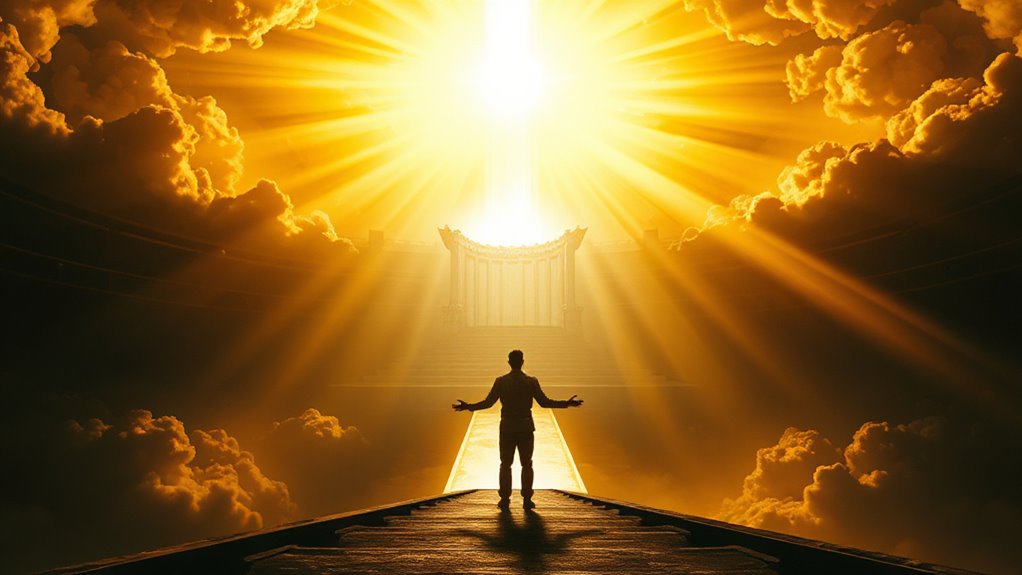
Beyond the resurrection of the dead lies Scripture’s account of final judgment, where every person—believer and unbeliever alike—faces accountability before God.
Revelation 20:11-15 describes a great white throne judgment, where Jesus Christ serves as judge and deeds are weighed against records kept in books. Critically, names absent from the Book of Life result in the lake of fire, described as the second death.
Matthew 25:46 draws a direct contrast: eternal punishment for the unrighteous, eternal life for the righteous. Romans 2:5-6 confirms that God repays according to works.
For believers, Revelation 21:1-7 promises a renewed creation—no death, pain, or sorrow. For the unrighteous, separation from God is permanent.
John 5:24 offers a quieter note: those who believe have already crossed from death into life. Faith in Jesus Christ is identified as the gateway through which eternal life is received, making the decision to surrender to Him the most consequential choice a person can make. Matthew 25:31 describes the Son of Man returning in glory to gather all nations before Him, separating the righteous from the wicked as a shepherd separates sheep from goats.