Christology — the study of Christ’s person and work — directly shapes how local congregations understand themselves. Scripture presents the church as Christ’s bride, a corporate image spanning both covenants. Jesus identified himself as bridegroom in Matthew 9:15, John the Baptist confirmed it in John 3:29, and Revelation 21:2 displays the bride in her fullest glory. This identity calls congregations toward purity, faithfulness, and unity. The fuller picture of what that demands unfolds across five distinct areas.
What Does Scripture Actually Say About Christ as Bridegroom?
Scripture introduces Jesus as a bridegroom not through theological argument but through his own words. In Matthew 9:15, Mark 2:19, and Luke 5:35, Jesus refers to himself directly as a bridegroom when questioned about fasting. This language invites readers to practice humble discernment and mercy when interpreting such metaphors in light of broader teaching about judging others biblical discernment.
At the Wedding at Cana, the headwaiter addresses Jesus as the bridegroom after the water-to-wine miracle. John the Baptist reinforces this identity plainly: “The one who has the bride is the bridegroom” (John 3:29). John himself functioned as the best man, whose role was to bring the bride to the bridegroom at the Jordan River.
These passages establish a consistent portrait. Jesus did not merely use wedding imagery as decoration. He claimed the role deliberately, embedding it across multiple accounts and voices. This bridal imagery extends well beyond the Gospels, appearing throughout the Old Testament in texts such as Hosea, Song of Songs, and Isaiah, where God’s relationship with his people is portrayed through the lens of covenantal marriage.
How the Old Testament Built the Bride of Christ Blueprint
The Old Testament does not arrive at the bride of Christ image suddenly.
Genesis 2 establishes the earliest blueprint, where God builds a woman from man, prefiguring the church as God’s building.
God’s first act of building a woman from man quietly foreshadows His greater work of constructing the church.
Psalm 45 follows with a wedding song picturing a bride receiving her king’s full attention.
Hosea then shows God actively wooing Israel as a wife, promising future restoration.
Ezekiel deepens this further, portraying Israel as a neglected woman whom God transforms through covenant care.
Song of Solomon ties the pattern together.
Each text adds detail, collectively constructing a coherent marital framework fulfilled in Christ’s relationship with the church. The biblical texts unfold within an ancient covenantal worldview that shapes their marital imagery.
Jeremiah adds a sobering note, depicting Israel as a bride whose devotion strayed from her earliest covenant loyalty.
Isaiah intensifies the marital framework by identifying God as both Maker and husband, with Isaiah 54:5 prophetically pointing to Christ as Redeemer and husband of the redeemed people.
What the Bride of Christ Means for the Universal and Local Church
Having traced the marital imagery through the Old Testament, from Genesis to the Song of Solomon, the question naturally follows: what does this imagery actually mean for the church today? Scholars note that the bride is not each individual believer but the collective body of all who trust Christ. This distinction carries practical weight:
- The universal church forms one unified spouse across all nations
- Every local congregation represents that same spouse in a specific place
- Faithfulness, not perfection, defines the spouse’s identity during this betrothal period
Together, these truths quietly challenge each local church to take its identity seriously. Scripture reinforces this identity in Revelation 21:2, where the Church is presented as the bride in its most glorious and complete expression. Christ is described as the Bridegroom who sacrificially and lovingly chose the church to be His bride, underscoring that this covenantal relationship is rooted in His deliberate, redemptive act on her behalf. This understanding also points to the importance of corporate worship as a visible expression of that covenant in local congregations.
What Faithfulness Looks Like for the Bride of Christ
Faithfulness, for the bride of Christ, takes shape across five recognizable qualities: purity, faithfulness itself, oneness, obedience, and mercy.
Purity involves being cleansed through Christ’s blood and presented without blemish.
Faithfulness means standing firm in His word despite delays, maintaining singleness of heart.
Oneness, as prayed in John 17:22, reflects unity between Father and Son.
Obedience follows apostolic teachings, submitting to Christ in everything as Ephesians 5 describes.
Mercy rounds out the picture — forgiving freely, exercising compassion without judgment. The overcoming remnant advances this mercy through sacrificial living, applying the blood of the Lamb and embracing God-given identity without loving life unto death.
Together, these qualities define what a congregation committed to Christ actually looks like in practice. When the church embodies virtues such as compassion, kindness, humility, and love, its growing beauty draws others in and brings glory to Christ. A humble heart marked by dependence on God undergirds and sustains all these virtues.
How the Bride of Christ’s Story Ends at the Wedding Feast
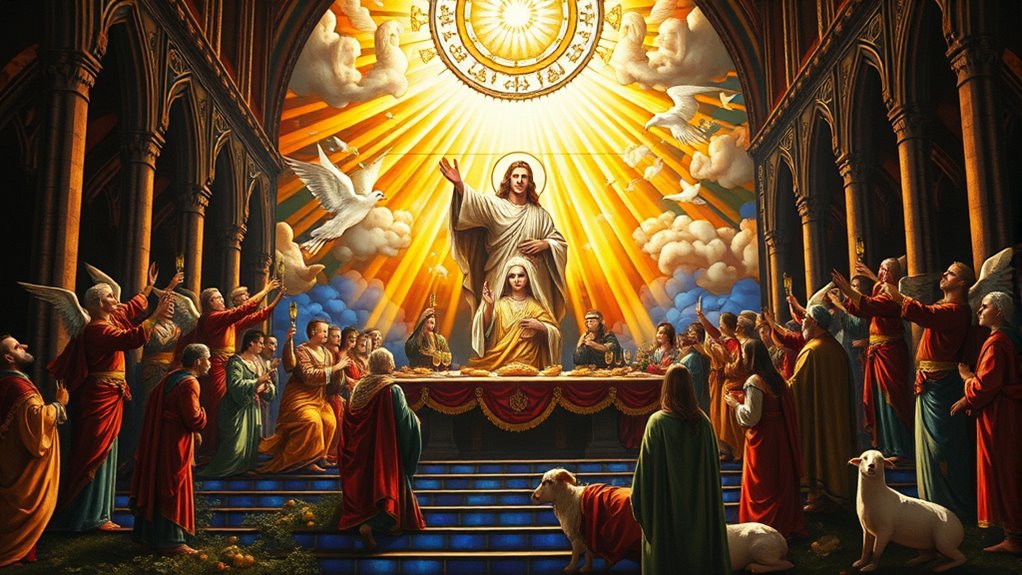
At the end of the story, every thread of the bride’s journey converges on a single moment described in Revelation 19 — the marriage supper of the Lamb. Scripture presents this as the culmination of Christ’s redemptive work, where eternal communion begins.
- An angel declares blessed those invited to this supper (Revelation 19:9)
- Isaiah’s eschatological feast foreshadowed this gathering centuries earlier (Isaiah 25:6-8)
- The celebration never ends, replaced by unbroken fellowship (Revelation 22:17)
The bride, having made herself ready, enters permanent union with Christ. Local congregations today live in anticipation of that conclusion. Scripture compares heaven to a wedding banquet prepared by a king for his son, underscoring that this eternal feast is the very image God chose to define the end of redemptive history. Those who reject the invitation and pursue their own fields and businesses forfeit their place at the table, as invited guests who refused demonstrate the sobering reality that not all who are called will be present at the feast. This vision of a final banquet ties into broader biblical themes of judgment and restoration.