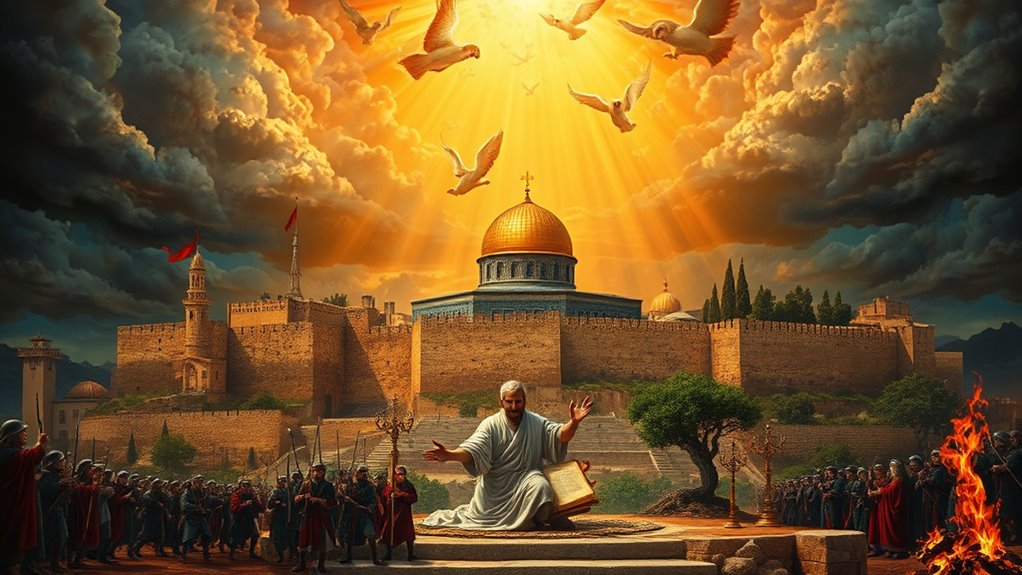
The Bible describes the end times through warnings from Jesus, Paul, and John. Jesus pointed to false messiahs, wars, famines, and persecution as early signs, calling them “birth pains.” Paul identified a coming rebellion and a “man of lawlessness” who enters a rebuilt Temple. Revelation adds cosmic disturbances and judgments unfolding in sequence. One clear marker Jesus gave is the gospel reaching all nations. Those who explore further will find both deeper warnings and practical guidance for faithful living today.
Key Takeaways
- Jesus warned of false messiahs, wars, famines, plagues, and persecution as signs preceding the end times.
- Paul described a future “man of lawlessness” who would declare himself God, signaling a great rebellion.
- Revelation describes sequential judgments—conquest, war, famine, and cosmic disturbances—marking the earth’s final days.
- Israel’s reestablishment in 1948 and worldwide gospel proclamation are considered key prophetic milestones by many scholars.
- Only God the Father knows the exact hour; believers are called to remain faithful, holy, and missional.
What Are the Biblical Signs of the End Times?
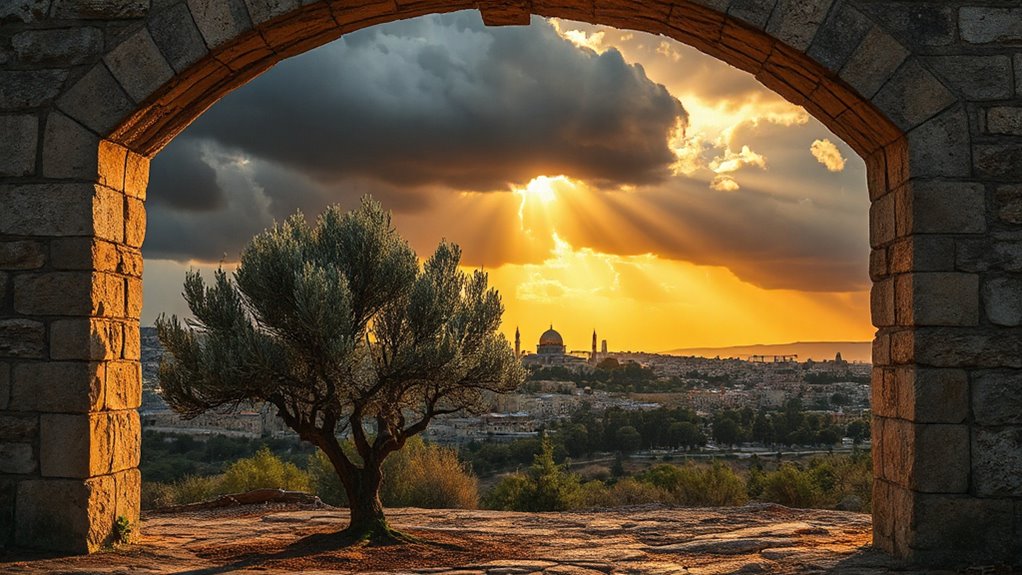
According to Scripture, several specific signs mark the approach of the end times, and understanding them requires looking closely at what the Bible actually says.
Scripture outlines specific signs marking the end times — but understanding them demands careful, faithful attention to what the Bible actually says.
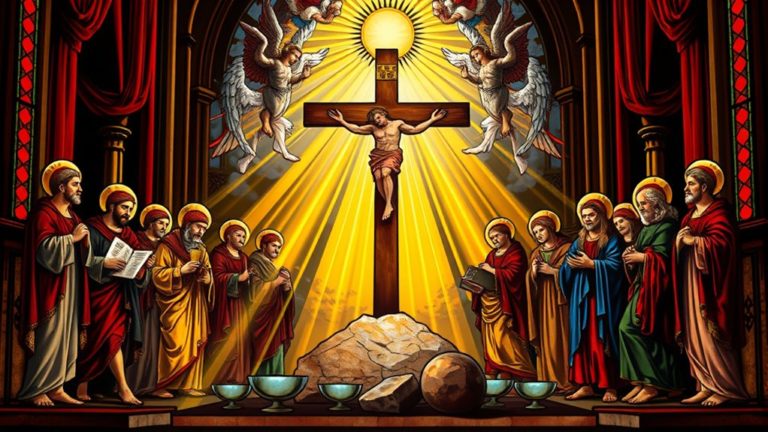
Matthew 24 records Jesus listing these indicators directly: false messiahs deceiving multitudes, wars between nations, famines, plagues, and earthquakes in various places. He called these events “the beginning of birth pains,” suggesting they intensify over time rather than arriving all at once. The Gospel accounts were given in a context tied to Jerusalem and its prophetic significance, including sites like Golgotha that anchor Jesus’ death in history.
Revelation 6 adds imagery of horsemen bringing conflict, food scarcity, and the removal of peace from the earth.
Second Timothy 3:1-4 describes a society marked by selfishness, pride, and weakening family bonds.
Taken together, these passages present a recognizable pattern, one that biblical scholars suggest believers should watch for with discernment rather than fear. The Bible also foretells that mankind would ruin the earth, a warning recorded in Revelation 11:18 that many connect to growing environmental concerns. Among the most significant prophetic developments, Israel’s reestablishment in its land in 1948 is widely regarded as a milestone marker in end-times prophecy.
What Did Jesus Specifically Warn About the Last Days?

When Jesus addressed his disciples on the Mount of Olives, recorded in Matthew 24, he did not speak in vague generalities but offered specific, categorized warnings about what the last days would look like.
He cautioned against false messiahs performing convincing signs, urging followers not to pursue claims of Christ appearing in wilderness locations or private rooms. He described persecution, widespread hatred, and societal betrayal among believers. The historical context of prophetic writings helps explain why such warnings resonated with first-century audiences and later readers, including during the post-exilic period.
Wars and national conflicts, he said, were coming but did not signal the immediate end.
Moral decay, including growing lawlessness and diminishing love, would mark the period.
He also pointed to a specific sign, the abomination of desolation, as a moment requiring urgent action.
Despite all warnings, he reminded his followers that only the Father knows the final hour. He further assured that days would be shortened for the sake of the elect during the period of unprecedented tribulation.
Jesus also made clear that the Good News would be preached to all nations before the end would come, presenting the completion of worldwide evangelism as a defining marker of the last days.
What Prophetic Events Will Happen Before Christ Returns?

Scripture outlines several specific events that, according to biblical prophecy, must unfold before Christ returns. Paul identifies a widespread rebellion or apostasy as one key precursor, followed by the revelation of a “man of lawlessness” who enters a rebuilt Temple and declares himself God. The doctrine of the Trinity, which affirms Jesus’ divine personhood distinct from the Father, helps explain why such claims would be blasphemous and profound in their implications for worship and authority, as Jesus is both fully divine and distinct in person.
Jesus described cosmic disturbances accompanying these events, including the sun darkening, the moon failing to shine, and stars falling from heaven. Jerusalem, according to Daniel and Luke, will face military encirclement signaling coming desolation.
The book of Revelation adds further detail through seven seals and trumpets, introducing conquest, war, famine, and pestilence in sequence. Taken together, these prophetic markers form a recognizable pattern that, biblical writers suggest, will signal Christ’s return is drawing near. Among the remaining events yet to be fulfilled, many scholars point to a future seven-year tribulation period as a central component of end-times prophecy.
Paul also notes that a restraining force on evil currently holds back the full emergence of lawlessness, and that its removal will precede the lawless one’s rise to power.
How Should Christians Prepare for the End Times?

Preparing for the end times, according to biblical teaching, is less about stockpiling supplies than about shaping character and deepening commitment. Scripture calls believers to pursue holiness, remaining spotless and blameless as 2 Peter 3:14 instructs, while living purified through Christ’s blood and shaped by the Spirit’s sanctifying work. Regular spiritual disciplines like daily Bible reading and prayer help form the habits that sustain readiness, so Christians are urged to maintain daily practices that deepen faith.
Christians are also encouraged to stay missional, continuing God’s work daily as John 9:4 directs, and doing good especially within the household of faith, per Galatians 6:10. Saturating the mind with Scripture, worshipping faithfully, and obeying Christ’s commands round out this preparation.
Matthew 24:45–46 frames readiness as faithful servanthood. Ultimately, biblical end-times preparation centers on drawing closer to Christ, living unashamed, and proclaiming the gospel steadily until he returns. Jesus made clear that no one knows the day or hour of his return, making faithful daily living the only truly reliable posture for every generation of believers.
Serving those who suffer—those in bondage, poverty, or chronic hardship—reflects participation in the restoration God promises at Christ’s return, when all things are renewed and the fullness of his presence is finally restored to creation.