
The Bible offers no detailed physical description of Jesus during His earthly ministry. The four Gospels record no mention of His height, hair, or facial features. Isaiah 53:2 comes closest, suggesting an ordinary, unremarkable appearance with “no beauty or majesty to attract us.” Paul’s words in 2 Corinthians 5:16 further discourage focusing on Christ’s physical form. What Scripture emphasizes instead is identity, mission, and character — and there is much more to uncover ahead.
Key Takeaways
- The Bible provides no detailed physical description of Jesus in the New Testament Gospels, omitting height, weight, and facial features entirely.
- Isaiah 53:2 suggests Jesus had an ordinary, unremarkable appearance with “no beauty or majesty” to distinguish Him from others.
- Isaiah 52:14 describes the Servant’s appearance as disfigured beyond human likeness, likely referencing suffering during crucifixion.
- Historical and anthropological evidence suggests Jesus probably had olive to brown skin, dark hair, and dark brown eyes.
- Paul’s statement in 2 Corinthians 5:16 indicates believers should not regard Christ by physical appearance but by spirit.
What Does the Bible Say About What Jesus Looked Like?

Surprisingly, the Bible offers no detailed physical description of Jesus during His earthly ministry. The New Testament gospels show little interest in His racial features or specific physical traits. No confirmed first-century historical records describe His appearance either.
Scripture instead emphasizes His spiritual identity, mission, and character. Isaiah 53:2 offers the closest reference, stating He had “no beauty or majesty to attract us to Him,” suggesting an ordinary, unremarkable appearance. This focus reflects the biblical teaching that God is fundamentally spirit and invisible, so earthly descriptions are necessarily limited and symbolic divine invisibility.
He likely resembled a typical Jewish male from Nazareth, blending naturally among His contemporaries. This absence of physical description was not accidental.
Early Christian writers understood that Jesus’s outward appearance held little theological weight. What mattered was not how He looked, but who He was and what He came to accomplish. Isaiah 52:14 describes a separate moment, when His appearance was disfigured beyond recognition due to the brutal suffering He endured before the crucifixion.
What truly set Jesus apart from those around Him were His words and miracles, not any distinguishing physical feature that would have drawn immediate attention.
What Does Isaiah 53 Reveal About Jesus’s Appearance?

Few passages in the Old Testament speak more directly to the physical appearance of Jesus than Isaiah 53. The text describes the Servant as lacking stately form, majestic splendor, or any striking appearance that might draw attention.
No muscular kingly stature appears in the description. Instead, the prophet compares the figure to a tender shoot growing from dry ground, imagery that connects physical ordinariness with humble origins. This prophetic language aligns with the broader biblical structure that divides the scriptures into 1,189 chapters enabling such passages to be located and studied.
The prophet pictures no commanding figure, only a tender shoot rising quietly from dry and unremarkable ground.
Isaiah 52:14 adds a sharper detail, noting that the Servant’s appearance was disfigured beyond human likeness, a condition Matthew 26:67 and John 19:3 later associate with the brutality of crucifixion.
Scholars note the prophecy emphasizes identity and mission over physical features, suggesting the Servant’s significance was revealed through character and sacrifice rather than external appearance. The chapter also connects this sacrifice to the fulfillment of God’s Covenant of Peace, through which Christ bore the iniquities of many to make them accounted righteous.
The dominant image of Jesus in churches worldwide traces largely to a single painting produced in 1940 by Warner Sallman, reproduced more than 500 million times, depicting features associated with northern European appearance rather than the Near Eastern origins the historical record supports.
What Did Jesus Really Look Like Historically?
Where Isaiah 53 leaves the subject intentionally vague, historical and archaeological research offers something more grounded.
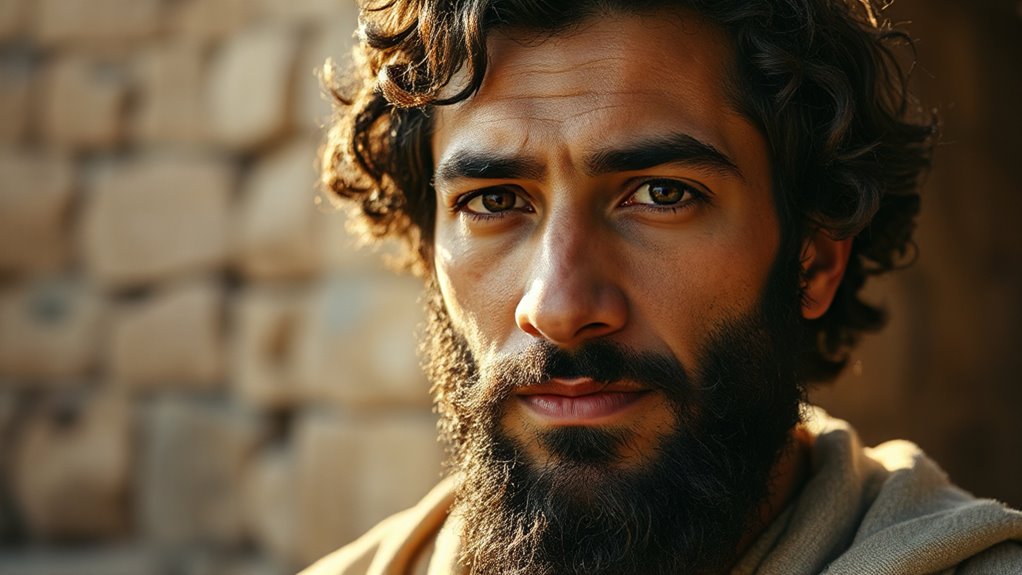
Anthropological studies of first-century Judean and Galilean populations indicate that Jewish men of that era typically had olive to brown skin, dark brown to black hair, and dark brown eyes. This aligns with the name Yeshua meaning “Yahweh saves,” reflecting his Jewish identity in both name and likely appearance.
Researchers estimate Jesus stood around 5 feet 5 inches tall, consistent with the regional male average.
Archaeological findings from burial sites in Judea and Galilee reinforce this picture.
Nothing in the physical record suggests distinguishing traits that would have made him stand out in a crowd.
Modern scholars broadly agree that the familiar European depictions, bearded, fair-skinned, with light wavy hair, reflect later cultural influences rather than historical reality.
The evidence points toward an ordinary-looking first-century Jewish man.
Research on ancient skeletons suggests Judeans were biologically closer to present-day Samaritans than to other modern populations.
The earliest known images of Jesus emerged in the first through third centuries A.D., long after his lifetime and shaped more by artistic convention than historical record.
Why Jesus’s Appearance Was Never the Point of the Gospel Accounts

The four canonical Gospels, Matthew, Mark, Luke, and John, record no physical description of Jesus during his earthly ministry. Height, weight, and facial features are absent throughout the New Testament narrative.
Scholars note this omission was likely intentional.
Paul states in 2 Corinthians 5:16 that believers no longer regard Christ according to the flesh.
The gospel’s core message, outlined in 1 Corinthians 15:3-4, centers on death and resurrection rather than physical identity.
Galatians 3:28 and Romans 10:12 further suggest that anchoring faith to a specific appearance could create barriers across cultures and nations.
John 20:29 reinforces that blessing belongs to those who believe without seeing.
The Gospels consistently redirect attention away from form and toward the theological significance of what Jesus accomplished. Even in the post-resurrection accounts, witnesses such as Mary Magdalene initially failed to recognize Jesus, suggesting that physical identity was secondary to his spoken word and presence.
Early Christian art from the third and fourth centuries depicted Jesus as youthful and beardless, with long curly hair and upper-class Roman dress, before later traditions shifted toward a bearded, more mature figure beginning in the late fourth century. Many early Christians also emphasized spiritual practices such as daily Scripture engagement and prayer as central to following Christ.