

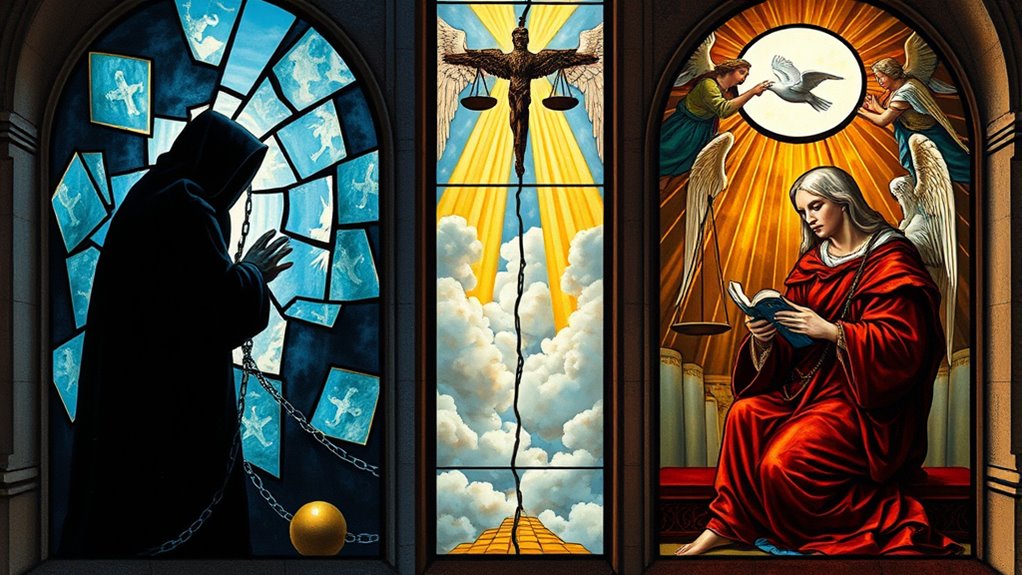
Skepticism betrays Christian virtue by placing human reason above divine revelation as the ultimate standard for truth. While Scripture encourages believers to test teachings and exercise discernment, humanistic skepticism creates an intellectual dead end where perpetual doubt prevents genuine commitment to God. This approach proves self-refuting, as the mind questions its own capacity to know anything with certainty. Faith requires more than intellectual assent—it demands trust extending beyond what reason alone can verify. The tension between healthy examination and corrosive doubt has shaped Protestant history for centuries, revealing essential distinctions that illuminate the path forward.
While skepticism often carries negative connotations in religious circles, the relationship between doubt and Christian faith reveals a more nuanced picture than either complete rejection or wholehearted embrace might suggest. The tension between questioning and believing has shaped Protestant development for centuries, creating a dynamic that continues to influence how believers approach spiritual truth.
Doubt and faith exist in tension rather than opposition, shaping how Protestant believers have pursued spiritual truth across centuries.
Christian tradition defines skepticism primarily as disbelief in spiritual truths, particularly concerning the Lord’s return as warned in Scripture. This form of doubt arises from human intellect instability and conflicting viewpoints, manifesting as questioning of fundamental faith principles. The ancient Greek term skepsis simply meant investigation, an attitude of examining knowledge claims without immediate affirmation. This philosophical foundation aimed at suspending judgment until adequate knowledge could be attained.
The challenge emerges when skepticism attacks Scripture’s authenticity, contests subjective experience as evidence of divine contact, or questions the historical success of the church. Faith requires commitment as a foundation for life and worldview, extending beyond mere intellectual assent to encompass the whole self. Pascal observed that Christians lack rational proofs, relying instead on faith as a sensible response to spiritual realities.
However, Scripture itself encourages a form of discernment that resembles critical thinking. Believers are instructed to test all things and hold fast to what proves good, avoiding hasty belief without deliberation. This biblical approach suggests that thoughtful examination differs from the destructive doubt that undermines faith foundations. Religious skepticism as a process for discovering truth allows questioning specific claims, such as particular miracle accounts, while accepting broader historical facts about Jesus.
The problem intensifies when skepticism becomes humanistic philosophy, measuring all reality by the human mind as ultimate standard. This self-refuting position undermines its own knowledge claims, creating an intellectual dead end. Yet many individuals encounter Christianity precisely through analytical engagement with skeptics online, leading them from doubt toward faith. The path forward requires distinguishing between healthy discernment that strengthens belief and corrosive skepticism that prevents commitment altogether. Recognizing false prophets and testing teachings against Scripture helps protect communities from deception.