






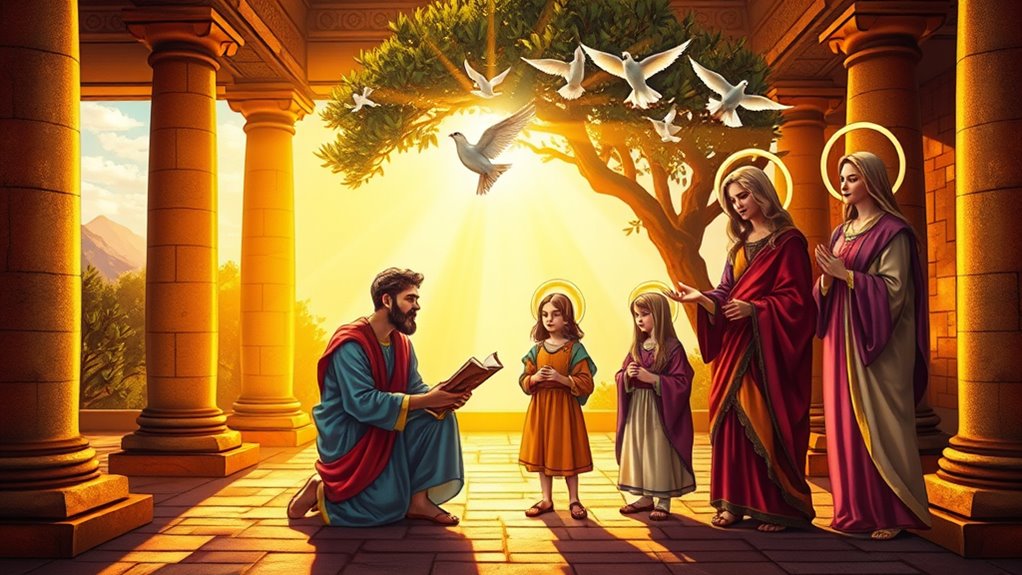
The Bible describes children as “a heritage from the Lord” and “a reward” in Psalm 127:3, establishing their worth as intentional gifts bearing God’s image rather than mere biological outcomes. Jesus rebuked disciples who turned children away, declaring in Mark 10:14-16 that the kingdom of God belongs to them and modeling their reception with joy. Scripture positions children within God’s redemptive purposes, calling parents to raise them through daily instruction rooted in Deuteronomy 6:7 and Ephesians 6:4, balancing correction with encouragement that reflects divine character and prepares hearts for faith.
Key Takeaways
- Children are heritage and rewards from God, created as His image-bearers with inherent worth and belonging to His kingdom.
- Jesus affirmed children’s value by rebuking those who turned them away and equating welcoming children with welcoming Christ Himself.
- God’s purpose for children includes filling the earth with image-bearers and advancing His redemptive work through generations.
- Parents must teach children God’s ways through daily routines, Bible reading, and deliberate discipleship as commanded in Scripture.
- Biblical parenting balances correction with encouragement, reflecting God’s character without provoking children to anger or discouragement.
What the Bible Says About Children’s Worth and Purpose
Throughout Scripture, children occupy a distinctive position in God’s design for humanity, described not as afterthoughts or mere extensions of their parents but as intentional gifts with inherent worth. Psalm 127:3 identifies them as “a heritage from the Lord” and “a reward from him,” language that establishes their value independent of accomplishment or utility.
The New Testament reinforces this perspective through Christ’s teachings. In Mark 10:14-16, Jesus rebukes disciples who turn children away, declaring that “the kingdom of God belongs to such as these.” Matthew 18:3-5 goes further, stating that welcoming a child is equivalent to welcoming Christ himself. These passages present children as image-bearers of God, purposed for disciple-making and worthy of reception with joy. All people, including children, are created in God’s image, which establishes their fundamental worth and dignity regardless of age or social standing.
God’s original command to humanity, “be fruitful and multiply”, frames procreation as obedience to divine design rather than merely personal preference. This command positions children within God’s intention to fill the earth with His image-bearers, giving theological purpose to human reproduction beyond biological or social considerations. Regular engagement in daily Bible reading and community life further supports parents and communities in nurturing children’s spiritual growth.
Biblical Principles for Teaching and Raising Godly Children

Scripture presents child-rearing not as a casual endeavor but as a sacred responsibility with eternal implications, one that requires deliberate attention to both divine instruction and daily practice. Beginners can benefit from a structured approach to spiritual formation, such as reading the Gospels and using the observation-interpretation-application method to guide discussions with children.
Child-rearing is not casual; it is a sacred responsibility with eternal implications requiring deliberate attention to divine instruction and daily practice.
Deuteronomy 6:7 calls parents to discuss God’s commandments throughout daily routines—when sitting at home, walking along the road, lying down, and rising up. This continual presence creates opportunities to impart truth and address teachable moments.
Proverbs 22:6 advises training children in the way they should go, establishing patterns that endure into adulthood.
Ephesians 6:4 instructs fathers to bring up children in the training and instruction of the Lord without provoking them to anger. The process balances correction with encouragement, rooted in reflecting God’s character rather than parental preference alone.
Parents serve as the primary human representation of God in a child’s life, making their own sanctification essential to the influence they have on their children.
Following Jesus’ example of leadership by serving provides a foundational model for parenting that demonstrates love and authority in harmony.