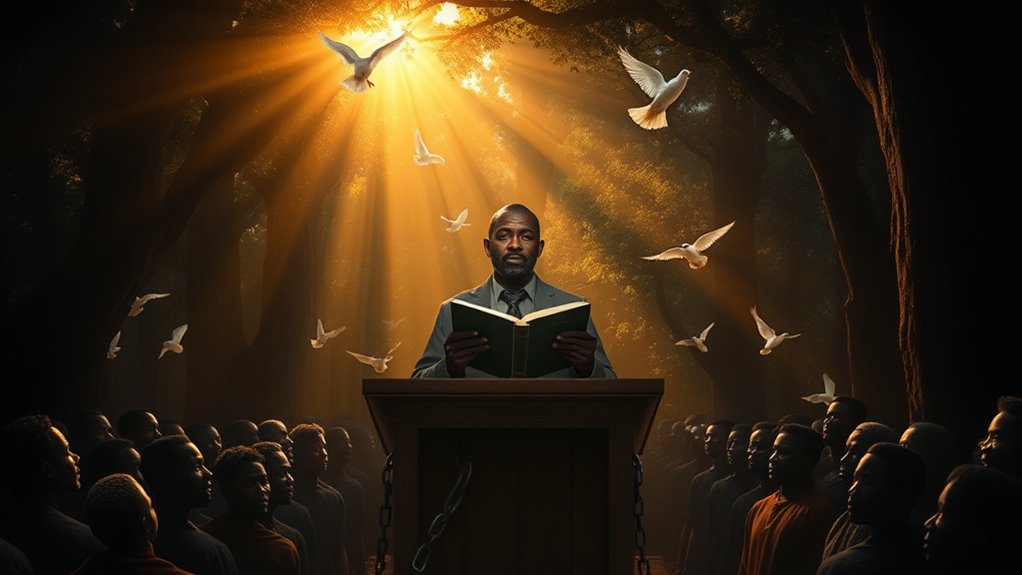
Gowan Pamphlet, born enslaved around 1748–1750 in Williamsburg, Virginia, defied colonial restrictions by secretly preaching to Black congregants in the woods beginning in the 1770s. After being ordained in 1772 as one of the first Black preachers in the colonies, he built a congregation that grew from 200 members in 1781 to 500 by 1793, despite facing accusations and legal bans on preachers of color. Manumitted in 1793, Pamphlet founded what became First Baptist Church in Williamsburg, compelling white Baptists to confront contradictions between their faith and slavery’s realities.
Gowan Pamphlet defied Virginia’s legal barriers against black preachers to build one of the earliest African American congregations in the South. Born enslaved around 1748-1750 and owned by Jane Vobe, who operated the King’s Arms Tavern in Williamsburg, he learned to read the Bible and attended services at Bruton Parish Church. His surname likely came from Thomas Paine’s revolutionary pamphlet *Common Sense*, reflecting the political ideas circulating through colonial Virginia.
Born enslaved yet self-educated, Gowan Pamphlet took his very name from revolutionary ideas, becoming one of the South’s pioneering black preachers.
In the 1770s, Pamphlet began preaching after an itinerant black minister named Moses was whipped and expelled for holding meetings. He conducted services secretly five to six miles southwest of Williamsburg in the Green Spring area, gathering enslaved and free blacks away from enslavers and patrollers. In 1772, with Vobe’s permission, he became one of the first ordained black preachers in the colonies.
His informal congregation grew from 200 members in 1781 to around 500 by 1793, even as Virginia authorities feared slave uprisings and the General Association of Baptists banned preachers of color from speaking. Pamphlet ignored the decree, risking excommunication and facing prejudice-fueled accusations including horse theft in 1779 and participation in a slave revolt plot in 1793. He continued preaching throughout the American Revolution, even during British occupation of Williamsburg, when he chose not to escape.
Pamphlet moved with Vobe’s household to Chesterfield County near Richmond in 1785-1786, then returned to Williamsburg in 1791 with his new owner, David Miller, Vobe’s son. Miller manumitted Pamphlet by deed in September 1793, recording it publicly in York County that December.
In October 1793, Pamphlet’s Church of black people at Williamsburg gained acceptance into the white-run Dover Baptist Association. His persistence forced Baptists to confront the discipline of slave-holding members and reconsider evangelical doctrines on slavery.
Pamphlet ministered until his death around 1807-1808, founding what is now First Baptist Church in Williamsburg. Today, James Ingram portrays him at Colonial Williamsburg, preserving the memory of a leader who challenged both legal and religious barriers. The story of his ministry also highlights early American religious developments, including the role of covenantal promises in shaping community identity.