



The New Testament contains no direct verse prohibiting tattoos, a significant omission given how thoroughly early epistles addressed behavioral concerns. Tattoos were common across the Roman Empire in the first century, used to mark slaves, gladiators, and criminals — groups likely represented in early churches. Scholars generally interpret the silence as indicating a lack of moral concern rather than oversight. The deeper questions around context, freedom, and content reveal a more nuanced picture ahead.
Key Takeaways
- The New Testament contains no verse that directly addresses or prohibits tattooing, despite tattoos being common in the first-century Roman Empire.
- Leviticus 19:28, frequently cited against tattoos, is an Old Testament passage specifically tied to pagan mourning rites, not general body modification.
- The “body as temple” argument in 1 Corinthians 6 addresses sexual immorality and spiritual apostasy, not neutral physical practices like tattoos.
- Romans 14 classifies tattoos among disputable matters, leaving the decision to individual Christian conscience rather than explicit command.
- Tattoo content can become sinful if it depicts false gods, occult symbols, profanity, or glorifies sexual immorality, as motive and content matter.
Does the New Testament Actually Mention Tattoos?

Those searching the New Testament for a clear ruling on tattoos will not find one. No verse directly addresses the practice. This silence is notable given that tattoos were common throughout the Roman Empire during the first century.
Romans used them to mark slaves, gladiators, and criminals. Many early Christians were themselves slaves, likely bearing identifying marks on their skin. Yet the New Testament epistles, which address numerous behavioral issues in specific detail, never mention tattooing. Scholars suggest this absence reflects a lack of moral concern rather than an oversight.
The new covenant established through Christ does not include commandments about body marking. That gap creates a gray area, leaving modern Christians without explicit scriptural direction on the subject. The only Old Testament passage commonly cited against tattoos is Leviticus 19:28, which was directed at Israel in response to ancient pagan mourning rituals. Today, about 30% of Americans have at least one tattoo, making the absence of New Testament guidance on the practice increasingly relevant to modern believers.
Why Leviticus 19:28 Doesn’t Settle the Tattoo Debate

Many Christians point to Leviticus 19:28 as the definitive biblical argument against tattoos, but a closer reading of the passage raises substantial doubts about that application.
The verse is situated within a larger section dealing with pagan mourning rites, not ornamental body alteration. Scholar Robert Alter observes that the Hebrew word nefesh in this context denotes specifically the dead, linking the prohibition to bereavement practices rather than general tattooing. The Hebrew noun rendered as “tattoo” occurs only once in all of Scripture, leaving its exact meaning ambiguous.
Early Jewish exegetes, including Abraham ibn Ezra, understood the passage as addressing mourning customs specifically. Moshe Isaac Ashkenazy further explained that tattooing served as a way to remember the deceased by carving names or pictures on the hand or arm, viewing the practice as a denial of the soul’s survival after death. Without firmer textual support, invoking Leviticus 19:28 against contemporary tattooing depends on assumptions the passage itself does not fully justify.
Why “Body as Temple” Isn’t a Blanket Ban on Tattoos

Once the limitations of Leviticus 19:28 are acknowledged, a second biblical argument steps forward to fill the gap: the idea that the human body is a temple of God, and that tattoos consequently constitute a form of desecration. The passage originates in 1 Corinthians 6, where Paul addressed sexual immorality tied directly to Corinthian temple prostitution and pagan worship.
Some theologians note that Paul’s “temple” may reference the corporate church body rather than individual bodies. Either way, his concern was spiritual apostasy through sexual sin, not neutral physical practices. Applying this passage to tattoos extends Paul’s meaning well beyond its original context. Decisions about body modification, scholars suggest, belong more appropriately to personal prayer and honest reflection than to this particular scripture.
The theological arc of the temple throughout Scripture moves toward God’s nearness with humanity, culminating in God’s Spirit dwelling within individual believers rather than in any physical structure or sacred site. Paul himself draws a sharp distinction by placing sexual sin in a unique category, warning in 1 Corinthians 6:18 that the sexually immoral person sins against his own body in a way that tattoos and other body modifications simply do not.
Does Christian Freedom Actually Cover Getting a Tattoo?
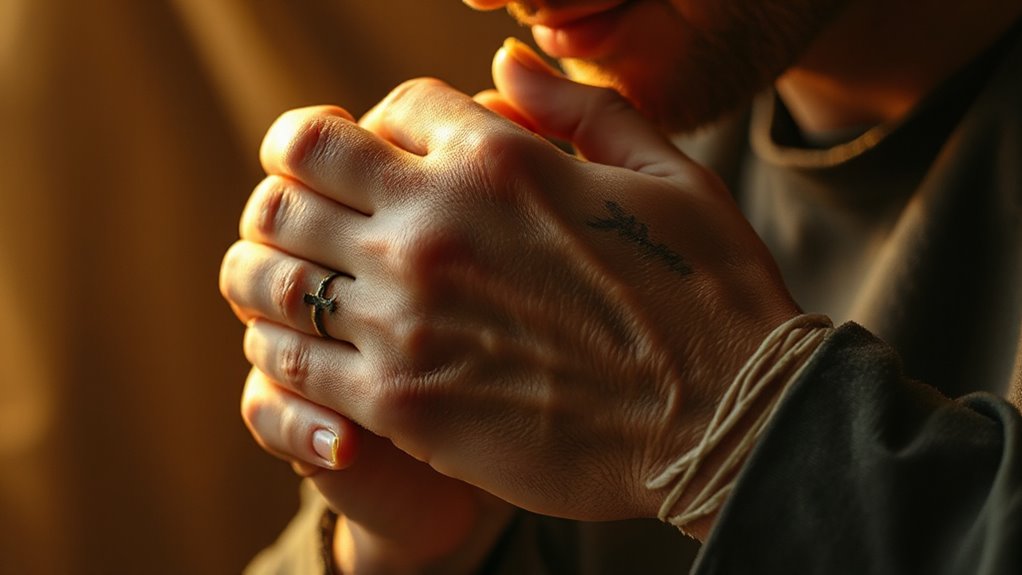
Where the New testament falls silent, Christian freedom steps in to fill the space. Theologians who study Romans 14 place tattoos among disputable matters — decisions left to individual conscience rather than universal command.
Where Scripture is silent, Christian freedom speaks — tattoos belong to conscience, not command.
Jesus fulfilled the Old Testament law (Romans 10:4), and Colossians 2:13-14 confirms that believers are no longer bound by Mosaic regulations. That framework gives Christians room to make personal choices about tattoos without violating Scripture.
However, freedom carries conditions. Galatians 5:19-21 reminds readers that liberty should not open the door to lust, impurity, or idolatry. Motive matters considerably. A tattoo chosen thoughtfully, free from sinful intent, falls within what New Testament teaching permits.
The question, ultimately, is not whether tattoos are allowed, but whether the reasoning behind one reflects honest, clear-headed discernment. Isaiah 44:5 even references someone writing or branding a tattoo upon his hand as an act of devotion to God. Practical wisdom also weighs in, as hasty decisions made without careful reflection can carry long-term consequences for relationships and employment.
Tattoo Content That Crosses Into Sin Territory

Christian freedom over tattoos does not extend equally to every image or phrase a person might consider. Certain content carries clear biblical warning regardless of personal liberty.
Images of false gods violate 1 Corinthians 10:14’s command to flee idolatry, while demonic figures conflict with 1 Corinthians 10:21.
Profane inscriptions break Ephesians 4:29’s prohibition on corrupt speech, and phrases glorifying sexual immorality contradict 1 Corinthians 6:18.
Occult symbols, including pentagrams and astrology designs, fall under Galatians 5:20, which lists sorcery among works of the flesh.
Violence-glorifying imagery sits uneasily beside Romans 12:17–19.
Scholars note that the content itself, not merely the act of tattooing, determines whether sin enters the decision. The question shifts from whether to get a tattoo toward what it actually communicates. All actions, including the choice of tattoo content, must be done in faith, as whatever is not faith is sin according to Romans 14:23.
Leviticus 19:28 explicitly prohibits tattooing in the Old Testament context, yet its concern was covenant faithfulness to Yahweh rather than declaring the permanent marking of skin as intrinsically evil, meaning content and motive remain the decisive factors for New Covenant believers.