




Catholics who rarely open Scripture often cite busy schedules, feelings of inadequacy, or painful associations from childhood. The Church offers a structured path forward. Reading begins with prayer, which shifts engagement from casual to receptive. The Catechism outlines four senses—literal, allegorical, moral, and anagogical—that guide interpretation. A simple read-reflect-respond method, paired with plans connecting Old and New Covenant passages, makes the practice sustainable. Those who press further will find the tradition runs considerably deeper.
Why Most Catholics Never Truly Read Scripture
For many Catholic families, the day moves fast. Children need rides, meals, and help with homework. Faith activities pile up too — Catechism memorization, saint studies, liturgical observances. Scripture quietly gets crowded out.
Beyond busy schedules, many Catholics carry a deeper hesitation. Some feel unqualified to read the Bible without formal guidance. Others grew up in homes where it simply never appeared. Research consistently shows Catholics read Scripture far less than evangelical Protestants. Vatican II’s Dei Verbum explicitly exhorts all the faithful to frequent reading of Scripture.
Poor catechesis often shares the blame. When nobody teaches a practice, it disappears across generations. Some parents even associate Scripture with shame or punishment from their own upbringing, deepening the avoidance. Still, the pattern is not permanent. Understanding why it exists is a reasonable first step. The Bible’s consistent concern for strangers and sojourners in both Old and New Testament texts can model how Scripture shapes communal life and hospitality.
Start Every Session With Prayer, Not a Page
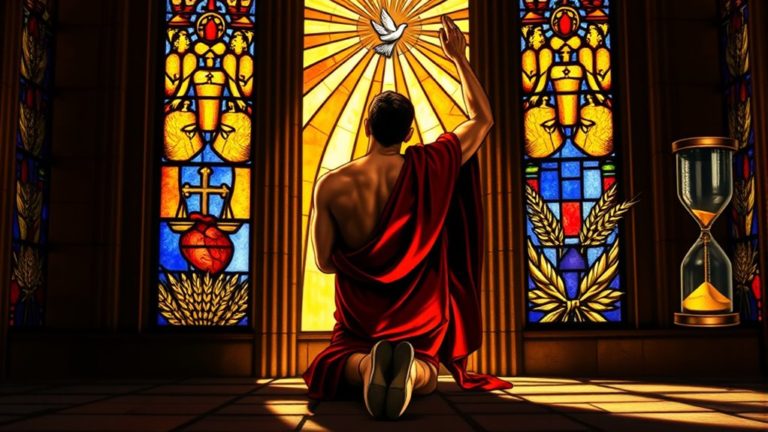
Opening a Bible without first pausing to pray is a bit like tilling dry, hardened ground and expecting a harvest.
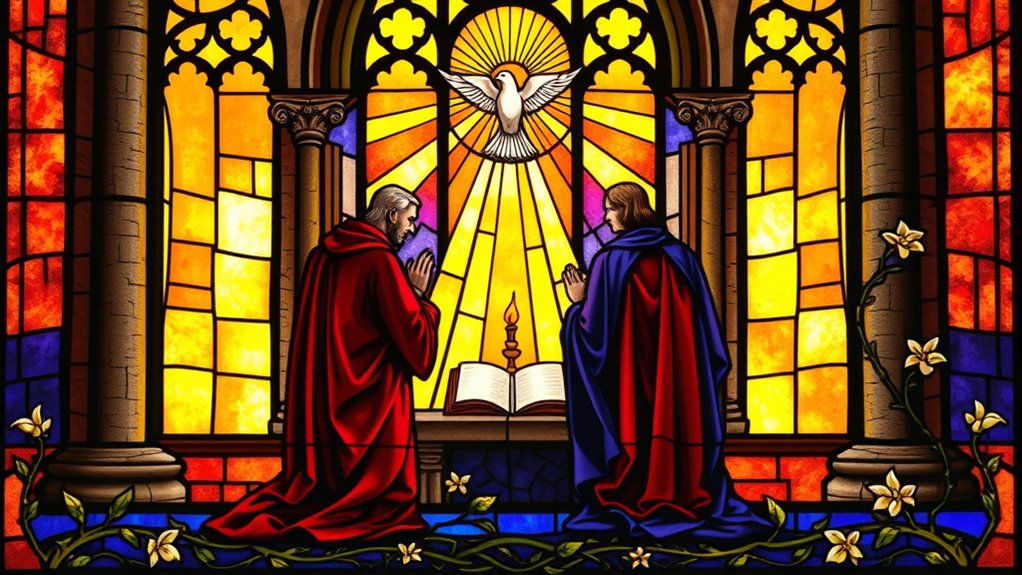
Prayer prepares the heart to receive what God intends to communicate, shifting Scripture from casual reading into a receptive spiritual encounter. Regular prayer also helps to cultivate inner calm that Scripture promises amid life’s anxieties.
Prayer doesn’t just open Scripture — it opens the soul to receive what God is already trying to say.
Three prayers Catholics have long relied on include:
- St. John Chrysostom’s prayer — asks God to open the eyes of the heart.
- St. Thomas Aquinas’s prayer — seeks sharp understanding and retentive memory.
- The Byzantine prayer — requests removal of passions obscuring holy light.
Each tradition points toward the same beginning: prayer first. Catholics have long opened Scripture study by addressing God directly, petitioning for knowledge of God’s will and growth in every good work. A prayerful approach makes reading intentional and transforming, turning time in Scripture into something that restores rather than merely informs.
The Four Senses of Scripture the Church Uses to Read Every Passage
The Catholic Church has long recognized that any passage of Scripture can be read on four distinct levels, each one revealing a different layer of meaning.
The literal sense, defined in Catechism paragraphs 115–119, forms the foundation. Built upon it are three spiritual senses.
The allegorical sense connects events to Christ and the Church.
The moral sense, sometimes called tropological interpretation, guides present behavior.
The anagogical sense, drawn from the Greek word meaning “leading upward,” points toward eternal destiny.
A medieval couplet summarizes the framework neatly: the letter speaks of deeds, allegory of faith, morality of action, and anagogy of destiny. Sr. Hyacinthe Defos du Rau OP demonstrates how to apply all four senses to any passage as part of a guided video series on praying with Scripture.
The four senses were not invented in the Middle Ages but trace their origins to early Christian thinkers, most notably Origen, who first formulated three senses of Scripture in the third century, a framework that Augustine later expanded into the four senses recognized by the Church today. Scripture’s authority
How to Read, Reflect, and Respond to Any Passage
Knowing how to approach a passage of Scripture makes a measurable difference in what a reader takes away from it. Catholic readers are encouraged to treat every passage through three deliberate movements:
- Read slowly and repeatedly, noting key words, action verbs, and the basic facts of who, what, when, and where.
- Reflect by asking what the text means, what it reveals about God’s character, and what its central point is.
- Respond by identifying one honest application for daily life.
Together, these steps transform reading from passive reception into active, faithful engagement with God’s Word. Reading the same passage across multiple Bible translations can broaden understanding by surfacing varied wording and nuance within the same text. James 1:22 reminds readers to be doers of the word and not hearers only, underscoring that engagement with Scripture must move beyond observation and reflection into concrete action. The practice of faith shown in belief, obedience and perseverance helps shape how readers apply Scripture in everyday choices.
How the Old and New Testament Read Each Other
Across centuries of composition, the Old and New covenants were written by different authors, in different languages, and for different immediate audiences—yet Catholic readers are encouraged to treat them as a single, unified witness to God’s actions in history. This unity is rooted in the continuing significance of covenantal promises traced from the patriarchs through later revelation.
Reading plans that pair daily Old and New scriptures passages reflect this approach practically. One example assigns Genesis 1–2 alongside Matthew 1 on the first day.
Such pairings allow each scripture to interpret the other, revealing thematic and prophetic connections without erasing historical context. The result is a reading experience where both covenants illuminate one continuous story. Intentional cross-reference plans are also designed so that related passages appear together, such as James alongside Genesis or Hebrews alongside Leviticus pairings.
Some reading plans deliberately avoid placing related books back-to-back, recognizing that reading Chronicles immediately after Kings risks repeated events dulling the reader’s engagement with each book’s distinct authorial purpose.