







Biblical meditation centers on the deliberate, repeated pondering of Scripture rather than emptying the mind, a practice distinct from Eastern traditions. The Bible instructs believers to meditate on God’s law day and night, as seen in Psalm 1:2, and to reflect on His precepts, character, and promises throughout Psalm 119. This involves slow, active engagement with God’s Word—reading small passages, memorizing verses, asking questions about meaning, and applying insights through prayer and obedience. The practice shapes daily living and spiritual formation when sustained with consistency and openness to the Holy Spirit, with practical methods offering guidance for deeper understanding.
Key Takeaways
- Biblical meditation involves actively filling the mind with Scripture, not emptying it like Eastern meditation practices.
- The Bible commands believers to meditate on God’s Word day and night with delight and consistent focus.
- Meditation should center on God’s law, precepts, character, promises, and the breathed-out Word of Scripture.
- Effective meditation requires slow, deliberate reflection—like chewing cud—pondering Scripture’s meaning word by word.
- Practical methods include choosing small passages, using repetition and memorization, and setting specific times for focused reflection.
What Does Meditation Mean in the Bible?

Biblical meditation, a practice woven throughout Scripture, centers on the deliberate pondering of God’s Word rather than the emptying of the mind. This approach predates Eastern meditation forms like Buddhism and operates on fundamentally different principles.
Rather than seeking mental emptiness, biblical meditation involves active engagement of both heart and mind, filling one’s thoughts with God’s promises and biblical truths. The practice requires slow, deliberate reflection on Scripture’s meaning, allowing words to dwell in the mind through careful consideration.
Scripture employs vivid imagery to describe this process, comparing it to a cow chewing its cud—consuming spiritual food, then processing it thoroughly. Unlike Eastern practices that may require specific postures or sacred spaces, biblical meditation necessitates only an attitude of openness toward God and receptivity to the Holy Spirit‘s work. Many beginners find helpful methods like the Inductive Method to guide observation, interpretation, and application during meditation.
What the Bible Tells Us to Meditate On

Understanding the nature of biblical meditation naturally raises the question of what specific content Scripture directs believers to contemplate.
Psalm 1:2 describes delight in the law of the Lord and meditation on it day and night, while Psalm 119:15 states meditation on precepts with eyes fixed on ways. The psalmist repeats “I will meditate on precepts” four times throughout Psalm 119.
Beyond God’s law, Scripture encourages meditation on God’s character and promises.
Exodus 34:6 proclaims the Lord as merciful, gracious, longsuffering, and abounding in goodness.
Believers are also directed to contemplate God’s strength, as stated in Philippians 4:13, which declares all things possible through him who strengthens.
This meditation involves rigorous reflection on God’s breathed-out word.
Beginners are encouraged to start with the Gospels and use a simple daily plan to build consistency while meditating on Scripture, especially reading plans.
How to Meditate on God’s Word
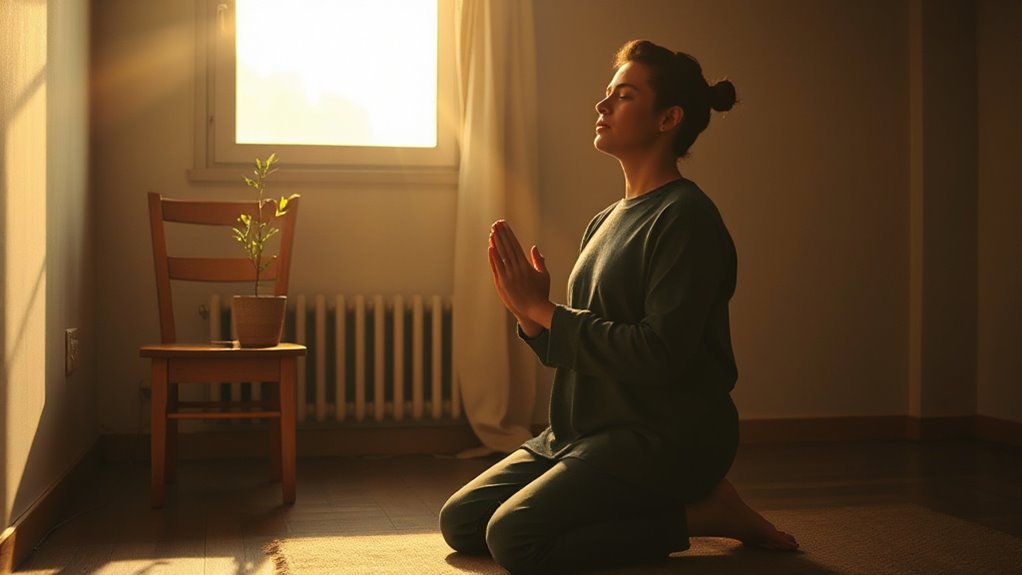
Engaging with Scripture through meditation requires intentional preparation that transforms a casual reading habit into a focused spiritual discipline. Believers carve out specific times and quiet places to focus without interruption, often beginning with prayer for openness to truth.
The selection process involves choosing small sections, from single verses to short chapters, then reading surrounding passages for context. Some practitioners set alarms two to four hours apart between readings. Memorization happens through repetition, speaking words aloud as Joshua 1:8 suggests, and reviewing passages before sleep.
Investigation methods include pondering word by word, taking notes, and asking questions about meaning. Application brings meditation full circle through prayer, visualization, and practical obedience, allowing Scripture to shape daily living rather than remaining theoretical knowledge. Regular church attendance provides community and accountability for sustaining these disciplines church attendance.