
The Bible does not mention the 2024 election by name, but its principles apply directly. Romans 13:1–7 instructs Christians to respect governing authorities, while Proverbs 29:2 emphasizes the importance of leaders with integrity. Scripture encourages civic engagement without endorsing any political party, and Psalm 135:6 reminds believers that God’s sovereignty extends over every election outcome. Those seeking deeper biblical guidance on how to vote wisely will find much more to ponder.
Key Takeaways
- The Bible does not address the 2024 election directly but provides timeless principles guiding faithful civic engagement and voting decisions.
- Romans 13:1–7 teaches that governing authorities are established by God, reminding believers to trust His sovereignty over election outcomes.
- Scripture urges evaluating candidates through a biblical lens, prioritizing character, integrity, and alignment with God’s commands over party loyalty.
- No political party fully reflects God’s kingdom; Christians must hold convictions humbly without surrendering core biblical values for partisan gain.
- Lasting societal change comes through Gospel transformation, not politics alone; believers should vote prayerfully, knowing God’s purposes cannot be thwarted.
What Does the Bible Actually Say About Voting?

While the Bible contains no direct command to vote, many Christians interpret its broader teachings on civic duty and obedience to authority as a foundation for electoral participation.
Romans 13:1-7 instructs believers to submit to governing authorities, and Acts 5:27-29 clarifies that obedience has limits when human law conflicts with God’s commands.
Some draw a parallel between voting and paying taxes, citing Mark 12:17, where Jesus acknowledges Caesar’s legitimate claim.
Matthew 6:10, which expresses the hope that God’s will be done on earth, leads certain believers to view casting a ballot as a meaningful act of faith.
No single verse mandates voting, but collectively, these passages suggest that civic engagement aligns with responsible Christian living. Proverbs 28:12 warns that godless leadership causes great suffering, underscoring why the choice of rulers carries such moral weight.
Isaiah 10:1–2 condemns those who make iniquitous decrees and oppressive statutes, particularly when such laws rob the poor of rights and turn the needy away from justice.
Should Christians Follow Scripture or a Political Party?
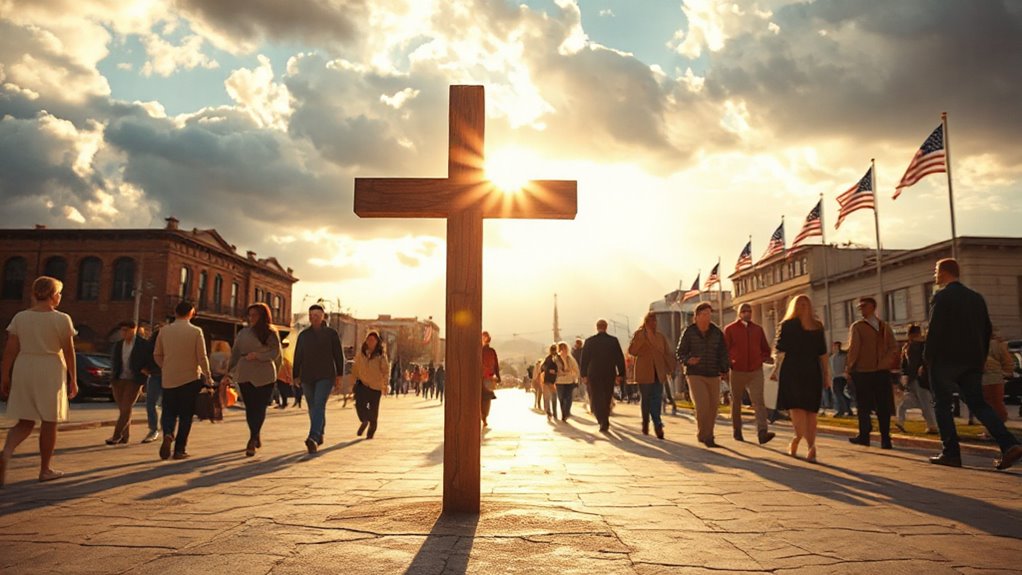
Scripture points Christians toward civic engagement, but it stops well short of endorsing any political party. No party fully reflects the kingdom of God, and the Bible never instructs believers to adopt any partisan platform uncritically. Instead, Christians are called “Kingdom people first,” meaning allegiance to Jesus Christ takes priority over political identity.
That framework shapes how many believers evaluate candidates. Rather than defaulting to party loyalty, Scripture encourages examining policies and character through a biblical lens. When moral distinctions between candidates are clear, character matters.
Core Christian convictions, according to this view, should never be abandoned for partisan advantage. Political parties are temporary institutions. God’s kingdom is not. That contrast, theologians note, helps believers keep political involvement in its proper place. Voting is understood as a civic duty consistent with the biblical call to submit to governing authorities, making participation an expression of faithful Christian living rather than mere political preference.
Biblical figures such as Joseph, Deborah, and Daniel served in significant political roles, demonstrating that faithful engagement with governing structures has deep roots in Scripture itself.
How Should Christians Vote According to the Bible?
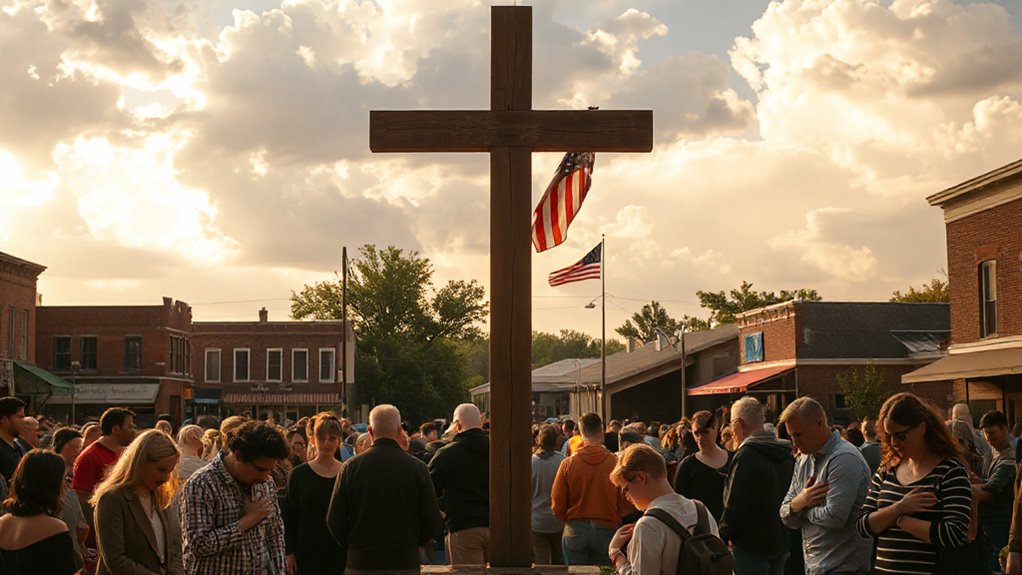
How, then, should Christians translate biblical values into an actual vote? Scripture offers practical direction. Proverbs 14:34 encourages support for candidates whose positions do not conflict with biblical commands on life, family, and faith. Proverbs 29:2 and 29:4 point toward leaders of strong character and integrity. Genesis 2:15 adds stewardship of creation and protection of the vulnerable as priorities worth weighing.
Christians are also encouraged to take into account the unborn, the marginalized, and the broader community when evaluating platforms. The process, according to 1 Timothy 2:1-4 and Galatians 5:22-23, involves prayer, study of Scripture, and careful discernment of a candidate’s character. Ultimately, Romans 14:12 reminds believers that their vote carries accountability before God, making thoughtful participation a serious responsibility. Scripture also warns that no single candidate or party fully embodies God’s will, calling believers to approach every election with humility rather than placing ultimate trust in any political figure or system. Christians are further reminded that lasting change comes not through political office but through the Gospel and the transforming work of the church in hearts and lives.
How Christians Can Trust God’s Sovereignty Over Any Election

Trust, according to Scripture, does not depend on election results. Psalm 135:6 states that God does whatever pleases Him, in every sphere.
Daniel 4:35 reinforces this, noting that no one can hold back His hand. This sovereignty extends to elections. God knows the long-term outcomes of every vote cast, and Romans 13:1–7 indicates that governing authorities are established by Him.
Christians are therefore encouraged to vote, pray, and engage civilly, understanding that God uses human activity to accomplish His purposes. Romans 11:33–36 frames the proper response as worship rather than anxiety.
When election results disappoint, lack of peace may signal misplaced trust. God’s faithfulness throughout history, including during difficult political seasons, provides the foundation for steady confidence.
Human actors carry out their intentions freely while still accomplishing God’s decreed outcomes. The crucifixion itself involved multiple layers of causality, with Jews, Romans, and God each playing distinct roles in a single sovereignly ordained event.
Just as Paul affirms in Romans 9:6 that God’s word has not failed, covenant promises remain valid regardless of which earthly powers rise or fall. The Bible’s composition spanned 1,500 years, reflecting how God worked through diverse historical contexts.