



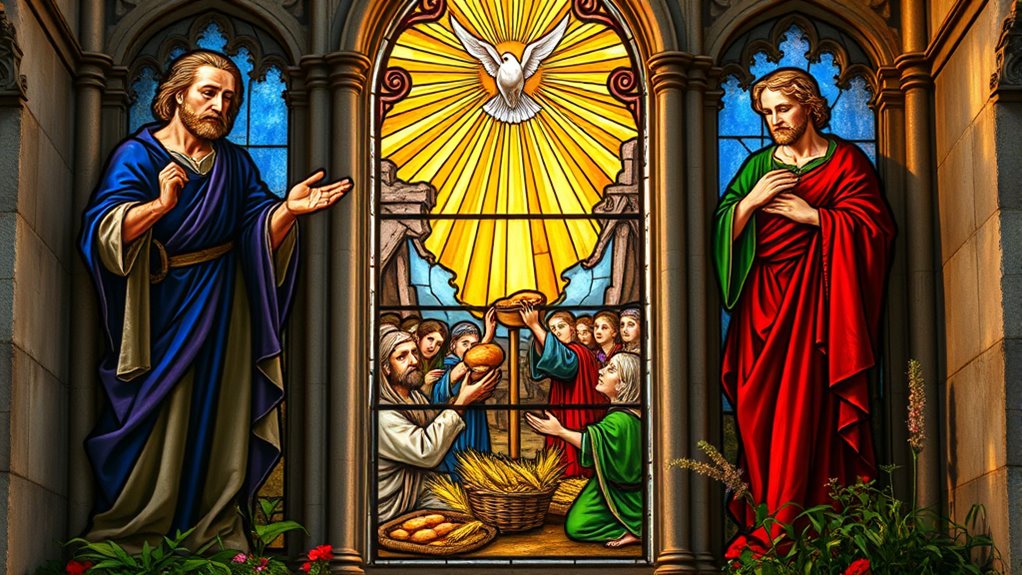



The Bible presents thanksgiving as a consistent command found across both covenants. Psalm 100:4 calls believers to enter God’s presence with gratitude, while 1 Thessalonians 5:18 instructs giving thanks in all circumstances as God’s will. James 1:17 roots gratitude in God’s character, identifying every good gift as coming from Him alone. Hebrews 13:15 frames thanksgiving as a deliberate “sacrifice of praise.” Those who explore further will discover how Scripture shapes thanksgiving into a daily, practiced way of life.
Key Takeaways
- The Bible repeatedly commands thanksgiving, with verses like Psalm 100:4 and 1 Thessalonians 5:18 instructing believers to give thanks consistently.
- Biblical gratitude is rooted in God’s character, faithfulness, and gifts—not in favorable circumstances or personal feelings.
- Scripture frames thanksgiving as deliberate worship, not emotion; Hebrews 13:15 calls it a “sacrifice of praise” offered to God.
- Believers are called to give thanks in all circumstances, including hardship, as an act of obedience and faith in God.
- The ultimate reason for Christian thanksgiving is God’s indescribable gift of Jesus Christ, highlighted in 2 Corinthians 9:15.
What Does the Bible Say About Thanksgiving?

Throughout the Bible, thanksgiving appears not as an occasional sentiment but as a recurring command woven into both the Old and New testimony. Psalm 100:4 calls believers to enter God’s presence with thanksgiving, while Psalm 136:1 grounds gratitude in God’s enduring goodness and love. Regular practices like daily Bible reading help cultivate a grateful heart by deepening understanding of God’s provisions and character, fostering spiritual growth.
The New Testament carries this forward with consistent urgency. Paul instructs believers in 1 Thessalonians 5:18 to give thanks in all circumstances, identifying the practice as God’s will in Christ Jesus. Ephesians 5:20 extends that call further, directing believers to give thanks always.
Scripture connects thanksgiving not to favorable conditions but to God’s character, his faithfulness, and his gifts. James 1:17 reinforces this by identifying every good gift as coming from God alone. Paul further urges believers in Colossians 4:2 to continue steadfastly in prayer with thanksgiving.
Second Corinthians 9:15 points believers toward the ultimate reason for gratitude, offering thanks to God for his indescribable gift of Jesus Christ.
Thanksgiving as Worship, Not Just a Feeling

Scripture frames thanksgiving not as a passing mood but as a deliberate act of worship directed toward God. Psalm 100:4 presents thanksgiving as an entry into God’s presence, pairing it with worship language that honors His name and character.
Thanksgiving is not a passing mood—it is a deliberate act of worship that draws us into God’s presence.
This framing separates biblical thanksgiving from ordinary expressions of personal appreciation. Rather than depending on favorable circumstances, it rests on God’s goodness, steadfast love, and faithfulness, qualities that remain constant. Regular practice of thanksgiving can help it become a natural part of conversation with God, deepening that relationship by reminding believers of God’s character and presence. consistency in practice
First Thessalonians 5:18 reinforces this by calling for thanksgiving in all circumstances, suggesting a practice grounded in truth rather than emotion.
Hebrews 13:15 describes it as a “sacrifice of praise,” language that implies intentional offering. Thanksgiving, by this definition, functions as an act of faith and reverence directed outward, toward God. James 1:17 reminds believers that every good gift originates from above, grounding thanksgiving in the unchanging generosity of God’s nature.
The Hebrew word for praise in Psalm 100 is “toda,” the same word translated as thanksgiving, revealing that praise and thanksgiving are inseparable in their biblical meaning.
How to Make Thanksgiving a Daily Practice

Because thanksgiving is framed in Scripture as a deliberate practice rather than a spontaneous feeling, making it part of daily life becomes a matter of habit and structure rather than waiting for the right mood.
Morning prayer can begin immediately after waking, thanking God for specific provisions rather than offering vague acknowledgment.
Throughout the day, brief spoken thanks can be repeated, turning gratitude into routine rather than occasion.
Gratitude journals, sticky notes, and jars help keep thanksgiving visible and consistent.
Expressing appreciation to coworkers, family members, and service workers extends the practice beyond private devotion into public relationship.
Attaching these habits to existing rhythms—breakfast, commuting, or bedtime—makes them easier to sustain.
Consistency matters more than length, since repeated practice gradually shapes thanksgiving into a way of life. Philippians 2:14-16 connects thankfulness to avoiding complaining and arguing, framing gratitude as part of shining as Christ’s light in the world.
Thanksgiving can also be expressed through worship songs and hymns, which Scripture affirms as a meaningful way to offer gratitude to God alongside spoken prayer and daily action.
A simple reading plan tied to a daily verse can help reinforce the habit by providing regular prompts for thankful reflection.
Why the Bible Commands Thanks Even in Hard Circumstances

The wording avoids suggesting that evil or suffering should be celebrated. Instead, it frames thanksgiving as obedience to God’s will regardless of conditions.
Hebrews 13:15 describes this kind of praise as a “sacrifice,” acknowledging that gratitude can be costly during hardship.
The theological logic, found throughout Psalms 106 and 107, is that thanks is grounded in who God is — good, loving, faithful — rather than in how circumstances feel. The Hebrew texts of the Old Testament often express this trust rooted in God’s character, reflecting the original Hebrew language of many psalms.
Romans 12:12 connects this posture to hope and patience, presenting thankfulness as trustful worship, not denial of pain. Rejoice in hope, be patient in tribulation, and be constant in prayer — these three practices are bound together in a single verse as a unified response to difficulty.
The story of Joseph illustrates how God can use hardship as preparation for a greater purpose, as his imprisonment ultimately positioned him to become one of the most powerful leaders in Egypt, second only to Pharaoh.