
Mormonism and Christianity share familiar words — *God*, *Jesus*, *salvation*, *heaven* — but those words carry very different meanings. Mormonism teaches a complete apostasy of Christ’s original church, a God with a physical body who was once mortal, and a salvation earned through obedience and temple ordinances. Traditional Christianity holds that God is eternal and unchanging, salvation is a free gift through faith alone, and the church was never lost. The contrasts run deeper than most expect.
The Great Apostasy: The Mormon Teaching That Invalidates All of Christianity
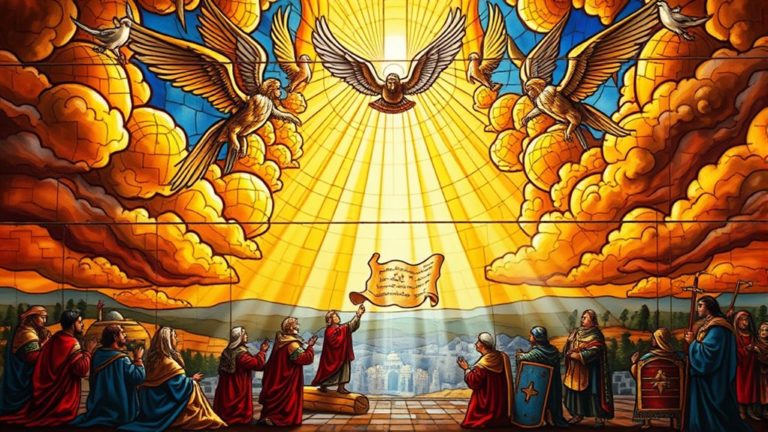
Among the most distinctive teachings in Latter-day Saint theology is the doctrine of the Great Apostasy, which holds that the original church established by Jesus Christ and His Twelve Apostles was completely lost following their deaths.
According to this teaching, priesthood authority, spiritual gifts, and the fullness of the gospel disappeared from the earth entirely.
This belief serves as the foundation for Joseph Smith’s claimed restoration in 1820.
Traditional Christianity, however, points to Matthew 16, where Jesus promised the gates of Hades would never prevail against His Church, as direct evidence that a universal apostasy was never possible. The Old Testament prophet Amos foretold this period as a famine of hearing the words of the Lord, during which people would wander and search but be unable to find them.
Scholars such as Eric Dursteler have identified the Great Apostasy as a linchpin of Mormon faith, meaning that without it, there would be no theological need for Joseph Smith or his claimed restoration.
Christian discussions of apostasy also consider varying biblical terms for the afterlife and judgment, such as Sheol and Hades, which shape how different traditions understand continuity and loss within the church.
The Mormon God vs. the Christian God: A Fundamental Difference
Few theological differences carry more weight than the contrasting views of God held by Latter-day Saints and traditional Christians.
Mormonism teaches that the Father, Son, and Holy Spirit are three separate beings united only in purpose. Traditional Christianity affirms one God existing eternally in three persons sharing one divine essence.
LDS doctrine, confirmed in Doctrine and Covenants 130:22, holds that God possesses a physical body. Christians believe God is an invisible, eternal Spirit.
Mormonism further teaches that God the Father was once a mortal man who progressed into deity, while Christianity maintains God is uncreated, unchanging, and eternally self-existent.
In Mormon teaching, Jesus and Lucifer are considered spirit brothers, both begotten as children of the Father, a claim Christianity firmly rejects given its understanding of Christ as eternally and fully God.
The Lorenzo Snow couplet, published by the LDS Church, captures this progression plainly: “As man now is, God once was: As God now is, man may be”, a statement Christianity rejects entirely in light of God’s declaration that none existed before Him and none shall come after.
These differences extend into how each tradition reads key biblical passages about identity and personhood, for example Old Testament narratives that shape Christian theological claims about God’s uniqueness.
Mormon Salvation vs. Christian Salvation: Works vs. Grace
Salvation stands at the heart of nearly every Christian tradition, and the differences between Latter-day Saint and traditional Christian definitions of it are significant.
Mormonism divides salvation into two categories: universal resurrection, given to everyone unconditionally, and eternal life, which must be earned through obedience, temple covenants, and priesthood ordinances.
Traditional Christianity, citing Ephesians 2:8–9, teaches that salvation is a free gift received through faith alone.
LDS doctrine conditions forgiveness on complete repentance and commandment-keeping.
Christianity holds that Christ’s shed blood justifies believers apart from personal effort.
The contrast is clear: one system merits; the other receives. In Mormon theology, the righteous who attain the Celestial Kingdom are promised an eternal existence in God’s presence, where they live as gods, dwell with their spouses, and continue to procreate.
Following death, LDS teaching holds that the spirit enters the spirit world, where it resides in either paradise or spirit prison while awaiting the resurrection and final judgment. Acknowledging biblical themes of mercy and reconciliation can help readers understand how forgiveness is presented as both a divine gift and a human practice.
Can Humans Become Gods? What Mormon Theology Actually Teaches
The question of salvation leads naturally into a deeper question about what, exactly, the saved are being saved *for*.
In Latter-day Saint theology, the answer is godhood.
Through a process called exaltation, faithful members believe they can become gods, ruling their own heavenly kingdoms and creating worlds. This idea contrasts with the Bible’s promises to Israel about covenantal land and lineage centered on the patriarchs and the covenantal promises.
Lorenzo Snow summarized the doctrine plainly: “As man now is, God once was; as God now is, man may become.”
Traditional Christianity firmly rejects this idea, maintaining that only one Creator God has ever existed. Isaiah declared that no god was formed before Him, nor shall there be any after Him.
For Christians, humans remain creatures; for Latter-day Saints, they are gods in waiting. Organizations like FAIR, formally known as The Foundation for Apologetic Information and Research, exist to address and respond to these kinds of theological distinctions from a Latter-day Saint perspective.
Mormon Heaven vs. Christian Heaven: Four Destinies vs. Two
Where a person ends up after death may be one of the starkest dividing lines between Latter-day Saint and traditional Christian theology.
Mormonism teaches four distinct destinations: the Celestial, Terrestrial, and Telestial Kingdoms, plus Outer Darkness.
Each level reflects how faithfully a person lived and what rituals they completed.
Only sealed temple ritual participants are believed to become Gods of their own planets.
Traditional Christianity, by contrast, teaches only two outcomes — Heaven or Hell.
Heaven centers entirely on God’s presence, not a reward earned through works.
Hell means permanent separation from God.
Christians believe salvation rests on faith in Christ alone, offering a certainty that Mormon theology’s works-based, multi-tiered system does not provide.
Outer Darkness is reserved specifically for the devil, his angels, and those Mormonism calls “sons of perdition.”
Christians also emphasize the biblical promise of a single eternal dwelling with God as described in new creation theology.