The Bible never uses the words “cannabis,” “marijuana,” or “hemp.” However, its teachings on sobriety, bodily stewardship, and conscience provide a working framework. Passages like 1 Corinthians 6:19–20 describe the body as a temple, while Ephesians 5:18 and 1 Peter 5:8 emphasize mental clarity and spiritual alertness. Legal status also shapes Christian obligation under Romans 13:1. The sections ahead examine each of these principles more closely.
Key Takeaways
- The Bible never mentions cannabis, marijuana, or hemp by name, leaving no direct scriptural command addressing its use.
- Some scholars suggest “kaneh bosm” in Exodus 30:23 refers to cannabis, but most linguists reject this, favoring “calamus” or balsam oil.
- Scripture repeatedly commands sobriety and mental clarity, with Ephesians 5:18, 1 Peter 5:8, and 2 Timothy 1:7 opposing intoxication broadly.
- First Corinthians 6:19–20 calls the body a temple of the Holy Spirit, raising stewardship concerns about substances that impair brain function.
- Where cannabis is illegal, Romans 13:1 creates a clear biblical obligation to abstain, regardless of personal disagreement with the law.
Does the Bible Actually Mention Cannabis?
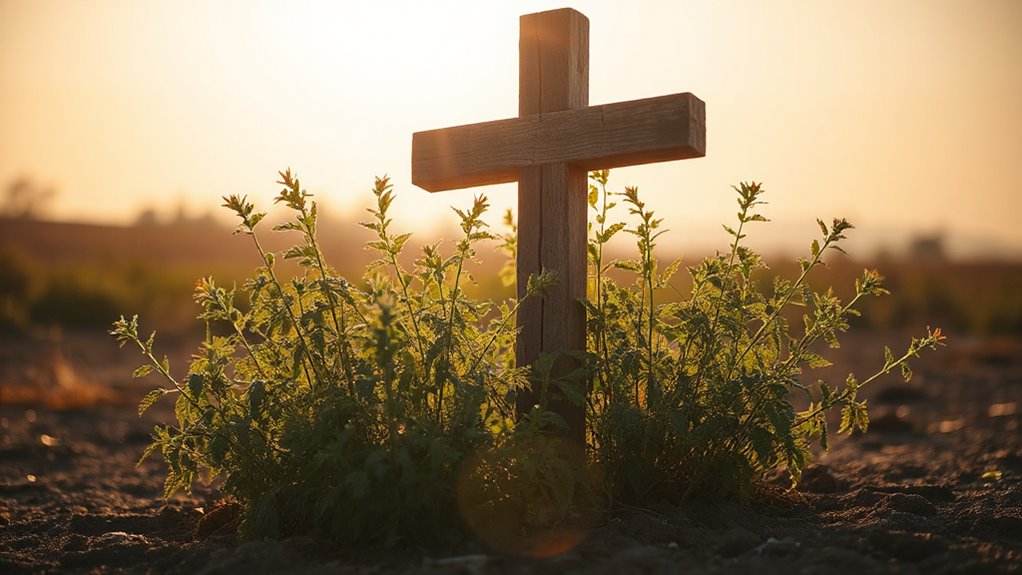
The Bible never uses the words “cannabis,” “marijuana,” or “hemp” in any of its passages, leaving modern readers without a direct scriptural reference to work from. The term “weed” also appears nowhere in scripture as a plant description.
This absence means the text neither endorses nor prohibits cannabis by name.
Some researchers have looked closer. Anthropologist Sula Benet proposed that the Hebrew phrase “kaneh bosm,” appearing in passages like Exodus 30:23 and Song of Songs 4:14, could be an early reference to cannabis.
Anthropologist Sula Benet proposed that the Hebrew phrase “kaneh bosm” may be an early scriptural reference to cannabis.
She identified five such Old Testament mentions.
Most modern linguists and religious authorities disagree, preferring the traditional translation of “calamus” or “sweet cane.” The debate remains unresolved, and no scholarly consensus currently supports the cannabis interpretation.
Scholars note that hemp identification claims in Old Testament passages cannot be substantiated from the Hebrew.
The authoritative Hebrew and Aramaic Lexicon of the Old Testament identifies the term qanēh-bōśem as a type of balsam oil, directly contradicting the phonetic comparison Benet used to link the word to cannabis.
Linguistic and manuscript evidence, including discoveries like the Dead Sea Scrolls, support the predominance of Hebrew and Aramaic origins for Old Testament texts.
Does Biblical Sobriety Apply to Cannabis Use?
Since the Bible offers no direct mention of cannabis by name, readers looking for guidance must turn to broader scriptural principles—particularly those surrounding sobriety and self-control. Several passages address intoxication directly. Ephesians 5:18 instructs believers to avoid drunkenness and instead be filled with the Spirit. Galatians 5:21 lists intoxication among behaviors that exclude a person from God’s kingdom. First Peter 5:8 warns against any impairment that dulls spiritual alertness. Many Christian traditions draw on these passages alongside teachings about sacramental practices to form guidance on substance use.
Scholars note these verses concern altered mental states broadly, not only alcohol. Second Timothy 1:7 describes God’s gift as a sound mind, suggesting clarity is spiritually valued. Romans 12:1 reinforces this by calling believers to present their bodies as holy offerings. Most biblical scholars conclude these sobriety principles extend naturally to cannabis intoxication.
First Corinthians 6:19-20 further reminds believers that their bodies are temples of the Holy Spirit, owned not by themselves but by God, and therefore to be used in ways that glorify Him. Some denominations take a strict opposition to any cannabis use, while others allow for responsible or moderate use when it does not lead to dependency or loss of self-control.
Is Your Body a Temple That Cannabis Violates?

One of the more personal arguments Christians raise against cannabis use comes from 1 Corinthians 6:19-20, which describes the human body as a temple of the Holy Spirit. This passage teaches that spiritual ownership of the body belongs to God, placing stewardship responsibilities on believers.
From this foundation, many theologians argue that introducing psychoactive compounds into the body constitutes a violation of that sacred dwelling. Cannabis binds to neurological receptors, alters brain chemistry, and can impair cognitive function over time. Regular engagement in spiritual disciplines like daily Bible reading and prayer can strengthen sober-mindedness and support resistance to behaviors seen as harmful, encouraging believers to honor their bodies as temples through consistent practices.
Critics connect this pharmacological disruption to the biblical requirement for sober-mindedness and self-control referenced in Galatians 5:22-23. The argument is not purely symbolic. It frames bodily choices as acts of either honoring or neglecting a temple that believers do not ultimately own. Modern cannabis strains have been intentionally modified to reach THC concentrations of 34%, raising questions about whether introducing such potency into the body can be reconciled with the stewardship this passage demands.
How Personal Conscience Shapes Your Decision on Cannabis?
Where scripture falls silent, personal conscience steps in as the primary guide. Because the Bible names neither cannabis nor marijuana, Romans 14 becomes a useful framework, allowing believers to hold different positions within the same faith community.
Personal conviction, shaped by honest self-assessment, determines whether use feels holy or sinful to the individual. Key factors include self-control, bodily care, intention, and responsibility. The doctrine that one God exists as three Persons underscores how doctrinal convictions shape ethical reasoning in other areas, including substance use, and can inform a believer’s understanding of conscience.
Conscience also considers others — particularly weaker believers who might be influenced or harmed.
Christians approach cannabis from four broad positions: total prohibition, moderation similar to alcohol, medicinal exception, and full liberty under Romans 14. Each relies on conscience rather than a direct command.
No single verse settles the question, making prayerful, honest reflection the most reliable tool available to each person. Scripture does remind believers that governing authorities are established by God, meaning legal standing in one’s region forms part of a conscience-driven evaluation. Some responses also point to Galatians 5:19–21, where witchcraft, or pharmakeia appears among the works of the flesh, a Greek term historically connected to the administering of drugs.
What Does the Bible Say About Following Cannabis Laws?
Personal conscience, as Romans 14 outlines, guides believers where Scripture stays silent — but conscience alone does not operate in a vacuum.
Romans 13:1 establishes that governing authorities exist because God appointed them, making legal compliance part of Christian duty.
Where cannabis remains illegal, believers face a clear biblical obligation to abstain.
Where civil law permits it, Scripture still applies higher standards.
Christian ethics extend beyond statutory permission, as Romans 14:13 warns against causing others to stumble through personal freedom.
Acts 5:29 confirms that disobedience becomes justifiable only when civil law directly contradicts divine command — a threshold recreational cannabis use does not meet.
Legal status, thus, does not determine moral righteousness.
Faithful living requires evaluating modern laws through Scripture, prioritizing God’s glory above personal freedom.
Recreational cannabis varies by location, being legal in some areas, restricted to medicinal use in others, and entirely illegal in some jurisdictions, meaning the Christian’s first obligation is determined in part by where they live.
Disagreeing with a cannabis law does not grant permission to break it, as heartfelt disdain for the law provides no biblical justification for lawbreaking.
Some Christians reconcile differing views by considering biblical chronologies and longstanding interpretive traditions when forming convictions about moral practice.