


The Bible mentions Damascus from the time of Abraham to the apostle Paul. In the Old Testament, prophets such as Isaiah, Amos, and Jeremiah announce judgment on the city. In the New Testament, Paul’s conversion on the Damascus Road in Acts 9 makes it a turning point in early Christianity. These Bible prophecies and Paul’s conversion are the main ways Scripture treats the city.
Key Takeaways
- Damascus appears in Genesis as an established city, linked to Abraham’s servant Eliezer and his pursuit of invading kings near Hobah.
- The Barada River made the city fertile, and its location made it a crossroads between Mesopotamia, Palestine, and Transjordan.
- Isaiah, Amos, Jeremiah, and Zechariah each addressed Damascus, with themes of ruin, exile, and fire.
- In Acts 9, Saul traveled to Damascus to arrest Christians and met the risen Christ. Ananias then restored his sight on Straight Street.
Damascus in the Bible: Geography, Power, and Patriarchal Origins
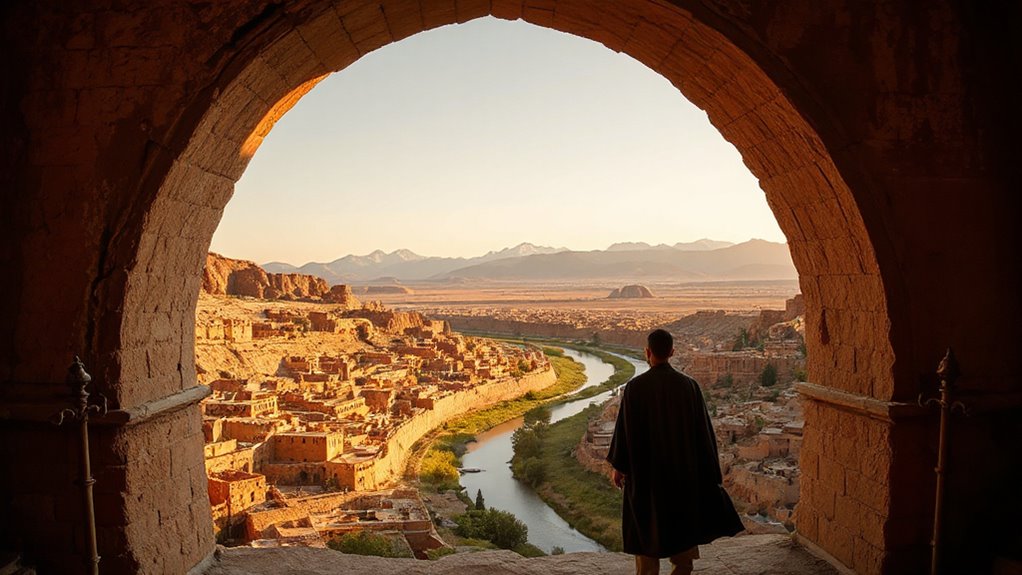
Damascus lies at the foot of the Anti-Lebanon mountain range, northeast of Mount Hermon. It sits on a plain roughly 2,200 feet above sea level, enclosed by mountains on three sides and open on the east toward the Arabian-Syrian Desert. This geography made it both defensible and commercially connected, linking the Levant to desert trade routes and northern Canaan. Its long history is reflected in sources written in Aramaic and Hebrew, languages that document the region across millennia.
The Bible treats Damascus as a recognized political and regional center associated with Aram. Its earliest appearances come in the patriarchal narratives. Genesis 14:15 mentions Hobah, north of Damascus, during Abraham’s pursuit of invading kings.
Abram said, “Lord Yahweh, what will you give me, since I go childless, and he who will inherit my estate is Eliezer of Damascus?”
Genesis 15:2 (WEB)
Here Abraham’s chief servant is called Eliezer of Damascus. Together, these passages show that Damascus was already an established settlement in the Abrahamic era, not merely a later political development.
The Barada River descended through a mountain gorge and spread across the plain, and its irrigation created fertility that gave Damascus commercial, military, and political importance beyond what its size alone would suggest. It also served as a principal crossroads between Mesopotamia and Syria to the north and Palestine and Transjordan to the south. That position made control of the city a strategic priority for every regional power in the ancient Near East.
What Did the Prophets Say About Damascus?
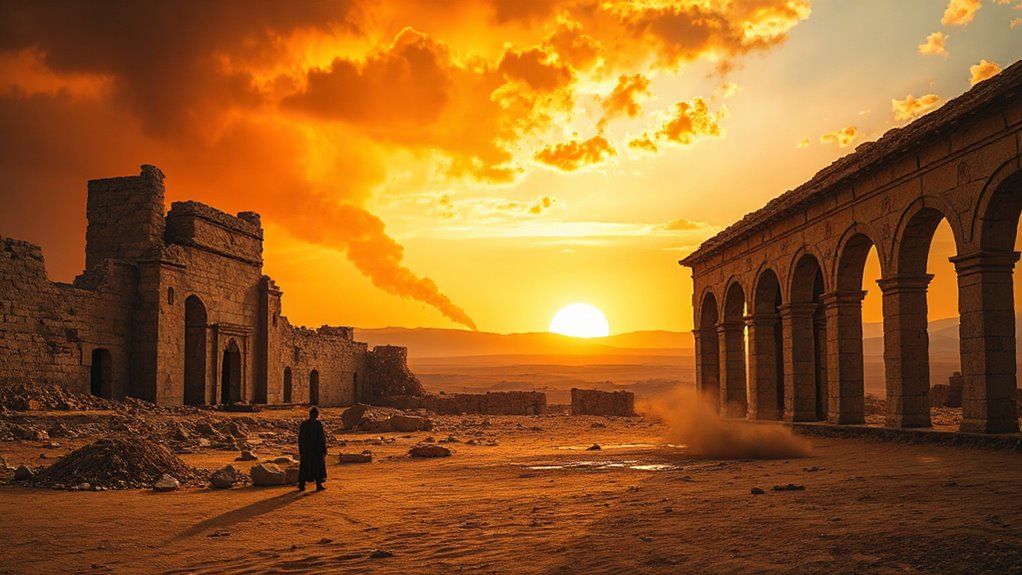
When the Hebrew prophets addressed Damascus, they did so with consistent purpose: the city stood under divine judgment, and its power would not last. Isaiah announced that Damascus would become a heap of ruins and predicted that its wealth would be carried off by Assyria.
The burden of Damascus. “Behold, Damascus is taken away from being a city, and it will be a ruinous heap.
Isaiah 17:1 (WEB)
Amos charged the city with cruelty against Gilead and forecast fire, broken gates, and exile. He declared that Syria would go into exile to Kir as a consequence of Damascus’s transgressions.
Jeremiah portrayed Damascus as gripped by panic, its warriors silenced and its walls consumed by flame. He specifically named Ben-hadad’s strongholds as targets of the fire. Zechariah placed Damascus within a broader oracle affirming God’s rule over the nations.
Across these four voices, the themes are consistent: destruction, fire, exile, and the collapse of pride. The prophets treated Damascus not simply as a political rival but as a lesson about accountability before God.
Why Damascus Matters in Paul’s Conversion and Early Christianity
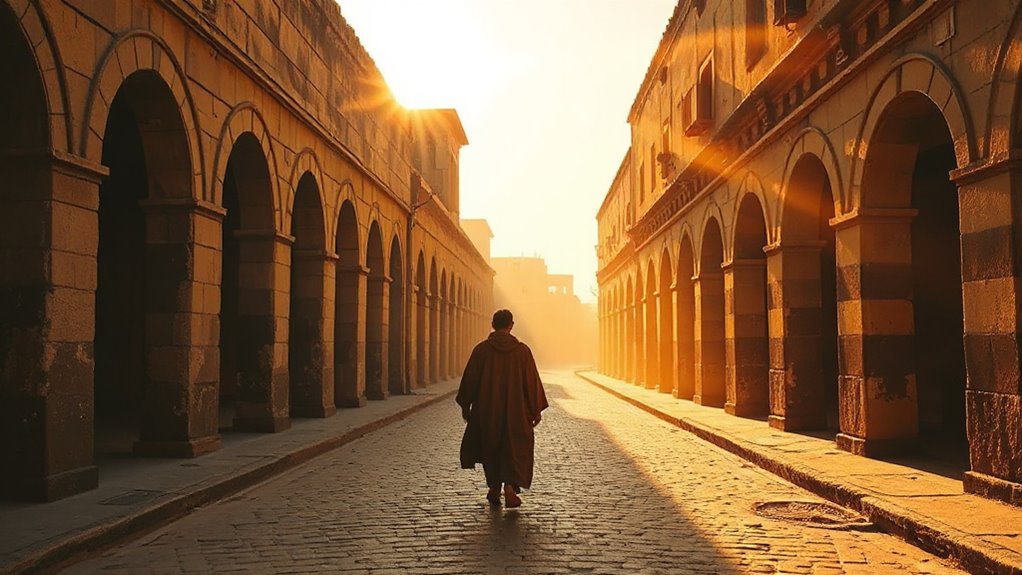
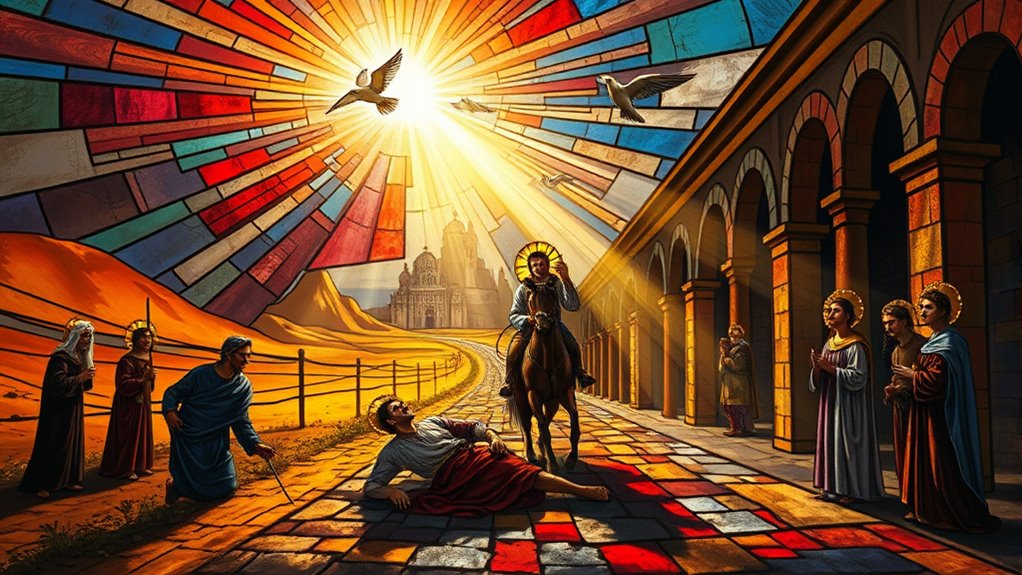
Few cities in the New Testament carry as much narrative weight. Acts 9 records Saul traveling toward the city to arrest followers of Jesus when a sudden encounter with the risen Christ left him blind and redirected.
As he traveled, he got close to Damascus, and suddenly a light from the sky shone around him. He fell on the earth, and heard a voice saying to him, “Saul, Saul, why do you persecute me?” He said, “Who are you, Lord?” The Lord said, “I am Jesus, whom you are persecuting. But rise up, and enter into the city, and you will be told what you must do.”
Acts 9:3-6 (WEB)
Saul was led into Damascus, where a local disciple named Ananias received a vision instructing him to find Saul on Straight Street. Ananias laid hands on him, restored his sight, and addressed him as “Brother Saul,” marking his immediate welcome into the Christian community.
After his sight was restored, Saul spent several days with the disciples and began preaching in synagogues that Jesus is the Son of God. Later, when he arrived in Jerusalem, the disciples there did not believe he was a disciple at all, which shows how strongly his earlier reputation had preceded him.
Paul’s own account in Galatians 1 confirms that he returned to Damascus after time in Arabia, linking the city to the formation of his understanding of the gospel. Damascus thus stands as an early, documented anchor point between persecution and apostolic mission. Scholars often date these events to the early AD 30s, using historical and biblical clues.
Common Questions About Damascus in the Bible
Why is Straight Street significant?
Straight Street is where Ananias was told to find Saul after his encounter with Christ. It places a specific location in Damascus at the center of Saul’s welcome into the Christian community.
Was Damascus only a New Testament city?
No. It appears in Genesis, centuries before Paul, and the prophets addressed it repeatedly. Its crossroads location made it important to every major power in the region.
Learning From Damascus in Scripture
Damascus shows how Scripture can speak of a single place as both a warning and a place of change. If you read these passages, try following the city from Genesis through the prophets to Acts, and notice how the story moves from judgment to transformation.