







In 1 Corinthians 3:9, Paul calls himself and Apollos “God’s fellow workers.” The phrase answers factionalism in Corinth: Paul and Apollos serve one mission under God’s direction, one planting and another watering, while God alone gives the growth. The church is God’s field and building, and each worker remains accountable for his own labor.
Key Takeaways
- Paul and Apollos are servants of one work, not rival leaders to follow.
- “Fellow workers” describes workers who belong to God, not equal partners with him.
- Each worker is responsible and will be rewarded for his own labor.
- The church is God’s field and God’s building, so ownership and growth are his.
What Does “God’s Fellow Workers” Mean in 1 Corinthians 3?
In 1 Corinthians 3:9, Paul defines how he and Apollos understood their roles in the church at Corinth. The phrase appears in a passage correcting factionalism, where Corinthians placed their loyalty in human leaders. Paul presents himself and Apollos as servants assigned by God to one mission, not as rival celebrities.
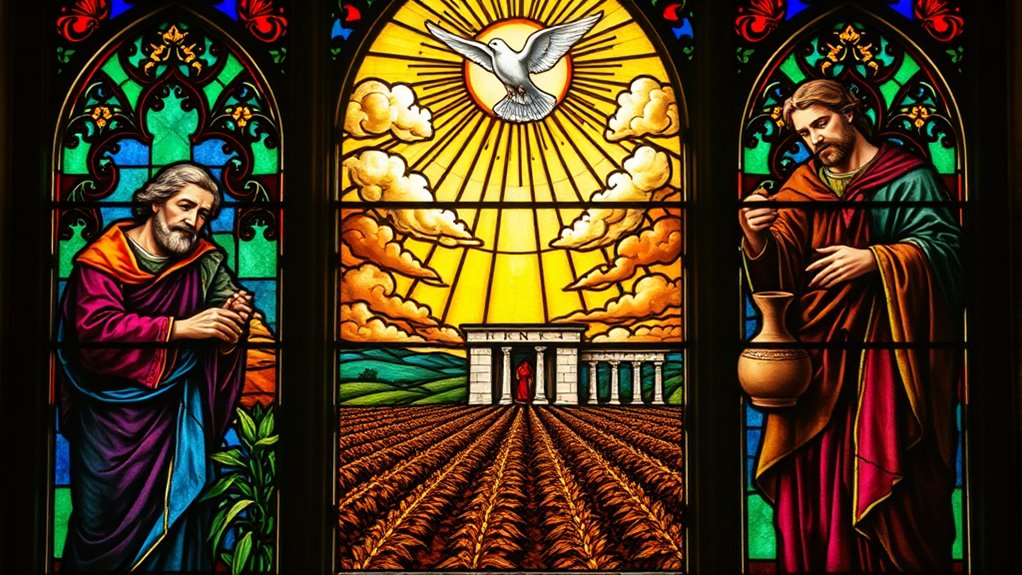
Who then is Apollos, and who is Paul, but servants through whom you believed; and each as the Lord gave to him? I planted. Apollos watered. But God gave the increase. So then neither he who plants is anything, nor he who waters, but God who gives the increase. Now he who plants and he who waters are the same, but each will receive his own reward according to his own labor. For we are God’s fellow workers. You are God’s farming, God’s building.
1 Corinthians 3:5-9 (WEB)
Translations render the phrase in several ways, including “God’s co-workers” in the CSB and CEB, “laborers together with God” in the KJ21, and “coworkers belonging to God” in the NET.
The Greek genitive can mean workers belonging to God, so it does not require equal partnership with him. It ties ministry to God’s ownership and direction. Paul adds that each person will receive reward for their own labor, so shared service under God does not erase individual responsibility. The role of the Spirit in empowering ministry underscores that growth ultimately comes from God’s work, not human effort alone.
Are God’s Fellow Workers Equal Partners With God?
Although the phrase can sound like a partnership of equals, the wording points in a different direction. Paul calls believers “God’s field” and “God’s building,” placing the workers inside God’s work, not beside him as peers. Many translations render the phrase as “God’s co-workers” (CSB, CEB), while others use “workers together for God” (ERV, NLT), which shows that the workers belong to God.
Paul describes himself and Apollos as servants through whom the Corinthians believed, and he stresses that each one’s work is the role the Lord has given to him. Scripture itself instructs and transforms believers as part of God’s means of growth, serving as divine authority for faith and practice. The passage therefore encourages humility, since workers matter but are never ultimate.
How Can God’s Fellow Workers Be One, Not Rivals?
How can two ministers who preach, teach, and build in the same church avoid becoming competitors? In 1 Corinthians 3:5–9, Paul answers by describing himself and Apollos as servants, not rival authorities. One plants, another waters, yet the text says they “are one,” because their tasks belong to a single work. Planting comes before watering, which shows that both tasks are essential and that neither role can be dismissed.
Each will be rewarded “according to his own labour,” so accountability remains without comparison. This teaches Christians to practice grace and accountability toward one another in ministry. Because growth comes from God, boasting over visible success is misplaced.
When ministers honor each other’s assigned work and refuse to gather factions around favorites, cooperation replaces competition, and the whole church moves forward together.
Do God’s Fellow Workers Still Matter If God Gives Growth?
Yes. Planting and watering are named as distinct, necessary acts, and each worker will “receive his reward according to his work.” God remains the owner, giving growth through human service rather than apart from it.
Faithful labor matters, even when results are delayed. Paul planted and Apollos watered, yet God caused the growth in Corinth. This mutual dependence reflects the biblical theme of trusting God as a steadfast refuge.
What Does It Mean to Be God’s Field and Building?
Paul’s reminder that God gives the growth leads to a further claim in 1 Corinthians 3:9, where he tells the Corinthians, “You are God’s field, God’s building.” The sentence shifts attention from the workers to the people they serve, and it places ownership with God rather than with Paul, Apollos, or any faction in the church. Paul has already said that the one who plants and the one who waters work with the same purpose, and that each will be rewarded for their own hard work.
The field image comes from farming, where planting and watering are distinct tasks and only God produces the increase. The building image suggests design and purpose, preparing for the later discussion of foundations. Together, they present a living, ordered church belonging to God. Paul grounds both images in the statement “For we are co-workers in God’s service,” which presents the shared labor of Paul and Apollos as the basis for the believers’ collective identity. Gathering in regular church community reflects the biblical pattern of worship, teaching, sacraments, and mutual encouragement that shapes this corporate identity.
Common Questions About God’s Fellow Workers
Why does Paul mention Apollos?
Some Corinthians placed their loyalty in human leaders. By naming himself and Apollos as servants of one work, Paul shows that neither is a rival authority to follow.
Does shared work mean no one is accountable?
No. Although Paul and Apollos are “one,” each will be rewarded according to his own labor. Shared service under God does not erase individual responsibility.
Serving Without Rivalry in the Church
The passage invites believers to do their assigned work faithfully and leave the results to God. Appreciating the different roles of others, rather than gathering behind favorites, keeps the church focused on the One who owns the field.