



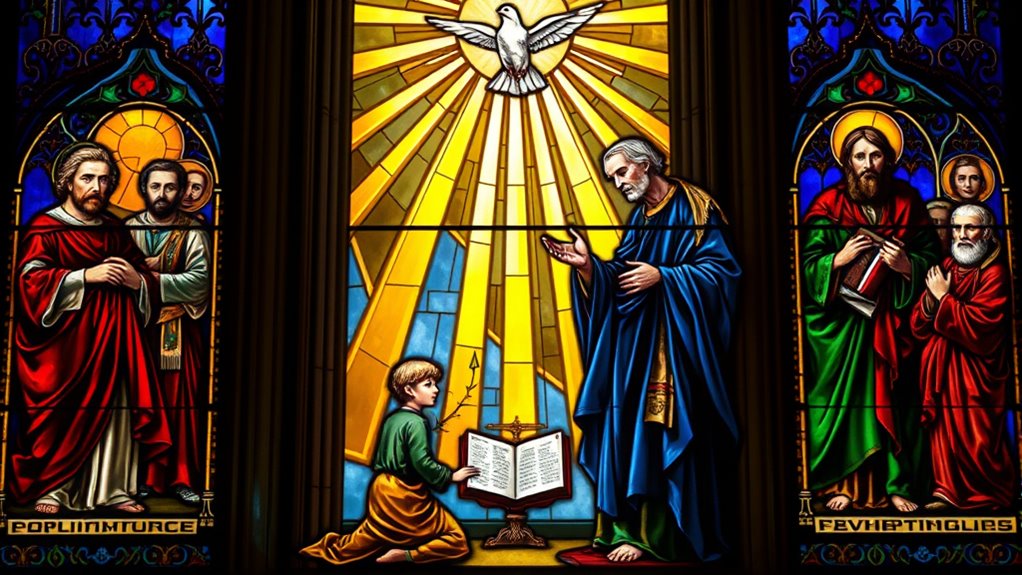


The Bible describes stewardship as managing what belongs to God rather than owning it outright. The Greek word *oikonomos* refers to a household manager who administers another person’s estate, with ownership never transferring to the manager. Scripture extends this responsibility beyond money to include time, spiritual gifts, relationships, the body, and creation itself. First Corinthians 4:2 states that stewards must simply be found faithful. The full picture of what that faithfulness looks like runs deeper than most expect.
Key Takeaways
- God owns everything, and humans are appointed as managers or trustees responsible for faithfully handling what belongs to Him.
- Biblical stewardship extends beyond money to include time, spiritual gifts, relationships, work, health, and care for creation.
- Spiritual gifts are entrusted resources meant to serve others, not personal possessions to be hoarded or wasted.
- Faithful stewardship requires consistent reliability in small responsibilities before larger ones can be entrusted to a person.
- Every person will ultimately give account to God for how they managed what was placed in their care.
What the Bible Actually Means by Stewardship

When most people hear the word “stewardship,” they tend to think of fundraising drives or church budget appeals, but the Bible means something more foundational by the term.
The Greek word *oikonomos*, from which the concept draws its shape, refers to a household manager who administers another person’s estate.
Ownership never transfers to the manager.
The steward manages, but never owns. Authority is granted, not given away.
The steward simply handles what belongs to someone else, acting under authority and answering for results.
Biblically, that owner is God.
Humanity occupies the role of trustee, responsible for gifts, time, resources, and talents placed under human care.
The arrangement is practical and relational at once.
Stewardship, in this framing, describes not a financial program but a defined position of trust, accountability, and faithful service directed toward God’s purposes.
God, as Creator of all things, holds absolute rights of ownership over everything entrusted to human managers.
The doctrine of the Trinity helps explain how Christians can worship Jesus while affirming God’s oneness, since Christ is distinct in person yet united in divine essence as part of the Godhead, a concept central to historical Christian belief and practice Trinitarian doctrine.
Bible Gateway, a widely used tool for studying these biblical concepts, is currently unavailable in the UK and EU while a new solution is being developed.
What Biblical Stewardship Covers Beyond Money

Once the biblical idea of stewardship is understood as managing what belongs to God rather than owning it outright, the scope of that responsibility turns out to be considerably wider than money.
Scripture presents time, gifts, relationships, creation, and the body as distinct areas of accountability. Ephesians 5:15-16 calls believers to redeem time wisely, while Proverbs warns against laziness as a stewardship failure. Regular, disciplined practices like daily Bible reading and prayer help believers steward these responsibilities faithfully and grow in obedience to God’s will, a pattern linked to spiritual growth.
First Peter 4:10 frames spiritual gifts as entrusted resources meant for serving others, not private advantage.
Genesis grounds environmental care in a creation mandate to cultivate and preserve the earth.
Relationships, health, work, and daily vocation round out what many stewardship frameworks describe as whole-life discipleship. The Parable of the Talents illustrates that God distributes gifts according to ability and expects a return on what has been entrusted, making faithful investment rather than fearful preservation the standard across every area of life.
The consistent principle across these areas is faithful management of what God has entrusted. Scripture also affirms that every legitimate vocation qualifies as stewardship territory, with Colossians 1:15-20 framing all work as service to Jesus Christ as firstborn of all creation and head of the church.
What God Expects From Faithful Stewards

Scripture sets out several clear expectations for those entrusted with God’s resources, and faithfulness stands at the center of all of them. First Corinthians 4:2 states that stewards must be found faithful, treating fidelity as a requirement rather than a preference.
Matthew 25:21 commends the servant who acts reliably over time, regardless of how much was entrusted. Catholics also emphasize ongoing responsibility through practices like participation in the seven sacraments.
Luke 16:10-12 connects small responsibilities to larger ones, suggesting that trustworthiness scales with consistency.
Romans 14:12 adds that every person will one day give account to God, making accountability unavoidable.
Luke 16:13 further clarifies that stewardship requires undivided loyalty, since no servant can serve two masters.
First Peter 4:10 rounds out the picture by directing believers to use their gifts in service to others. Christians carry a particular weight in this regard, as they have been entrusted with the Word of God, the most valuable resource of all, and are accountable for how they steward it.
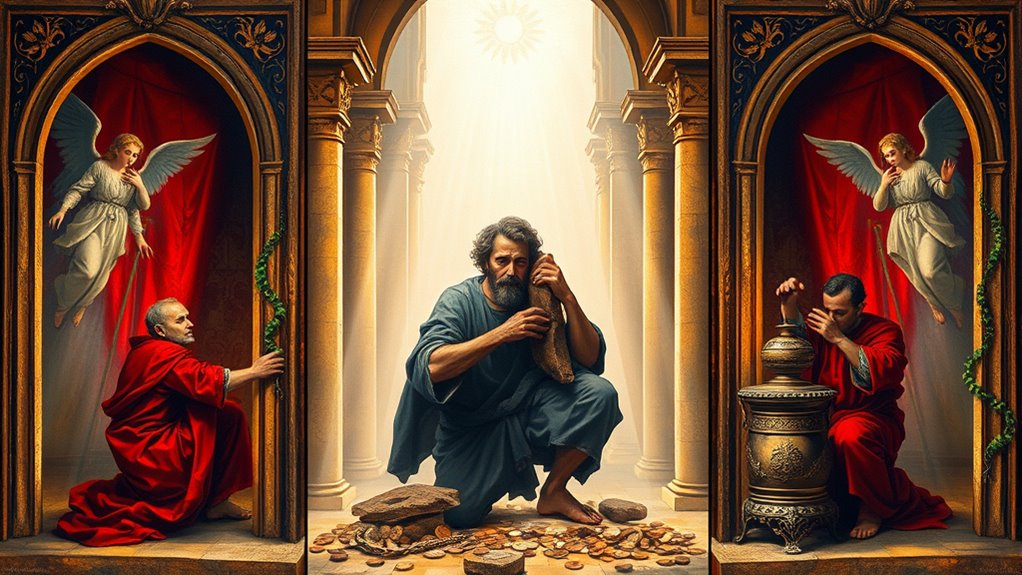
The parable of the talents in Matthew 25 reinforces that neglecting entrusted gifts leads not only to loss but to condemnation, while faithful use results in greater responsibility and reward.