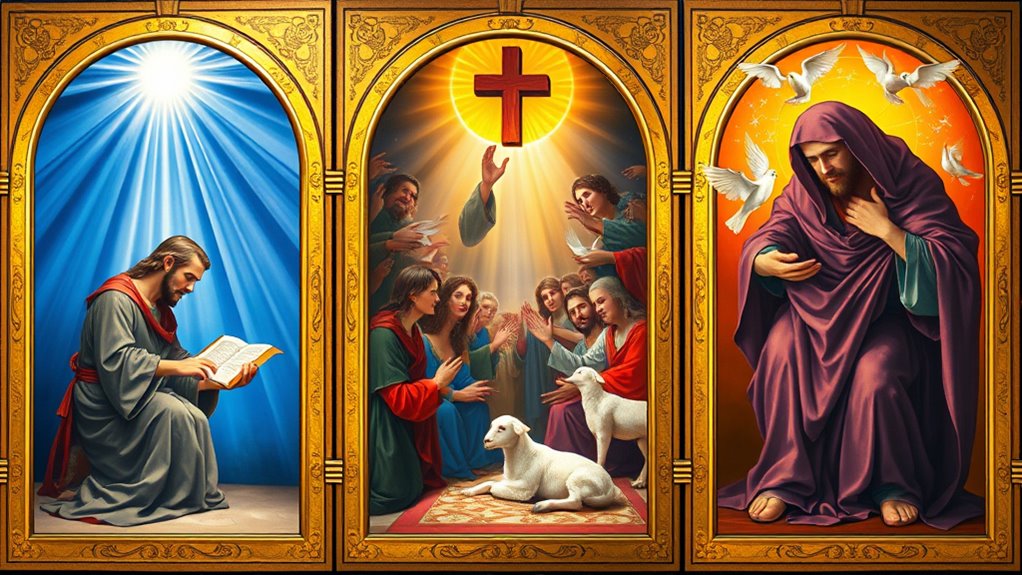

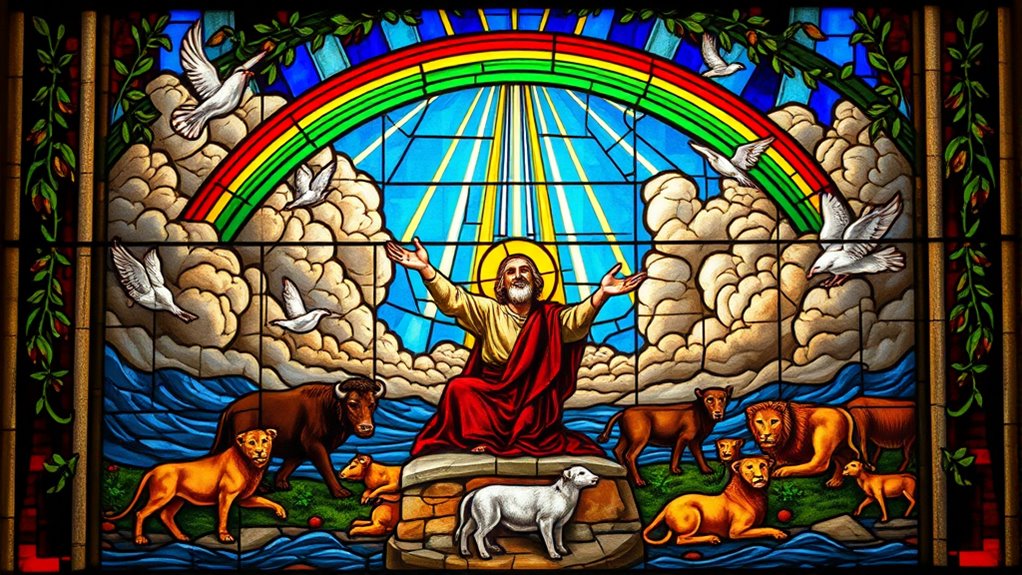
The Bible identifies the rainbow as a covenant sign in Genesis 9, where God promised Noah that floodwaters would never again destroy all life on earth. God called it “the sign of the covenant” in verse 12, describing it as everlasting and extended to every living creature. Rainbow imagery later appears in Ezekiel 1:28 and Revelation 4:3, surrounding scenes of divine glory. The full picture of what the rainbow communicates about God’s character and mercy runs deeper than a single passage.
Key Takeaways
- God established the rainbow as the sign of His covenant with Noah, promising never again to destroy all life with a flood.
- The covenant extends to every living creature on earth, not just humanity, and applies to all future generations.
- God said seeing the rainbow would remind Him to keep His promise of protection over all living creatures.
- Rainbow imagery appears in Ezekiel and Revelation encircling God’s throne, symbolizing divine majesty, holiness, and presence.
- The rainbow represents God’s mercy appearing after judgment, reflecting His initiative to bind Himself to a promise without requiring human merit.
What Genesis 9 Says the Rainbow Is Actually For
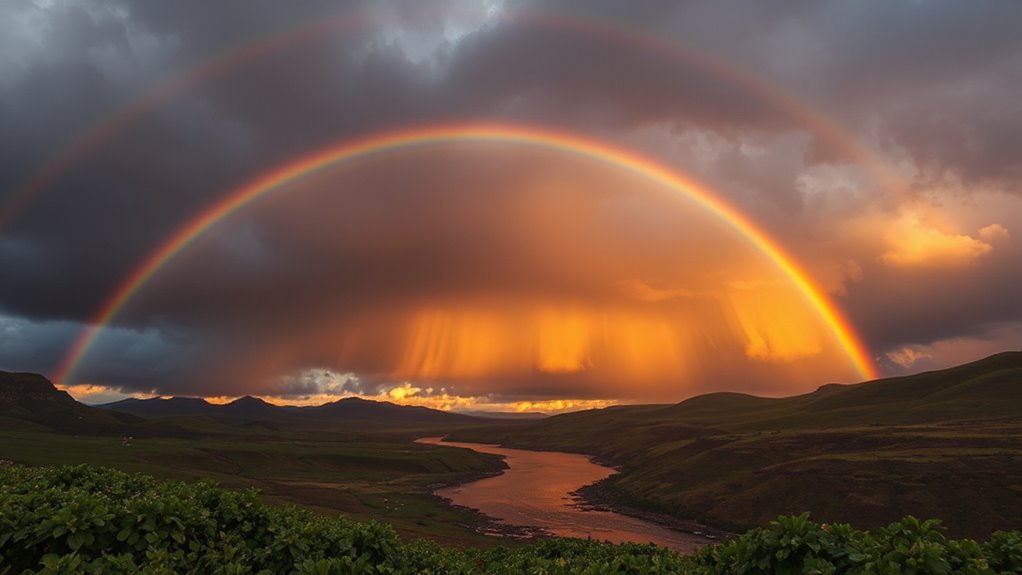
Most people recognize the rainbow as a natural weather phenomenon, but Genesis 9 presents it in a different light entirely.
According to the text, the rainbow carries a specific covenant purpose: it marks God’s binding agreement with every living creature on earth.
Genesis 9:12 explicitly calls it “the sign of the covenant,” and that designation shapes everything the passage says about it.
The rainbow’s appearance connects directly to flood restraint, signaling that floodwaters will never again destroy all life.
God states in verse 15 that seeing the rainbow prompts divine remembrance of that promise.
The covenant extends beyond humanity to all living creatures and is described as everlasting, making the rainbow a continual, global marker of divine commitment to the created world. The covenant also explicitly includes “descendants after you”, extending its protective scope to all future generations who would never witness the original flood.
God’s commitment is further confirmed by the image of Him personally looking at the rainbow, described in verse 16 as a reminder of “the everlasting covenant” between God and every living creature of all flesh that is on the earth.
Scholars note that biblical language often reflects ancient Near Eastern imagery about the sky and earth, which can illuminate how covenants like this were publicly symbolized in nature.
The Noah Covenant and What God Actually Promised
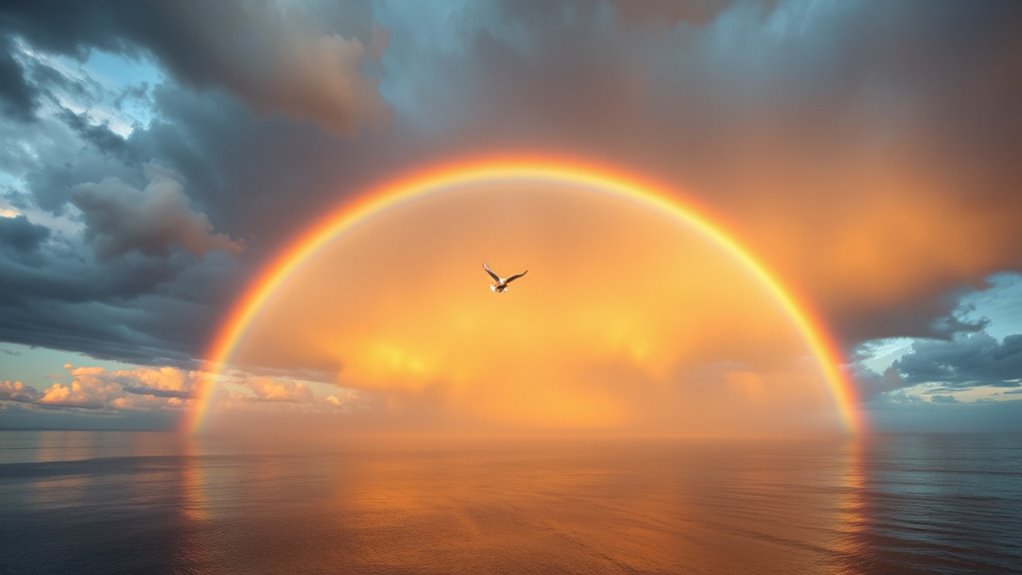
The covenant recorded in Genesis 8:20–9:17 begins immediately after Noah exits the ark and offers a sacrifice, linking worship with the moment God makes his promise. Noah’s worship sets the scene for what follows: a divine commitment extended not only to Noah and his sons but to every living creature and the earth itself. The covenant purpose is specific and clear. God promised never again to destroy all life through floodwaters, and never again to use a flood to destroy the earth. This was not a broad guarantee against every future disaster. The language targets one particular form of total destruction. God describes the covenant as everlasting, and repeats the promise several times across the passage, underlining its permanence and its reach across all of creation. The rainbow was set in the clouds as the sign of the covenant, serving as a visible token for all generations to come. God stated that when he sees the rainbow in the cloud, he will remember the everlasting covenant between himself and every living creature on the earth. The promise’s permanence reflects the biblical theme of God’s unchanging commitment to creation, rooted in the notion of God’s faithfulness.
How the Rainbow Appears in Ezekiel and Revelation
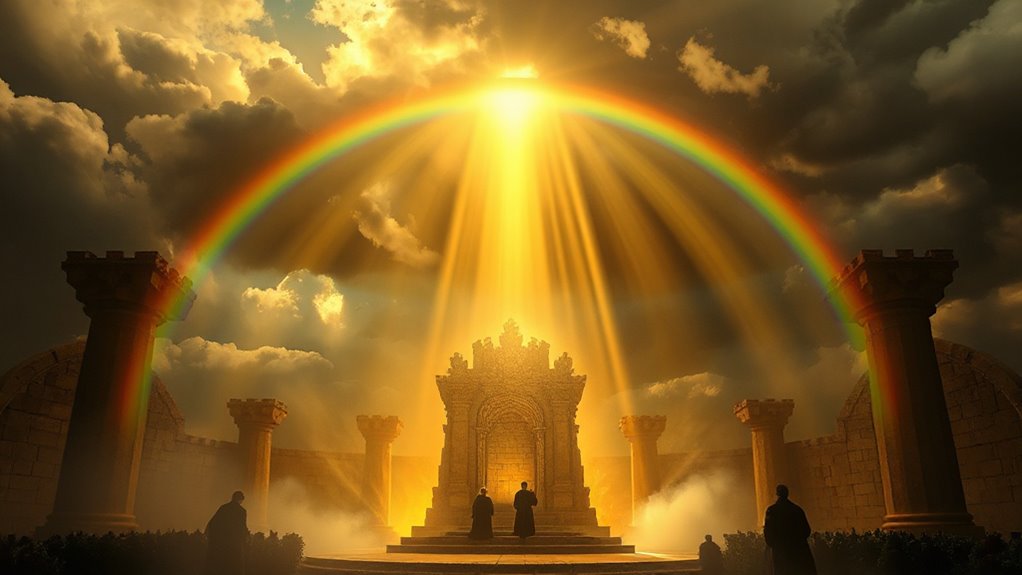
Beyond Genesis, the rainbow appears in two other parts of the Bible: the book of Ezekiel and the book of Revelation.
In Ezekiel 1:28, the prophet describes an Ezekiel thronevision in which the radiance surrounding God’s presence resembles a rainbow on a rainy day. The image is not decorative but serves as an analogy for divine glory, appearing alongside fire, brightness, and enthroned majesty. Ezekiel responds by falling facedown in worship. The vision’s setting recalls other biblical scenes located outside Jerusalem that emphasize the separation of divine encounters from ordinary communal spaces.
Revelation builds on this imagery in two places. Revelation 4:3 describes a Revelation emeraldglow rainbow encircling the heavenly throne, emphasizing sovereign splendor.
Revelation 10:1 places a rainbow above a mighty angel’s head, echoing Ezekiel’s storm-and-glory setting. The cross references for Ezekiel 1:28 directly link this verse to Revelation 10:1 and Genesis 9:13, connecting the rainbow’s appearances across both Testaments.
Across all three passages, the rainbow consistently signals heavenly majesty, holiness, and divine presence rather than simply marking weather. The books of Ezekiel and Revelation are both counted among the Major Prophets and Apocalyptic writings that shape the Bible’s vision of divine glory.
What the Rainbow Reveals About God’s Character
Taken together, the rainbow’s appearances in Scripture trace a consistent portrait of God’s character.
From Genesis 9 onward, the sign communicates that God keeps His word across generations, not because humans remember it, but because He does.
God’s covenant was extended to every living creature, making His reliability universal in scope.
The rainbow shows visible mercy appearing directly after judgment, suggesting that restraint, not continued wrath, defines God’s ongoing posture toward creation.
It also reveals a God who takes the initiative, binding Himself to a promise without requiring human merit.
Even when clouds gather, the rainbow reframes danger as grace.
Scripture consistently presents a God whose faithfulness outlasts catastrophe and whose care extends to the whole created order. In Revelation 4:3, the rainbow appears around God’s throne, showing that covenant faithfulness surrounds His sovereign rule even in heaven.
The Hebrew word for “sign” in Genesis 9:13 carries the meaning of signal, beacon, or evidence, underscoring that the rainbow functions as visible, objective proof of the covenant God established with the earth.
The rainbow’s presence after Noah’s Flood also echoes how divine messages were preserved across linguistic and cultural shifts, much like the transmission of Scripture in Hebrew and Greek.
Grace After Judgment: What the Sign Still Means Today
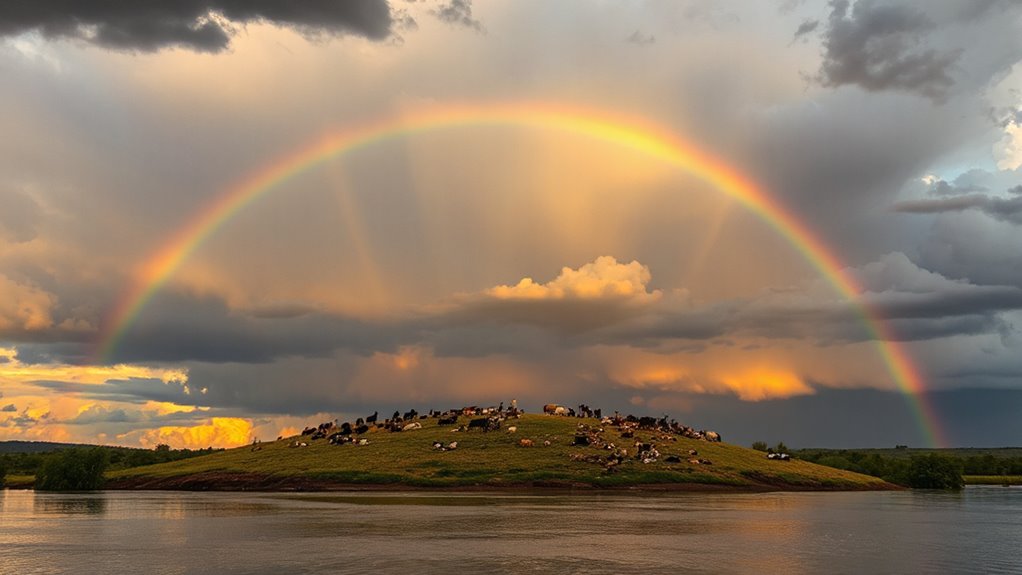
Knowing what the rainbow reveals about God’s character makes the question of its ongoing meaning more concrete.
Genesis 9 frames the rainbow as covenant reassurance directed not only at Noah but at every living creature.
That scope matters.
The sign appears after judgment, not before it, which positions mercy boundaries as part of how divine order operates.
God states that the rainbow triggers divine memory of the promise, making remembrance a covenantal act rather than a passive response.
This framing suggests that cosmic grace extends across all generations, not just the original audience of the flood narrative.
For readers today, the rainbow remains a visible marker that destruction has defined limits.
Judgment, according to the text, does not have the final word.
Mercy does.
The covenant God established with Noah explicitly extended to “every living creature”, encompassing birds, livestock, and every beast of the earth alongside humanity.
God also provided “everything that moves” as food for Noah and his descendants, pairing the covenant’s protective scope with a new framework for human provision after the flood.
The assurance echoes the biblical theme that divine salvation accompanies God’s promises to humanity.