


The Bible presents two distinct perspectives on eating pork. Leviticus 11:7 prohibits consuming swine in the Old Testament, designating it ceremonially unclean because it has a divided hoof but does not chew the cud. This law distinguished ancient Israelites from their neighbors and symbolized spiritual obedience. However, the New Testament transforms this teaching. In Mark 7:18–19, Jesus declares all foods clean, shifting focus from external dietary rules to internal purity. Romans 14 and Colossians 2:16–17 further affirm Christian freedom regarding food choices, indicating these restrictions no longer bind believers under the New Covenant. The full context reveals how this theological shift unfolded.
Key Takeaways
- Old Testament law prohibits eating pork, declaring swine unclean because they have divided hooves but don’t chew cud.
- Consuming or touching pork made Israelites ritually unclean, separating them spiritually from surrounding pagan nations.
- Jesus declared all foods clean, shifting focus from external dietary rules to internal spiritual purity and heart transformation.
- New Testament teachings emphasize Christian freedom from Old Covenant food restrictions, viewing them as fulfilled in Christ.
- The Bible shows a transition from strict ceremonial dietary laws to spiritual principles under the New Covenant.
Old Testament Prohibitions and the Law of Moses

The Old Covenant presents clear and explicit prohibitions against consuming pork, rooted in the dietary laws given to the Israelites through Moses. Leviticus 11:7 explicitly designates swine as ceremonially unclean because the animal, while possessing a divided hoof, fails to chew the cud.
This dual-criteria system established which animals qualified as acceptable for consumption. The prohibition extended beyond mere eating, as touching swine meat rendered individuals ritually unclean under Old Testament Law.
These dietary restrictions formed an integral part of the testament structure between God and Israel, carrying theological significance that transcended practical concerns. The laws served multiple purposes: distinguishing Israelites from pagan neighbors who sacrificed swine to idols, reinforcing spiritual separation, and testing the community’s commitment to divine instruction through visible, daily obedience. The covenant included blessings for obedience and curses for disobedience, establishing the conditional nature of Israel’s relationship with God. These laws were specific to Israel and not intended as universal commandments for all nations. The development of these laws occurred during a long biblical composition period spanning centuries, including major work in the post-exilic period.
New Testament Perspectives on Food and Freedom in Christ

How did early Christians navigate the strict dietary boundaries established under Moses when their faith centered on a Jewish Messiah yet spread rapidly into Gentile territories where pork and other forbidden meats were staple foods?
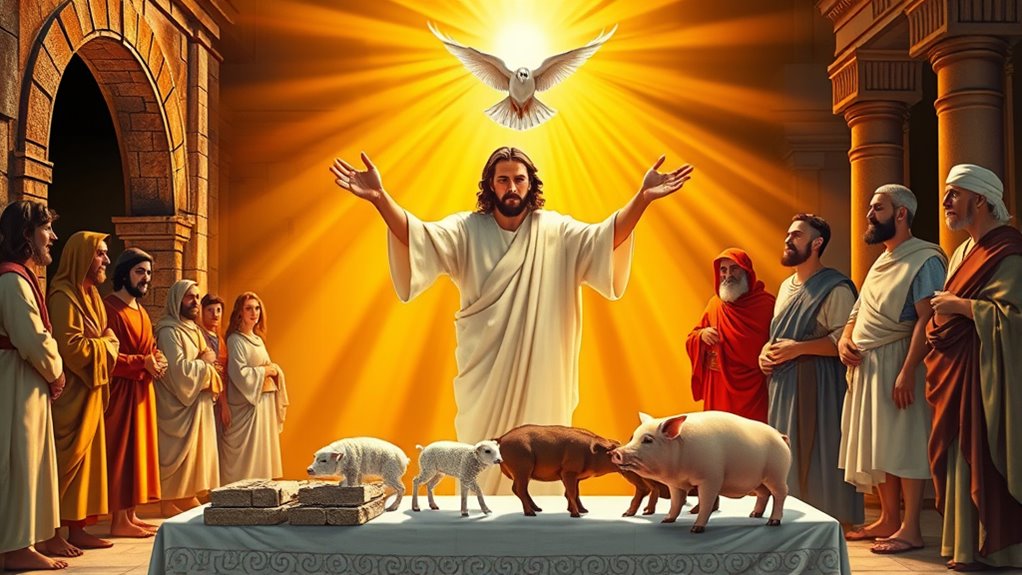
Mark 7:18–19 records Jesus teaching that nothing entering from outside defiles a person, with the editorial note “Thus he declared all foods clean.”
Hebrews 9:10 treats food regulations as temporary external rules “until the time of reformation.”
Paul wrote in Romans 14 that “nothing is unclean in itself,” urging sensitivity to differing consciences.
Colossians 2:16–17 warns against judgment over food, calling such restrictions a shadow whose substance is Christ.
These passages form the foundation for viewing dietary laws as fulfilled and set aside under the New Covenant.
The New Covenant emphasizes spiritual principles over dietary laws, shifting the focus from external observances to matters of the heart.
However, Acts 15:20–21 instructed Gentile believers to abstain from certain practices, with verse 21 explaining that Moses’ Law was read every Sabbath in synagogues, indicating an expectation that new believers would gradually learn these teachings.
Scholars commonly date the shift in practice to the first century AD, during the final years of the first century BC through the first century AD, as the church confronted Jewish-Gentile relations and clarified Gentile inclusion.