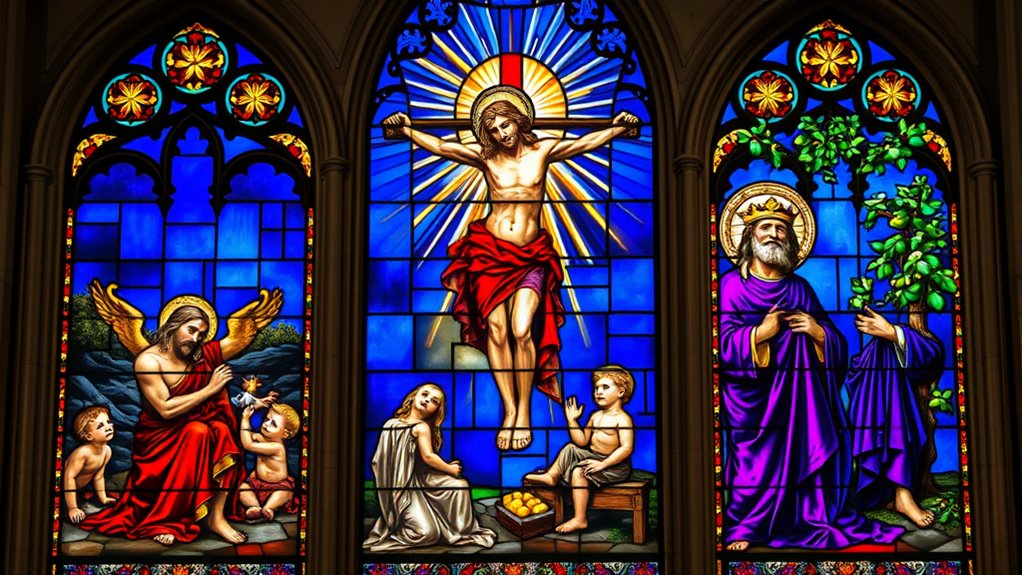


The Bible offers no physical description of Jesus in any of the four canonical Gospels. His height, complexion, and facial features go entirely unrecorded. Isaiah 53:2 hints the Messiah had no striking appearance, while Revelation 1:14–16 describes symbolic imagery tied to divine glory rather than earthly looks. Historical and anthropological evidence suggests a first-century Galilean Jewish appearance, with olive-brown skin and dark hair. Those curious about the fuller picture will find the details worth exploring.
Key Takeaways
- The Gospels provide no physical description of Jesus, focusing instead on his teachings, miracles, and resurrection.
- Isaiah 53:2 hints the Messiah had no striking appearance, suggesting Jesus blended into ordinary crowds.
- Revelation 1:14-16 describes white hair and fiery eyes, but scholars interpret this as symbolic, not literal.
- Historical and anthropological evidence suggests Jesus had olive-brown skin, dark hair, and brown eyes.
- Gospel silence on appearance is considered deliberate, redirecting focus toward Jesus’ identity and theological meaning.
What the Bible Actually Says About Jesus’ Appearance

Surprisingly little is written in the Bible about what Jesus actually looked like. The Gospels focus entirely on his teachings, miracles, death, and resurrection, leaving no description of his height, facial features, or complexion. Early theological reflection emphasized Jesus’ identity and role rather than physical description, underscoring the doctrine of the Trinity and the distinct persons it affirms.
Writers of the canonical Gospels showed no interest in his physical appearance whatsoever. The prophet Isaiah, writing centuries earlier, offered the closest direct reference, stating in Isaiah 53:2 that the Messiah had “no beauty or majesty to attract us to him.”
The Gospel writers recorded no physical description of Jesus, leaving his appearance entirely to history’s imagination.
Visions in Revelation 1:14-16 describe a glorified Christ with hair like white wool and eyes of fire, but scholars recognize these as symbolic imagery rather than earthly physical description.
Historical records and archaeological evidence similarly contain no confirmed account of what Jesus specifically looked like. Given that Jesus was Jewish, his appearance most likely included dark skin, eyes, and hair, contrasting sharply with the European features commonly depicted in modern portrayals.
Multiple Bible translations, including the ESV, KJV, NASB, NIV, and NLT, consistently convey that Jesus had no standout visual features, suggesting his appearance drew no special attention and that his words and miracles, rather than his looks, set him apart.
What Jewish History Tells Us About How Jesus Looked

Although the Gospels record almost nothing about Jesus’ physical appearance, Jewish history and anthropology offer a reasonable framework for understanding what he likely looked like.
First-century Galilean Jews typically had olive-brown skin, dark brown to black hair, and deep brown eyes. These traits reflect the broader genetic profile of Semitic populations living in the Levant. Archaeological and historical evidence places Jesus firmly within first-century Palestinian society.
Facial reconstruction studies support this picture, confirming features common across the region. Scholars note that ancient Galilean Jews bear the closest physical resemblance to contemporary Iraqi Jews.
Jesus, working outdoors as a carpenter in Galilee, would have had weathered, sun-darkened skin and a trimmed beard.
His average height was likely around five feet one inch.
Nothing about his appearance, historical evidence suggests, would have made him stand out in a crowd. Virtually all scholars of antiquity agree that Jesus existed as a historical person, yet none of the Gospel accounts provide a physical description of him.
By the 19th century, theories emerged suggesting Jesus was non-Semitic in origin, with writers proposing he could be white, black, or another race entirely, claims driven largely by cultural stereotypes and ethnocentrism rather than historical or scientific analysis.
Why Revelation’s Description of Jesus Isn’t a Physical Portrait
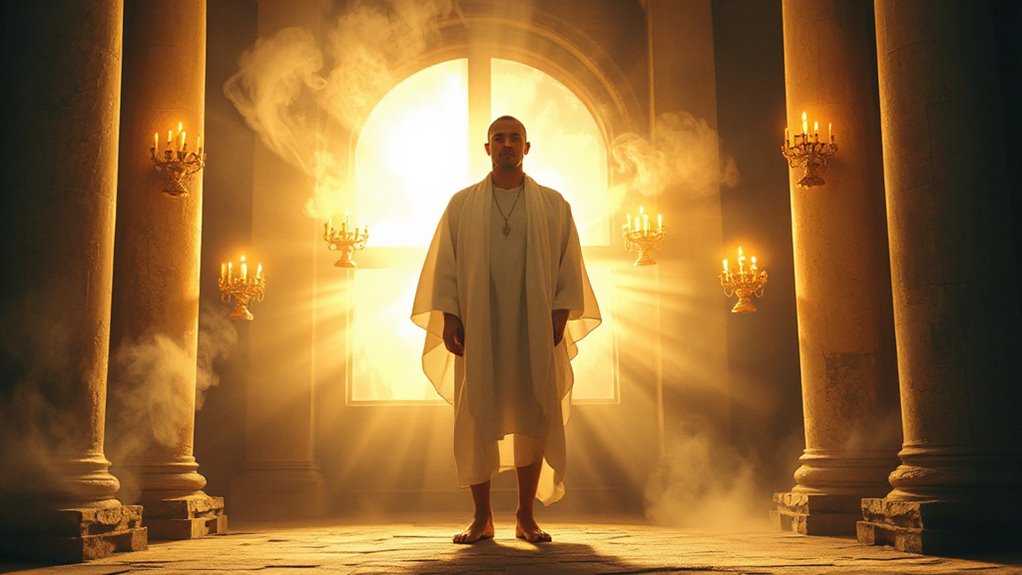
When the apostle John describes Jesus in the opening chapter of Revelation, the imagery he uses—white hair like wool, eyes like blazing fire, feet like glowing bronze—reads nothing like a physical description.
John was writing from Patmos after the resurrection and ascension, meaning the vision depicts a glorified, heavenly figure rather than the man who walked through Galilee.
White hair signals ancient divinity, not aging.
Fire-like eyes represent penetrating judgment.
Glowing bronze feet suggest unshakeable strength.
Scholars broadly agree these are symbolic attributes, not physical traits.
The Gospel writers, by contrast, recorded no physical description of Jesus during his earthly life at all.
Revelation was never meant to answer what Jesus looked like.
It was meant to convey what he is. John received this vision while “in the Spirit” on the island of Patmos, the first of four such visionary states recorded throughout the book.
The figure John sees stands among seven golden lampstands, which the text itself identifies as representing the seven churches receiving the letter, underscoring that the vision is built on symbol rather than literal appearance.
Many scholars note that first-century readers would have interpreted these images through a background of Jewish apocalyptic symbols, so the vision communicates theological truth rather than physical detail.
Why the Bible Never Bothered Describing Jesus’ Face

The four Gospels record Jesus feeding thousands, healing the blind, and rising from the dead, yet not one of them describes what his face actually looked like.
Scholars note this silence was deliberate, not accidental.
Every canonical Gospel omits his eye color, facial structure, and skin tone consistently.
Theologians suggest this choice carries purpose: describing Jesus’ face might have encouraged physical idol worship, conflicting with the Second Commandment’s clear prohibition.
The omission also redirects readers toward his teachings, miracles, and resurrection rather than his appearance.
Isaiah 53:2 offers the only indirect clue, stating the Messiah possessed no remarkable beauty.
That single verse implies ordinariness rather than distinction.
Ultimately, the biblical writers considered Jesus’ physical features secondary to his identity and redemptive work.
The Transfiguration accounts across Matthew, Mark, and Luke represent the one exception where Scripture directly describes Jesus’ physical form, portraying his face and clothes radiating extraordinary light.
Eastern Orthodox and Catholic traditions argue that Sacred Tradition supplements the Gospels through iconographic and oral material, citing John 21:25 as evidence that not everything about Jesus was captured in written Scripture.
Consistent practices like regular Bible reading and daily prayer help readers focus on Jesus’ teachings and spiritual significance rather than seeking detailed physical descriptions.