



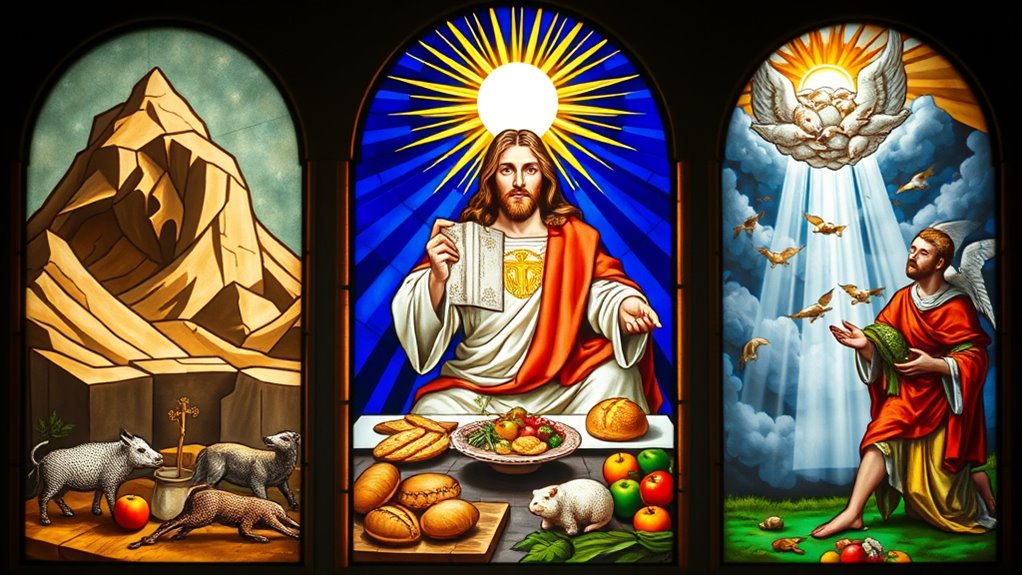
The Bible’s teaching on eating meat has shifted across time, beginning with a plant-based diet in Genesis 1:29, then permitting meat after the Flood in Genesis 9:3. Old Covenant laws in Leviticus 11 restricted Israelites to clean animals with divided hooves and cud-chewing habits, while prohibiting pork and shellfish. The New Covenant changed this framework when Jesus declared all foods clean in Mark 7:19, and Peter’s vision in Acts 10 confirmed that dietary restrictions no longer applied to Christians, though blood consumption remained forbidden and consideration for others’ convictions was encouraged in Romans 14.
Key Takeaways
- Originally humans ate only plants (Genesis 1:29), but after the Fall, God permitted eating meat (Genesis 9:3).
- Old Testament law prohibited certain animals like pork and shellfish, restricting Israelites to “clean” animals with specific characteristics.
- Jesus declared all foods clean (Mark 7:19), shifting focus from dietary rules to internal character and heart condition.
- The New Testament freed Christians from Old Testament dietary restrictions, except the continuing prohibition against consuming blood.
- Christians may eat meat freely but should respect others’ convictions about food choices (Romans 14).
What Does the Bible Say About Eating Meat?
The Bible’s perspective on eating meat unfolds across both covenants, beginning with humanity’s original plant-based diet and progressing through specific permissions and restrictions that shaped dietary practices for millennia. Genesis 1:29 establishes that pre-Fall humans consumed only plant-based foods, a provision that changed after the Fall when God granted permission to eat meat in Genesis 9:3, stating “Every moving thing that liveth shall be meat for you.” This marked a fundamental shift in human sustenance. Later, detailed regulations emerged distinguishing clean from unclean animals. Land creatures required divided hooves and cud-chewing ability, while aquatic life needed fins and scales. Animals meeting only one criterion were prohibited, making creatures like camels and pigs unclean despite possessing one qualifying characteristic. Blood consumption remained prohibited throughout both covenants, as Leviticus 17:10-14 and Acts 15 affirm, because “the life of a creature is in the blood.” These laws were given so that obedience would result in wellbeing for those who follow them, as Deuteronomy 5:29 indicates. The Catholic tradition also recognizes additional scriptural books found in the Septuagint that influenced early Christian understanding of law and practice.
What Meats Does the Bible Prohibit Christians From Eating?

Understanding which meats Christians are permitted to consume requires examining how biblical dietary laws evolved from the Old Testament to the New Dispensation and recognizing a fundamental shift in religious obligation.
Under the Mosaic covenant, Israel observed strict prohibitions against pork, shellfish, and animals lacking split hooves or cud-chewing characteristics. However, the New Testament records a decisive change. Jesus declared all foods clean in Mark 7:19, teaching that internal character rather than dietary choices defiles a person. Many Catholic translations, such as the NABRE, are used in liturgy and reflect this teaching in their notes.
Peter’s vision in Acts 10:15 reinforced this transformation, stating “Do not call anything impure that God has made clean.” Paul further identified meat restrictions as marks of apostasy. Consequently, contemporary Christians face no biblical prohibitions regarding meat consumption, though Romans 14 encourages consideration for others’ convictions.
The primary purpose of these Old Testament dietary regulations was to set Israel apart as a holy nation unto Jehovah, distinguishing them from surrounding peoples through their daily practices. The original laws found in Leviticus 11 and Deuteronomy 14 provided detailed lists of clean and unclean animals for consumption.