


The Bible describes Jesus’ return as a future, bodily, and publicly visible event. In John 14:3, Jesus promises to come again so believers can be with him. Revelation 22:12 adds that he will bring rewards based on each person’s deeds. Matthew 24:30 and Revelation 1:7 describe the moment as unmistakable, accompanied by cosmic signs and angels. Scripture also calls believers to remain watchful and faithful until that day arrives — details explored further ahead.
Key Takeaways
- Jesus promised His return in John 14:3, framing His departure as temporary and guaranteeing a future reunion with His followers.
- Revelation 22:12 states Jesus will bring rewards at His return, distributed according to each person’s deeds.
- Matthew 24:30 and Revelation 1:7 describe the return as visible, bodily, and public, witnessed by every eye.
- Cosmic signs will accompany His return, including darkened skies, falling stars, angels, and a loud trumpet.
- Believers are called to watchfulness, faithful service, holiness, and mutual encouragement while awaiting His unknown return timing.
What Did Jesus Actually Promise About His Return?

Among the most direct statements Jesus made about his own future was a simple promise recorded in John 14:3: “I will come again.” He spoke these words during a farewell address to his disciples, not in a moment of apocalyptic prophecy, but as a response to their fear and uncertainty.
Among the most direct statements Jesus made about his own future was a simple promise: “I will come again.”
John 14:1 opens with the instruction, “Do not let your hearts be troubled,” establishing comfort as the primary purpose of the promise.
Jesus framed his departure as temporary, describing a return tied to reunion: “that where I am, you may be also.”
The promise was personal and direct, not symbolic. It was meant to replace anxiety with trust, presenting his absence not as abandonment, but as preparation for something still coming.
Revelation 22:12 adds another dimension to this promise, where Jesus declares that when he comes, his reward is with him, giving to each person according to what they have done.
He likely spoke these comforting words in Aramaic speech, the everyday language of first-century Palestine.
What Will the Second Coming of Jesus Actually Look Like?

Jesus promised he would come back, but the New Scripture goes further than that simple assurance by describing what the event will actually look like.
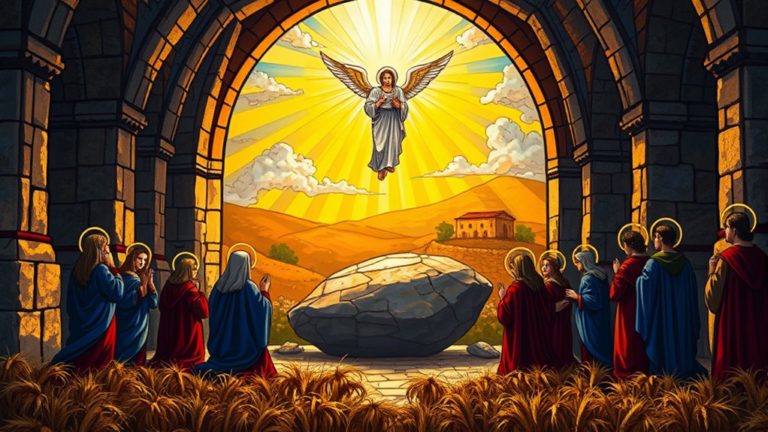
According to Matthew 24:30, the Son of Man arrives on clouds with power and great glory, and Revelation 1:7 adds that every eye will see him.
The return is bodily and public, not symbolic or private.
Cosmic signs accompany it: the sun darkens, the moon fails, and stars fall.
Angels travel with Christ, and a loud trumpet signals his arrival.
Matthew 24:31 describes angels gathering believers from every corner of the earth and heaven.
Matthew 25:31 then connects the event directly to judgment, presenting the second coming as both a rescue for God’s people and a defining moment for all of history. At his return, the dead in Christ will rise first, followed by living believers who are caught up to meet him.
For every biblical prophecy concerning Christ’s first coming, eight concern the Second Coming, underscoring how much of Scripture is oriented toward this singular, climactic event. A number of passages also use cosmic and observational language consistent with ancient understandings of the earth’s shape.
What Does Scripture Say Believers Should Do While Waiting for Christ’s Return?

While the New covenant spends considerable space describing what Christ’s return will look like, it gives equal attention to how believers should conduct themselves in the meantime.
Jesus commands followers to “keep watch,” since the exact timing remains unknown.
Because no one knows the hour, Jesus calls his followers to stay alert and ready at all times.
James compares the waiting period to a farmer patiently expecting harvest, framing it as active endurance rather than passive delay.
Hebrews specifically describes Christ returning for those “eagerly waiting” for him.
The parable of the talents reinforces this posture, showing that servants are expected to remain productive during the master’s absence.
Alongside watchfulness and faithful service, the New Testament calls for pursuing holiness, self-control, and mutual encouragement within the believing community. Hebrews 10:25 urges believers against neglecting meeting together, emphasizing that fellowship and encouragement become especially critical as the day of Christ’s return draws near. Reading aloud and multiple readings can deepen understanding and reveal practical ways to live this out, especially when following a consistent reading plan.
Hope, fellowship, and continued proclamation are presented as defining marks of the waiting Christian life. John writes that everyone who holds this hope purifies himself just as Christ is pure, demonstrating that the anticipation of His return produces genuine transformation in the believer’s character.