The Bible never mentions burning sage anywhere in its text. Scholars confirm no passage endorses or condemns the practice directly. Scripture does address incense in worship, but those offerings followed divine command and symbolized prayer rising toward God. Burning sage carries associations with New Age and Native American spiritual traditions, which raises concerns for Christians. Those wanting to understand the biblical distinctions more fully will find the complete picture just ahead.
Key Takeaways
- The Bible never mentions burning sage, offering no direct endorsement or explicit condemnation of the practice anywhere in Scripture.
- Biblical incense was divinely commanded for worship, symbolizing prayer rising to God, using specific ingredients like frankincense, not sage.
- Unauthorized worship offerings were taken seriously by God, as shown when Nadab and Abihu faced divine punishment for offering strange fire.
- Burning sage with spiritual intent raises concerns, as Deuteronomy 18 warns against seeking spiritual intervention outside of God’s designated means.
- Scripture consistently identifies Jesus Christ, not herbs or smoke, as the true source of spiritual cleansing and purification for believers.
What the Bible Actually Says About Burning Sage
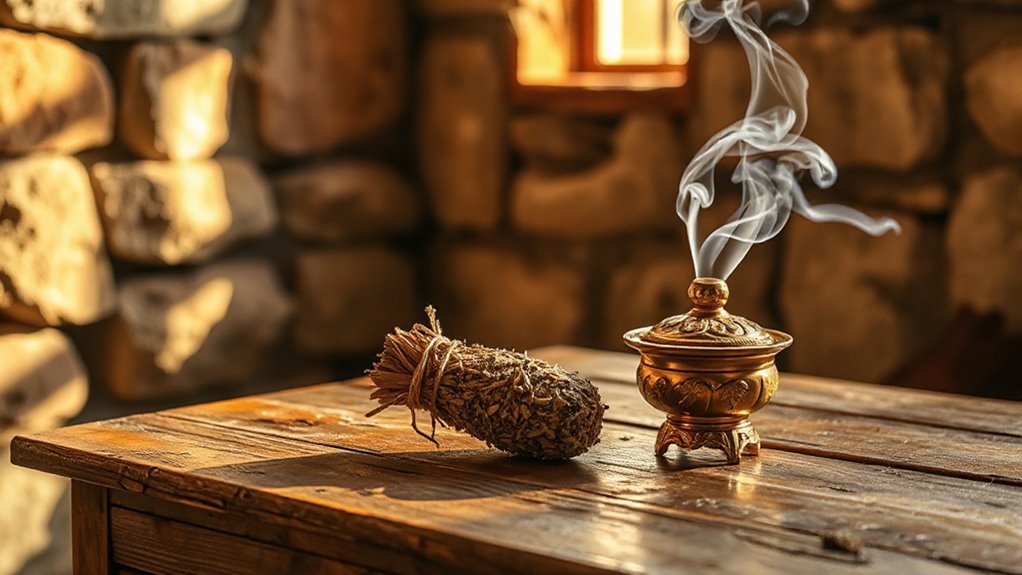
Although burning sage has become a widely recognized ritual in certain spiritual communities, the Bible does not mention the practice directly.
No biblical text includes the specific phrase “burning sage,” and scholars confirm it appears in no passage of Scripture.
The Bible does discuss incense and aromatic herbs in the context of worship, but sage is never identified as an ingredient.
In the tabernacle and temple, incense served as an offering to God, symbolizing prayer rather than physical cleansing.
Psalm 141:2 reflects this connection, comparing prayer to rising incense.
In the book of Revelation, golden bowls full of incense are identified as prayers of God’s people, demonstrating how deeply symbolic aromatic offerings were in biblical worship.
While aromatic plants held cultural significance in the ancient world, the Bible’s silence on sage specifically means the practice carries neither direct endorsement nor explicit condemnation from Scripture.
Scripture does, however, offer clear warnings about rituals rooted in pagan traditions, with Jeremiah 10:2 instructing believers to not learn the ways of the nations or be driven by fear of signs and rituals.
Observations from ancient cultures and biblical language about aromatic offerings help explain why such practices developed even when not directly prescribed by Scripture.
How Biblical Incense Differs From Burning Sage
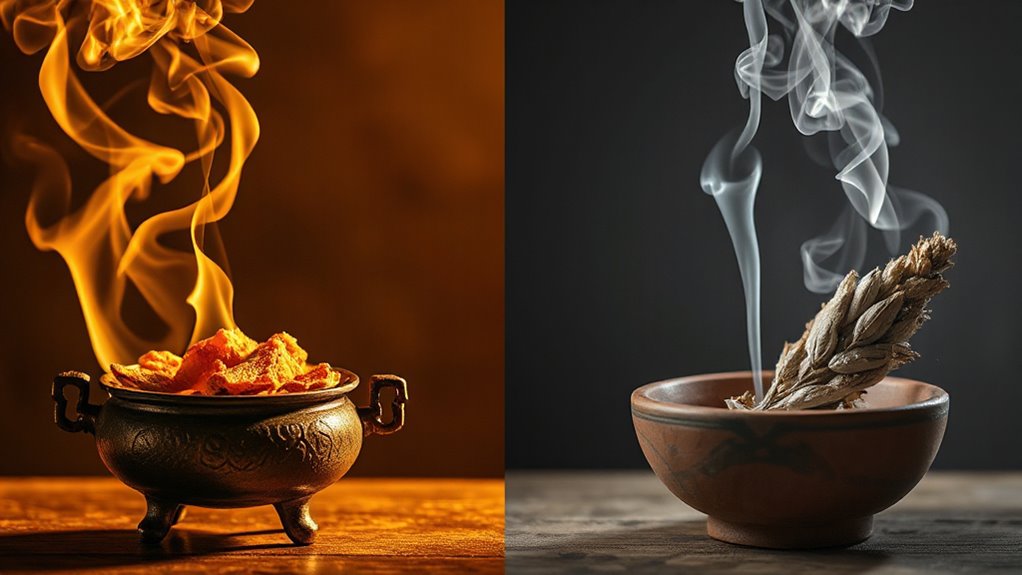
Rooted in divine command, biblical incense stands apart from the modern practice of burning sage in both origin and purpose. God prescribed specific ingredients for holy incense, including stacte, onycha, galbanum, and pure frankincense in equal parts. Its purpose was singular: to symbolize prayer rising toward God during covenantal worship. The use of incense in liturgy is reflected in various Catholic traditions, which maintain continuity with the Old Testament model.
Unauthorized offerings, like those of Nadab and Abihu, resulted in divine punishment, demonstrating how seriously God regarded this practice.
Burning sage, by contrast, originates from Native American spirituality and New Age ritual. It carries no biblical foundation. Where biblical incense pointed worshippers toward God, smudging aims to “cleanse energy” or drive out spirits, concepts Scripture does not support. Scripture does affirm that prayers are incense, as seen in Revelation 5:8, where the prayers of the saints are described as the acceptable offering before God.
One practice was God-ordained; the other is man-made, and that distinction carries significant weight for Christians seeking discernment. Sage itself, belonging to the genus Salvia, family Lamiaceae, is never mentioned by name in Scripture, further confirming that its spiritual use carries no biblical warrant.
Why Burning Sage Is a Problem for Christians
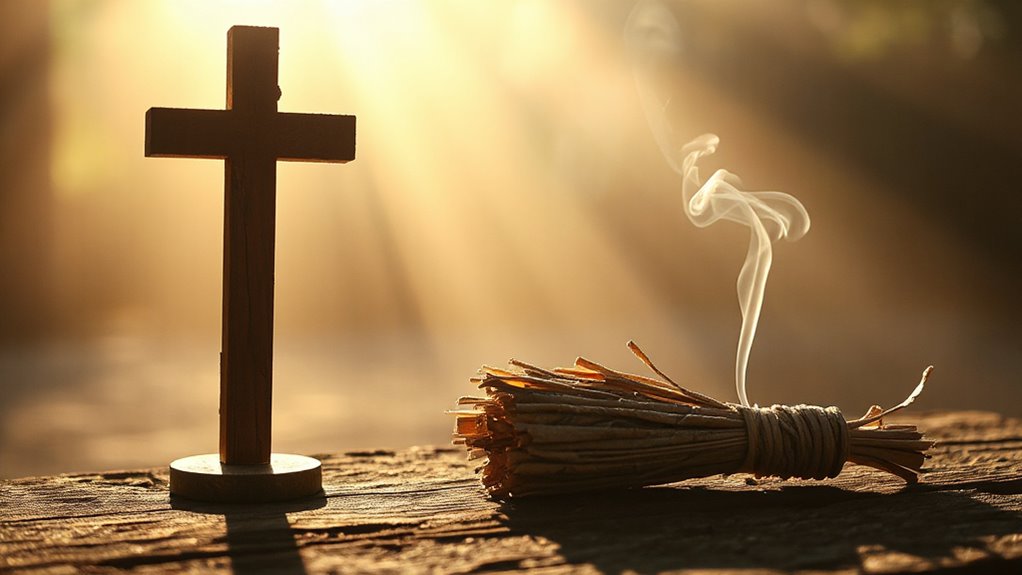
When Christians encounter the practice of burning sage, several concerns arise that go beyond personal preference.
Scripture consistently links spiritual cleansing to God’s power, Christ’s work, and the Holy Spirit—not to herbs or smoke.
Burning sage with spiritual intent, whether rooted in New Age or Native American traditions, aligns with practices the Bible classifies as occult.
Deuteronomy 18 warns against seeking spiritual intervention outside of God.
Beyond the occult association, the practice implies that Christ’s work is somehow insufficient.
Scripture calls believers to pursue purification through prayer, faith, and obedience.
When a created plant replaces dependence on Christ, trust has shifted in a spiritually significant direction.
For Christians seeking discernment, the concern is not the sage itself but the spiritual meaning assigned to it. The Bible never directly mentions burning sage, meaning Christians must rely on biblical interpretation and conscience to navigate whether the practice aligns with their faith. A number of biblical books were written over centuries by many authors, reflecting diverse historical contexts that inform how Christians interpret such practices.
Why Christ, Not Sage, Is the Source of Spiritual Cleansing
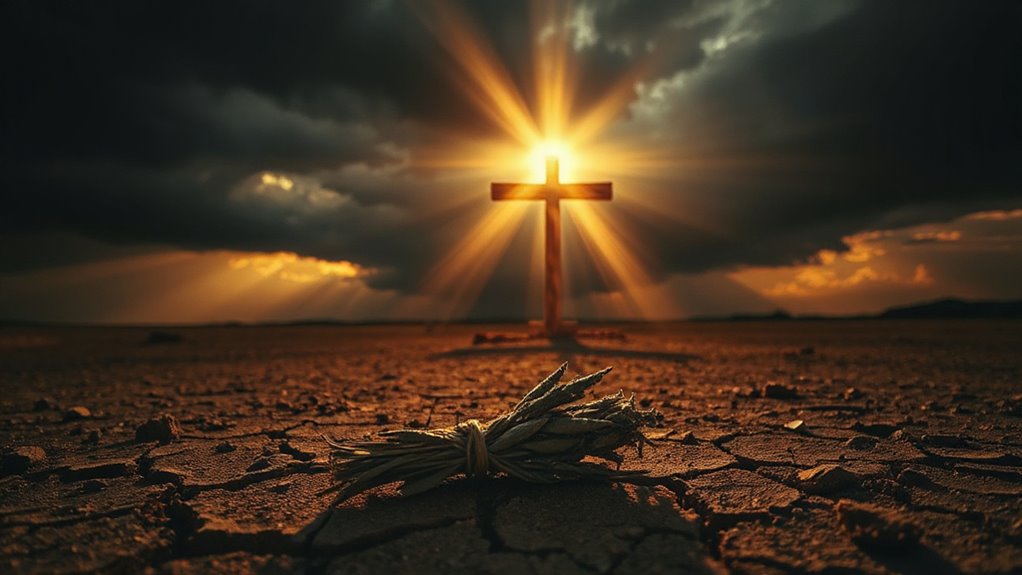
Having identified why burning sage raises concerns for Christians, the question that naturally follows is where genuine spiritual cleansing actually comes from. Scripture consistently points to one source: Jesus Christ.
According to 1 John 1:7, the blood of Christ cleanses believers from all sin.
Hebrews 10:22 describes hearts sprinkled clean from a guilty conscience through faith in Him.
The process involves repentance, as Acts 3:19 instructs, along with confession and trust in Christ’s sacrifice. Jesus and his followers primarily used Aramaic in daily life, reflecting the language context of first-century Palestine.
Baptism symbolizes this cleansing, representing forgiveness and the receiving of the Holy Spirit.
Ephesians 5:25–27 adds that Christ purifies the Church to stand without blemish before God. Ephesians 5:26 further specifies that this sanctification comes through the washing of water by the word, making Scripture itself an instrument of cleansing for believers.
Isaiah 1:18 promises that sins like scarlet will be made white as snow, affirming that God Himself initiated and assured the provision of cleansing long before Christ’s earthly ministry.
Where sage offers symbolic ritual, Christ offers actual restoration of conscience and fellowship with God through His death and resurrection.