

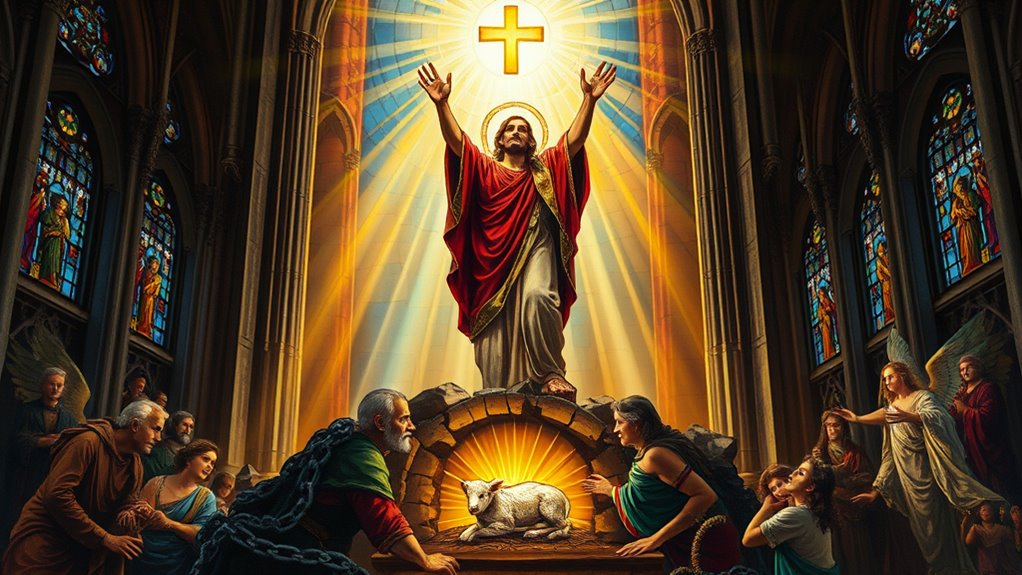


The Bible presents salvation as a gift received through faith in Jesus Christ, not earned through personal effort. Ephesians 2:8–9 states it plainly: grace alone saves, leaving no room for boasting. Acts 4:12 and John 14:6 identify Jesus as the only source of salvation. Faith and repentance work together as one response, and genuine conversion produces real transformation. Those who explore further will find each of these threads runs deeper than a single paragraph can hold.
Key Takeaways
- Salvation is a gift from God received through grace and faith, not earned through personal works or achievement (Ephesians 2:8-9).
- Jesus Christ is the exclusive path to salvation, with no alternative route offered in Scripture (Acts 4:12; John 14:6).
- Responding to the gospel requires both faith and repentance, which are inseparable and occur together (Mark 1:15).
- True belief involves trusting Christ’s finished work while genuinely turning away from sin toward God.
- Authentic salvation produces real transformation: a new identity, renewed thinking, and visible spiritual fruit (2 Corinthians 5:17).
What the Bible Actually Says About Being Saved

When people ask what the Bible says about being saved, the answer begins with a straightforward claim: salvation is not something a person earns. Ephesians 2:8-9 describes it as a gift received through grace alone, with works and personal achievement explicitly excluded.
Boasting, the text notes, has no place in salvation because the initiative belongs entirely to God. Catholic Bibles include the deuterocanonical books, which reflect the broader canon used in Catholic tradition.
Christ central to this message means no alternative path exists. Acts 4:12 states that salvation is found in no one else but Jesus. John 14:6 reinforces this, presenting him as the only way.
John 3:16 connects eternal life directly to belief in the Son. The Bible treats this not as a philosophy to admire but as a message to receive and trust. The Spirit of grace is identified in Scripture as one of the three persons of the Godhead intimately connected to this saving work.
Galatians 2:16 makes the contrast explicit, stating that a person is not justified by works of the law but through faith in Jesus Christ.
How Faith and Repentance Work Together in Salvation

Salvation in the New Scriptures consistently involves two responses: faith and repentance.
Theologians often describe these as distinct but inseparable, comparing them to two sides of the same coin.
Repentance means turning sinless away from sin and redirecting allegiance toward God.
Repentance means turning away from sin and redirecting every allegiance fully toward God.
Faith means trusting Christ’s finished work rather than personal effort or goodness.
Mark 1:15 captures both responses together when Jesus calls people to repent and believe the gospel.
Acts 2:38 reinforces repentance as part of the apostolic message, while Romans 10:9 connects belief directly to salvation.
Many sources explain that repentant faith is not two separate decisions made at different times.
Instead, true belief already contains turning from sin, and genuine repentance naturally moves toward trust in Christ.
Together, they form one complete response to the gospel. The Greek term for believe used in Mark 1:15 is pisteuo, meaning to have faith in, upon, or with respect to a person or thing.
Repentance is not something a person produces through personal effort but is rather a gift God gives, as confirmed in Acts 5:31 and Acts 11:18.
The biblical picture of salvation also coheres with the doctrine that Jesus is both divine and human in order to accomplish redemption for humanity.
What Changes When Someone Is Truly Saved

True conversion, according to Scripture, produces more than a change in religious affiliation or moral effort. The Bible describes salvation as bringing genuine transformation across several areas of a person’s life.
Identity shifts first, as 2 Corinthians 5:17 presents the saved person as a new creation. Inner renewal follows, with Romans 12:2 describing changed thinking patterns and values.
Spirit-filled living then shapes desires, motives, and responses from within. Galatians 5:22–23 identifies visible fruit—love, joy, peace, and self-control—as expected evidence of this inward work.
Romans 6:6 adds that sin’s controlling power is broken, opening space for growth in holiness. Salvation also draws believers into closer relationship with God and places them within the community of the church.
This transformation moves deeper than behavior, reaching the mind, will, emotions, and desires as the Holy Spirit progressively shapes a person toward Christlikeness. Scripture frames this ongoing work as recovery from the Fall, as God restores what was lost through Creation, Redemption, and Restoration in Christ. A consistent routine of study and prayer, such as following a reading plan, supports steady spiritual growth and understanding.