
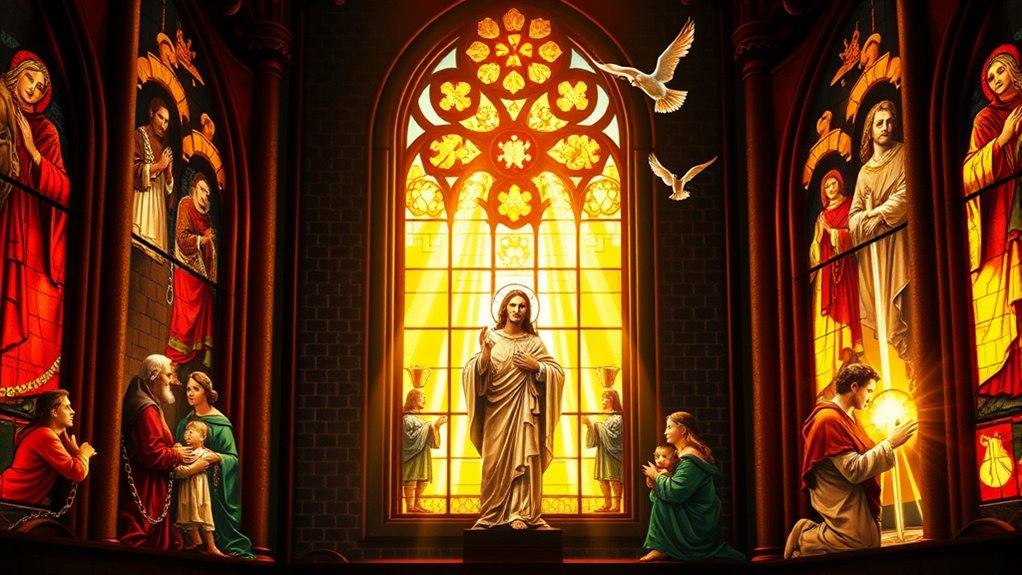

The Bible describes Jewish people as a nation chosen by God for a covenant relationship defined by responsibility rather than superiority. Deuteronomy 7:6 calls Israel God’s treasured possession, while Exodus 19:5 links that standing to obedience and covenant-keeping. Romans 9–11 affirms that Israel’s calling remains intact even within the New Testament’s broader story. That story, spanning both writings, carries more detail worth exploring.
Key Takeaways
- The Bible describes Jewish people as God’s chosen nation, selected not for their merit but through divine love and covenant faithfulness.
- Jewish election carries responsibility rather than superiority, with chosen status linked to obedience and covenant-keeping obligations.
- Israel’s role in Scripture involves law, promise, and witness, serving as a testimony to God’s covenant across generations.
- Romans 11 affirms that Israel’s calling remains intact, with Gentiles grafted into Israel’s story rather than replacing it.
- The New Testament presents Jews and Gentiles as sharing salvation through faith while preserving each group’s distinct place in God’s plan.
What the Bible Says About Jewish Election and Chosen Status
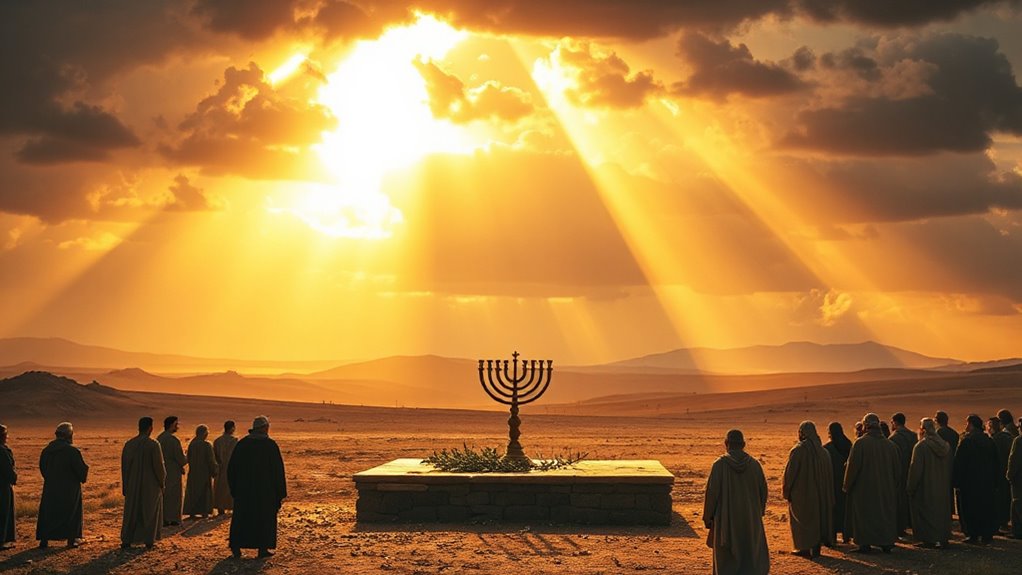
One of the most consistent themes in the Bible is the idea that God chose Israel from among all the nations of the earth. Deuteronomy 7:6 describes Israel as a holy people and God’s treasured possession, while Deuteronomy 14:2 repeats that same language.
According to Deuteronomy 7:7–8, this choice was not based on Israel’s size or merit, but on divine love and covenant faithfulness. Scholars note that election carries both privilege and purpose. The Catholic canon also preserves texts that reflect Israel’s election in the Old Testament, including the deuterocanonical books.
Exodus 19:5 introduces conditional language, linking Israel’s chosen status to obedience and covenant-keeping. Jewish interpretation often frames chosenness as responsibility rather than superiority.
In the New Testament, Romans 9:4–5 affirms Israel’s unique standing. The broader biblical pattern presents election as purposeful, relational, and connected to God’s redemptive plan. Amos 3:2 further reflects this relational dynamic, noting that Israel’s unique bond with God results in heightened accountability for iniquities.
The Hebrew Bible uses specific terms to describe Israel’s relationship with God, including the word segullah, meaning treasured or treasure people, to convey the nature of this covenantal bond.
Israel’s Covenant Role in Scripture: Law, Promise, and Witness

Alongside Israel’s chosen status ran a network of covenant obligations that gave that status its shape and direction.
Deuteronomy placed the Book of the Law beside the ark as a witness against Israel, making the law a public accountability document rather than a private guide.
The covenant also carried promise: land, blessing, and the calling that all families of the earth would benefit through Abraham’s line.
These two threads—law and promise—were held together by a third: witness.
Law and promise do not stand alone—witness binds them, giving covenant life its outward, testifying shape.
Israel’s ordered national life was meant to display God’s character to surrounding nations.
Deuteronomy reinforced this through written law, songs, and public readings, each designed to preserve covenant memory across generations.
The same testimony that confirmed Israel’s identity could also expose its failures.
Heaven and earth were called as witnesses against the people, underscoring that covenant accountability was cosmic in scope and not confined to any single generation.
At Sinai, God framed Israel’s covenant identity with a specific purpose: to be a kingdom of priests and a holy nation representing God’s character before the world.
Golgotha, the site of Jesus’ crucifixion, lay outside Jerusalem’s ancient walls, illustrating the covenant theme of judgment carried out outside the city.
How the New Testament Treats Israel Alongside the Gentiles

Throughout the New covenant, Israel and the Gentiles appear not as competing categories but as two groups held within a single unfolding plan. Romans 9–11 treats them as distinct yet connected, with Paul describing Gentiles as branches grafted into Israel’s olive tree rather than replacing it.
Romans 11:25–29 speaks of a mystery involving both groups, affirming that Israel’s calling remains intact. This perspective echoes how the early church navigated differing traditions such as Catholic and Protestant approaches to scripture and authority.
Ephesians 2:11–22 describes Gentiles as once separated but brought near through Christ, while Ephesians 3:6 calls them fellow heirs within the same body.
Acts consistently shows the gospel reaching Jews first, then Gentiles.
Paul holds both identities together without erasing either.
The New Testament presents shared access to salvation through faith while preserving each group’s distinct place within the larger story. Ephesians 2:14–16 describes Jesus breaking down the middle wall of separation, creating one new man from the two while leaving neither identity dissolved.
Romans 11:28 captures this tension plainly, describing Israel as enemies concerning the gospel yet beloved on account of the fathers, underscoring that God’s purposes for the Jewish people have not been abandoned.