


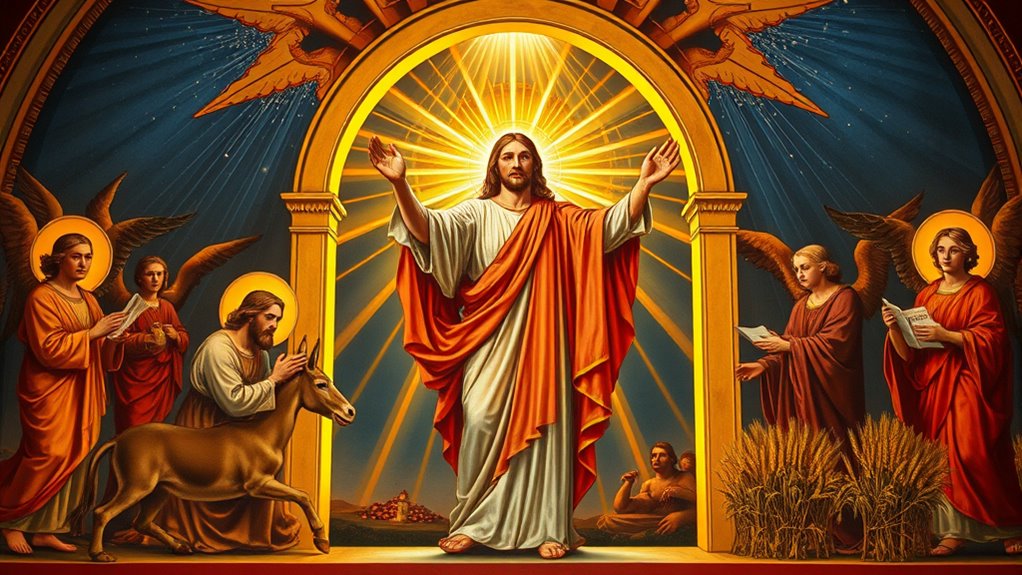



The Bible does not endorse luck as a governing force in human life. Instead, scripture presents God’s providence as the power behind seemingly random events. Proverbs 16:33 states that even lots cast into the lap carry decisions from the Lord. Isaiah 65:11–12 rebukes those who trust Fortune over God. Matthew 10:29–31 confirms that even a sparrow’s fall falls within God’s knowledge, suggesting no event escapes divine oversight. More on this follows below.
Key Takeaways
- The Bible never endorses luck as a governing force, instead framing seemingly random events as falling under divine oversight.
- Proverbs 16:33 teaches that even casting lots, a chance-based act, ultimately reflects God’s decision and control.
- Isaiah 65:11–12 explicitly rebukes trusting Fortune or Destiny as spiritual unfaithfulness toward God.
- Ephesians 1:11 and Romans 8:28 affirm God works all things purposefully, leaving no room for independent chance.
- Believers are instructed to replace luck-based thinking with prayer, gratitude, and trust in God’s providence.
Does the Bible Believe in Luck?

Whether the Bible endorses the concept of luck is a question that its own texts answer fairly directly. No verse explicitly approves of luck as a governing force in human life. Instead, passages consistently frame seemingly random events as falling under divine oversight.
Proverbs 16:33 states that lots are cast into the lap, but every decision comes from the Lord. Isaiah 65:11–12 rebukes Israel for preparing tables for Fortune and filling bowls for Destiny, treating that behavior as unfaithfulness. Ecclesiastes 9:11–12 acknowledges that time and chance affect everyone, yet broader biblical context places those events within God’s control. The pattern across Scripture suggests that what appears accidental is, in the Bible’s view, purposeful.
Colossians 1:16 affirms that all things were created by God and for God, leaving no room for random chance to reign as an independent force. Rather than crossing fingers or hoping for good fortune, Scripture invites believers to pray about everything with thanksgiving, as directed in Philippians 4:6. Matthew 10:29–31 further reinforces this by declaring that not even a sparrow falls without God’s knowledge, suggesting that if small things are under His care, nothing in a believer’s life is left to chance.
How God’s Providence Replaces Luck in the Bible

At the center of biblical teaching on providence lies a straightforward claim: God directs events with purpose, leaving no room for luck as an independent force. Proverbs 16:33 states that even casting lots falls under divine control, suggesting outcomes are never purely random. Ephesians 1:11 reinforces this, describing God as working all things according to His will. Where luck implies unpredictability, providence implies intention.
Psalm 37:23 notes that God directs a person’s steps, while Daniel 2:21 shows that same sovereignty shaping national history. James 1:17 adds that every good gift comes from God, not chance. Together, these passages present a consistent framework: blessings and outcomes trace back to a purposeful Creator rather than to fortune or circumstance. Romans 8:28 assures that all things work together for good for those who love God and are called according to His purpose.
What appeared to be a chance encounter when Ruth gleaned in Boaz’s field was later recognized by Naomi as God’s providential hand, demonstrating that events which seem random are often purposefully ordered by God.
Should Christians Rely on Luck or Prayer?

When a Christian faces uncertainty, the question of whether to wish for luck or turn to prayer carries real theological weight. Philippians 4:6 instructs believers to pray about everything rather than worry, presenting prayer as a direct channel to God rather than a passive hope in chance. Where luck assumes an impersonal, unpredictable force governs outcomes, prayer assumes a listening God who acts with purpose.
Proverbs 16:3 connects committing plans to God with genuine success, while Romans 8:28 assures that God works circumstances toward good for those who love Him. Proverbs 16:33 reminds believers that even what appears to be chance, such as the casting of a lot, is ultimately from the Lord.
Practically, Christians are encouraged to replace lucky charms and fortune-based thinking with Scripture, gratitude, and diligence. Isaiah 65:11-12 specifically warns against trusting fortune over God, framing that choice as spiritually significant. Psalm 5:12 describes God as surrounding the righteous with favor as a shield, reinforcing that divine blessing flows from relationship rather than chance.