


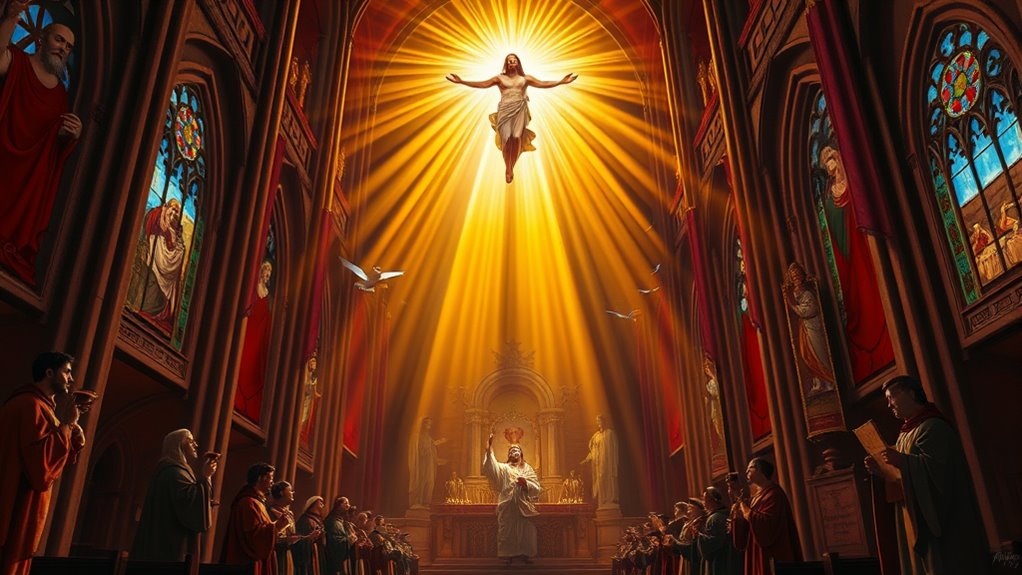
Christians can do “greater works” than Jesus described in John 14:12, but the phrase requires precise definition. Scholars broadly agree the promise points to expanded missionary reach after Pentecost, not to surpassing Christ’s divine authority. Augustine noted that leading a sinner to spiritual life may itself qualify as greater than physical miracles. Believers act as authorized witnesses, never independent powers. The distinction between scope and authority shapes everything the passage actually promises.
What Does “Greater Works” Actually Mean in John 14:12?
Tucked inside Jesus’ farewell speech to his disciples on the night before his crucifixion, John 14:12 carries a promise that has puzzled readers for centuries: “Whoever believes in me will also do the works that I do; and greater works than these will he do, because I am going to the Father.” The verse does not stand alone. It connects immediately to John 14:13–14, tying these works to prayer and the Father’s glory. Scholars generally read “greater” as broader in extent and redemptive impact, not superior in divine authority, pointing toward Spirit-empowered mission following Jesus’ ascension. Augustine argued that bringing a sinner from spiritual death to life is greater than raising a dead body. In John’s Gospel, “works” encompasses far more than miracles, extending to preaching, teaching, befriending sinners, and ministering to the poor, reflecting the full breadth of what the Father calls his people to do. The promise anticipates the Spirit’s ongoing indwelling and empowerment for mission after Pentecost, enabling believers to participate in Christ’s redemptive work through proclamation, service, and transformative power Holy Spirit.
Why “Greater Works” Points to Reach and Scope, Not Miraculous Power
Among the interpretive questions surrounding John 14:12, few matter more practically than whether “greater works” refers to miraculous intensity or to the breadth and reach of mission. Scholars consistently favor the latter reading, citing four supporting observations:
Few interpretive questions surrounding John 14:12 matter more practically than what “greater works” actually means.
- Jesus tied the promise to his departure, signaling a new missional phase.
- Post-Pentecost witness expanded from Jerusalem outward to entire continents.
- Disciple-made movements multiply impact across generations, not just moments.
- Johannine “works” include proclamation and conversion, not only signs.
Together, these observations suggest “greater” describes cumulative, gospel-driven reach rather than individual miracle comparison. Jesus’ earthly ministry was confined to a geographic region roughly the size of Manhattan, yet his followers were commissioned to carry the gospel to the remotest parts of the earth.
Piper further grounds this reading in John 20:21–23, where the risen Christ breathes the Holy Spirit upon the disciples and grants authority to proclaim forgiveness of sins, identifying missionary proclamation of forgiveness as the defining expression of the greater works made possible by the finished atonement. A thoughtful reading also recognizes how biblical depictions of judgment and destiny, including terms like Hades and Gehenna, shape serious reflection on the stakes of mission.
Why Completed Redemption Makes Post-Pentecost Ministry “Greater”
After the cross and resurrection, a new chapter in redemptive history opened—one that reshapes how theologians understand Jesus’ promise in John 14:12.
When Christ declared “It is finished” (John 19:30), the redemptive foundation was set. Post-Pentecost ministry builds directly on that foundation. Brad Jersak notes that the Spirit continues applying what the cross secured.
Desiring God describes the last-days era beginning after Christ’s ascension, creating a new ministry environment. Because atonement is already accomplished, Spirit-empowered proclamation carries full redemptive weight. This environment emphasizes the call to servant leadership as a primary expression of Christian ministry.
The “greater” quality of post-Pentecost ministry, theologians argue, flows from this completed work—not from surpassing Christ’s authority. The finished work itself was not limited to the cross alone, as the redemption project encompassed Christ’s birth, baptism, and ministry, reaching its apex at Calvary’s decisive moment.
The exaltation of Christ unleashed the sending of the Spirit, empowering disciples to perform works that gather nations and demonstrate the finished work’s scope—a reality foretold by prophets including Isaiah, Joel, and Malachi.
Does John 14:12 Mean Believers Share Jesus’ Divine Authority?
When Jesus told his disciples in John 14:12 that they would do “greater works” than he had done, some readers have taken the promise to mean that believers somehow share in his divine authority.
Some have read Jesus’s promise of “greater works” in John 14:12 as granting believers a share in his divine authority.
John’s Gospel, however, draws a careful distinction. Scholars identify four boundaries the text establishes:
- Authority flows from Jesus to believers, not from believers themselves
- Prayer “in my name” signals dependence, not equality
- Believers serve as authorized witnesses, not co-divine figures
- Jesus retains his unique identity as incarnate Word
Ministry remains derivative—empowered through Christ, never independent of him. The word “works” itself carries a range of meanings shaped by context, encompassing everything from divine miracles to everyday righteous conduct. The Greek term for the promised Helper, állos, indicates another of the same kind as Jesus, affirming that the Spirit who empowers believers is of equal divine quality rather than a lesser substitute. The Bible also affirms the legitimacy of governing authorities while distinguishing ultimate allegiance to God above any earthly ruler.
What “Greater Works” Does Not Mean: and Why the Distinction Matters
Jesus’ earthly works—redemption, revelation, definitive signs—remain the source and standard. The church’s works are considered greater only in a derived, post-resurrection sense, flowing from Christ’s exaltation rather than replacing anything he accomplished. The statement in John 14:12 was addressed directly to the first-century disciples, not issued as a blanket promise to every individual believer across all generations. The emphasis on serving others with a gentle heart reflects the biblical pattern seen in figures like Moses, David, and Paul.
The minister’s role, objectively defined as preaching the word and administering sacraments, likewise carries no inflated claim of personal power beyond what is conferred by Christ’s own authority.