









The Bible mentions salt more than 40 times, connecting it to daily life, worship, and deeper spiritual meaning. Salt preserved food, cleansed newborns, and purified water. God required it in grain offerings and incense, calling it “the salt of the covenant” in Leviticus 2:13. The phrase “covenant of salt” appears in Numbers 18:19 and 2 Chronicles 13:5, signaling permanence and faithfulness. Jesus later called his disciples “the salt of the earth” in Matthew 5:13. Each biblical layer reveals something worth exploring further.
Key Takeaways
- Salt was used daily in biblical life for preserving food, seasoning, cleansing newborns, and purifying water (2 Kings 2:20–22).
- God commanded salt on every grain offering, calling it “the salt of the covenant of your God” (Leviticus 2:13).
- The “covenant of salt” phrase appears twice, symbolizing a permanent, binding agreement that cannot be broken (Numbers 18:19; 2 Chronicles 13:5).
- Jesus called His disciples “the salt of the earth,” emphasizing visible, preserving influence and distinctive conduct in the world (Matthew 5:13).
- Salt symbolizes both judgment and restoration—cursing devastated lands while also representing renewal and enduring covenant faithfulness throughout Scripture.
What Was Salt Used for in the Biblical World?
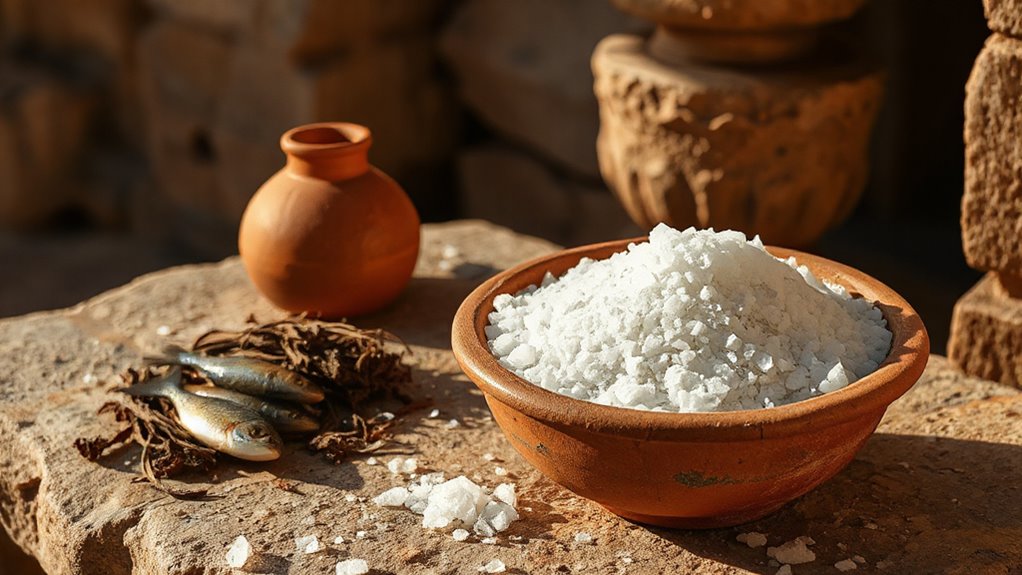
Salt held a central place in the daily life of the ancient biblical world, serving purposes that stretched well beyond the dinner table. It seasoned food for both people and animals, as Job 6:6 suggests, and it preserved meats and fish in a warm climate where spoilage came quickly. Salt also carried cleansing functions: Ezekiel 16:4 describes newborns being rubbed with it, and the prophet Elisha used it to purify contaminated water at Jericho. In worship, salt was required in grain offerings and incense preparation, as noted in Exodus 30:35. Socially, sharing salt marked hospitality and fellowship. The phrase “eating the salt of a man” was understood to mean deriving sustenance or being in someone’s pay and service. Its economic value extended to trade and taxation across the wider Near East, making it both a household necessity and a culturally significant commodity. Biblical descriptions often use symbolic imagery to convey deeper meanings about substances like salt. Bible Gateway, a widely used resource for exploring such biblical references, is not currently available in the UK and EU region while a new solution is being worked on.
Why Was Salt Required in Biblical Sacrifices and Offerings?

The phrase “salt of the covenant” signals something beyond flavor.
Salt marked the offering as a binding covenant act, expressing permanence and faithfulness between the worshiper and God.
Jewish sources, including the Jewish Encyclopedia, note that salt eventually became considered indispensable across nearly all sacrifices, not only grain offerings.
Rabbinic tradition treated its inclusion as non-optional.
The requirement reinforced that these offerings were consecrated gifts, not ordinary food, and that worship carried lasting obligation rather than casual gesture.
Multiple translations, including the NIV, NKJV, and NRSV, consistently render the command with explicit warnings never to omit salt, reflecting its non-negotiable place in the sacrificial system.
The use of salt in offerings also reflects continuity with Israel’s reception of certain texts preserved in the Septuagint and later recognized in various Christian canons.
What Does a “Covenant of Salt” Mean?

The phrase “covenant of salt” appears only twice in the Old Testament using that exact wording: Numbers 18:19 and 2 Chronicles 13:5.
Numbers 18:19 applies it to the priestly allotment, marking the priests’ share in holy offerings as a permanent, fixed ordinance before God.
Second Chronicles 13:5 uses the same phrase to describe God’s grant of kingship to David and his descendants.
Leviticus 2:13 reinforces the connection by calling salt “the salt of the covenant of your God” in grain offering instructions.
Across these passages, salt functions as a symbol of permanence, loyalty, and incorruptibility.
Ancient Near Eastern cultures associated shared salt with binding agreement and friendship. Scholar Jacob Milgrom noted that salt’s preservative qualities made it an ideal symbol of covenant perdurability.
In ancient cultures, agreements were made legally binding by ingesting salt together, often in the presence of witnesses who understood the act as a solemn and binding contract.
Together, these texts portray a covenant of salt as an enduring, unbreakable promise rooted in divine faithfulness rather than human arrangement. Additional readings indicate that a modest daily time investment, such as 12 minutes daily, makes study of these passages and related themes manageable over the course of a year.
What Did Jesus Mean by “Salt of the Earth”?

When Jesus called his disciples “the salt of the earth” in Matthew 5:13, he placed that declaration immediately after the Beatitudes and just before calling them “the light of the world,” suggesting a deliberate sequence of images about public influence. Commentaries commonly identify two primary meanings.
The first is preservation: salt slowed decay in the ancient world, and many scholars apply this to believers restraining moral corruption in society. The second is flavor: salt seasons food, and disciples similarly bring distinctiveness and goodness to ordinary life.
Both readings emphasize visible conduct rather than private faith. Jesus also warned that salt losing its saltiness becomes useless, a caution commentators connect to spiritual compromise and lost witness.
The saying functions simultaneously as an honor and a serious responsibility. In rabbinic literature, salt also served as a metaphor for wisdom, connecting the image to teaching and the life of the mind.
Bible Gateway, a widely used resource for studying such passages, is currently not available in the UK and EU regions while a new solution is being developed, with refunds for paid subscribers scheduled no later than September 15, 2025.
Regular practices like daily Bible reading and prayer daily support the kind of spiritual consistency that helps believers remain “salty” in their witness.
When Does Salt Symbolize Judgment, Curse, or Restoration in the Bible?

Salt carries sharply different meanings in Scripture depending on context, shifting between images of ruin and renewal with notable consistency.
Salt in Scripture carries sharply different meanings, shifting between ruin and renewal with striking consistency.
Lot’s wife became a pillar of salt after looking back at Sodom, marking divine judgment with permanent consequence.
Abimelech sowed Shechem with salt in Judges 9:45, declaring the city cursed and unfit for habitation.
Deuteronomy 29:23 describes devastated land as a burning waste of salt and sulfur, reinforcing that imagery further.
Yet salt also signals restoration.
In 2 Kings 2:20–22, Elisha used salt to purify Jericho’s waters, reversing barrenness and restoring life.
Numbers 18:19 connects salt to an enduring covenant, associating it with faithfulness and preservation.
The Valley of Salt served as a battlefield where David struck down his enemies, marking the terrain itself as a site of decisive divine judgment.
Commentators note that Abimelech’s act was not intended to literally render the soil barren but served as a token of detestation, expressing a desire for the city’s utter and irrecoverable destruction.
Together, these passages show salt functioning as both a sentence and a sign of renewed blessing. Additional biblical scenes often place such events near Jerusalem, emphasizing their public and communal significance.