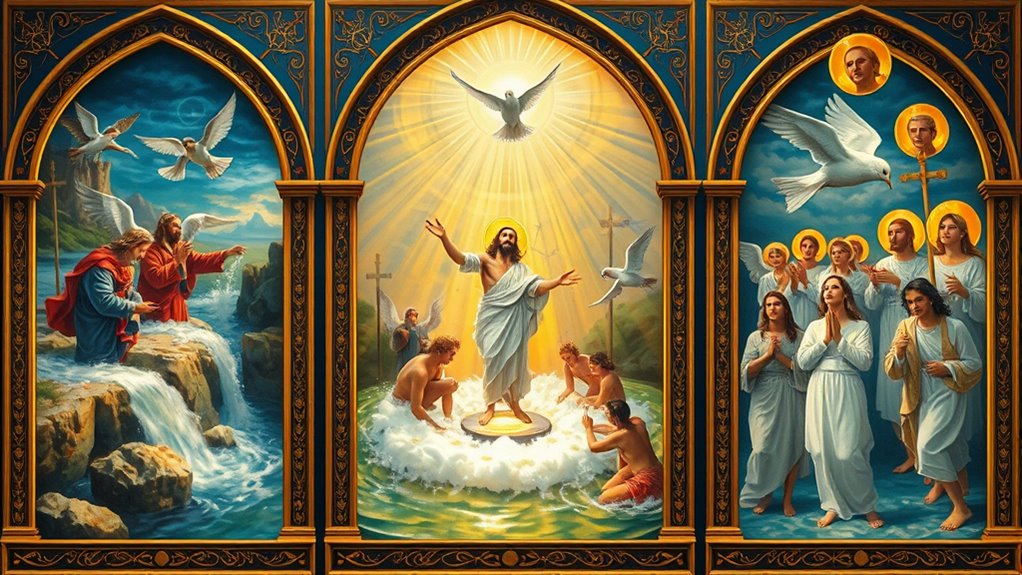



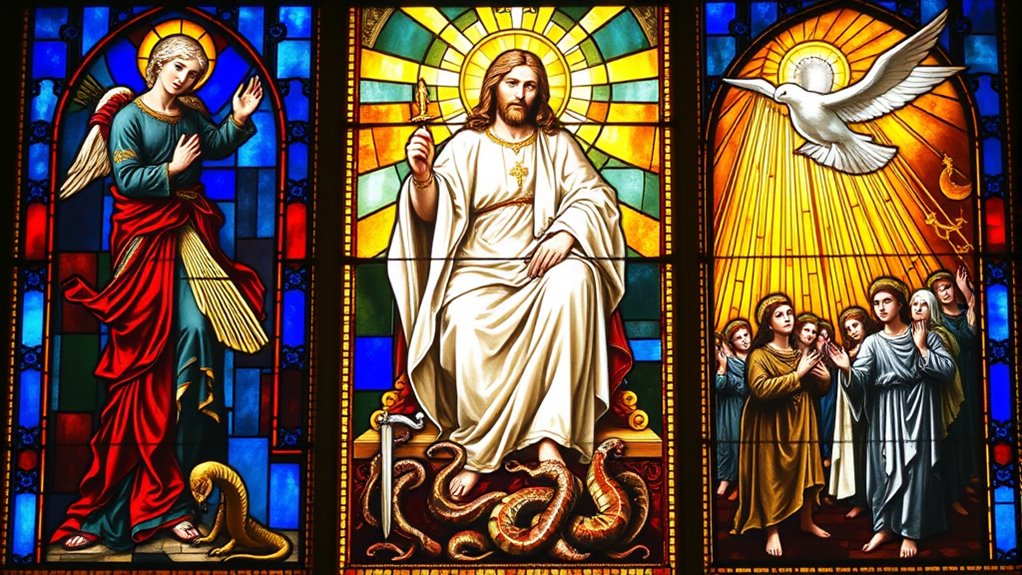

The Bible describes spirituality as a life shaped by the Holy Spirit and directed toward God’s purposes rather than personal preference. It is not self-constructed but rooted in a covenant relationship with the Father, Son, and Holy Spirit. Scripture teaches that true believers possess the Holy Spirit, making transformation possible from the inside out. Romans 12:2 frames this as renewal of the mind rather than outward conformity. What that process looks like in practice runs deeper than most expect.
Key Takeaways
- The Bible defines spirituality as a life guided by the Holy Spirit and aligned with God’s will, not personal preference.
- All true Christians possess the Holy Spirit, making believers supernatural rather than merely natural people.
- Biblical spirituality transforms from the inside out, renewing the mind, will, and emotions through the Holy Spirit’s work.
- Spiritual maturity is measured by Christlike fruit such as love, patience, kindness, and self-control, not biblical knowledge alone.
- Unlike worldly spirituality shaped by emotion, biblical spirituality is rooted in God’s unaltered Word and covenant relationship.
What the Bible Actually Means by Biblical Spirituality

Biblical spirituality, as defined by Scripture, refers to a life guided by the Holy Spirit and aligned with God’s will. It encompasses the practices, beliefs, and experiences that build a genuine connection with God. This spirituality is rooted in the doctrine that the Father, Son, and Holy Spirit share one divine essence, forming the basis for Christian life and worship Trinitarian belief.
At its core, this spirituality rests on holiness and living according to God’s purpose rather than worldly standards. Scripture teaches that all true Christians possess the Holy Spirit, making them, in a meaningful sense, supernatural rather than merely natural people.
This distinction matters. A person living by biblical spirituality is not simply following moral rules but is being transformed inwardly into the image of Christ.
The foundation, then, is relational rather than purely behavioral, centering on a deep, ongoing union with God through faith and the indwelling Spirit. Humans are uniquely positioned to develop this spirituality because, unlike animals that act on instinct, only God’s intelligent creatures can establish a genuine friendship with God.
This relationship is not initiated by human effort but begins with God himself, as biblical spirituality is understood as divine restoration and healing of the broken relationship between the Triune God and humanity.
How the Holy Spirit Transforms a Believer From the Inside Out

When the Holy Spirit enters a believer’s life, Scripture teaches that the change begins not at the surface but at the deepest level of a person’s being—the human spirit itself. The Spirit functions as a divine agent, connecting the believer to God and initiating an ongoing transformation rather than a single event. This transformation parallels how language shaped identity in first-century contexts, where Aramaic served as the everyday tongue.
From there, renewal moves outward.
The soul—comprising mind, will, and emotions—is reshaped through honest engagement with God’s Word. Old desires are not simply suppressed but replaced with new affections, identity, and purpose.
The believer’s role throughout this process is active surrender, creating space for the Spirit to work. Romans 6:12–14 calls believers to yield body and soul to God, without which they remain mired in sin.
Romans 12:2 instructs believers not to be conformed to the world’s external customs but to pursue renewal of the mind, through which lasting transformation takes shape.
Over time, the result is visible: a person increasingly resembling Jesus and no longer defined by who they formerly were.
How Biblical Spirituality Differs From the World

Two distinct visions of spirituality compete for attention in the modern world, and the differences between them run deeper than surface preference.
The world frames spirituality as a personal project, shaped by emotion, shifting circumstances, and self-crafted belief.
Biblical spirituality, by contrast, is rooted in the unaltered Word of God and centered on a covenant relationship with the Creator, Savior, and Holy Spirit. Catholics and other Christian traditions ground this covenant in both Scripture and Sacred Tradition, which shapes how believers live out that relationship.
Where worldly approaches prioritize inner peace through human effort, Scripture points to inward transformation through the Holy Spirit’s work.
Worldly faith often rests on vague optimism, while biblical faith is described as substance anchored in God’s character and promises.
One system builds from the self outward; the other begins with God and reshapes everything else. The Hebrew word ruach, meaning breath, wind, or spirit, captures how biblical spirituality is not self-generated but breathed into existence by God Himself.
Not all spiritualities lead to the same destination, and Scripture affirms only one authentic model for union with God, centered on Christ and His covenant.
What the Bible Says About Spiritual Growth and Maturity?

Spiritual growth, according to Scripture, begins the moment a person receives salvation and continues as a lifelong process of becoming more like Christ. Ephesians 4:13 defines maturity as reflecting the fullness of Christ’s character, not simply accumulating biblical knowledge.
The Bible identifies practical disciplines that sustain this growth: regular Scripture reading, prayer, fellowship, confession, and service. These practices nourish faith the way water and sunlight nourish a growing plant. Regular engagement in foundational disciplines like daily Bible reading and prayer correlates with measurable spiritual progress and deeper relationship with God through purposeful engagement with others and Scripture daily Bible reading.
True maturity, Scripture notes, is measured by the fruit produced — love, patience, kindness, and self-control — rather than spiritual gifts possessed.
John 15:4-5 frames growth as remaining connected to Christ, since apart from Him, lasting fruit is impossible. Consistency, humility, and perseverance remain the defining marks of genuine Christian maturity. Romans 5:3-4 teaches that suffering itself becomes a means of growth, as endurance produces character, and character produces hope.
Ephesians 2:8-10 reminds believers that while salvation comes by grace through faith and not by works, God creates each person in Christ Jesus for good works prepared beforehand, making spiritual growth an outworking of grace rather than a product of self-effort alone.
Daily Practices That Define a Truly Biblical Spiritual Life

A genuinely biblical spiritual life is not built on occasional religious moments but on consistent, structured daily habits grounded in Scripture.
Believers are encouraged to read one short passage daily, asking three focused questions about God, self, and required action.
Joshua 1:8 commands meditating on Scripture day and night, reinforcing memorization as a practical discipline. This discipline can be developed through reading plans that create a manageable routine for daily engagement.
Prayer functions not as a scheduled ritual but as continuous conversation, woven into ordinary moments like commuting or cooking.
The ACTS method—Adoration, Confession, Thanksgiving, and Supplication—provides structure for intentional prayer.
Writing three daily gratitudes, practicing silence for ten to twenty minutes, and connecting regularly with a biblical community further shape spiritual formation. Regular fellowship with other believers provides both encouragement and accountability in faith.
Together, these habits build a steady, grounded faith over time. Scripture also serves as a guide when a believer does not know what to pray, making God’s Word foundational to a vibrant and authentic prayer life.